

Labrador Retrievers are renowned for their affable disposition, sharp intellect, and—let’s not forget—their profound appreciation for sustenance. For numerous proprietors, this drive for food simplifies training and elicits strong responses from Labradors. Conversely, for certain households, this characteristic can precipitate troublesome conduct such as guarding valued items or showing aggression around food in Labradors.

Should you have witnessed your Labrador emitting low growls, tensing its body, baring teeth, or fiercely defending its edibles, toys, or rewards, rest assured you are not isolated—and your dog is not inherently “faulty.” Possession guarding in Labradors is a behavior that can be managed, not an inherent character flaw. Through appropriate comprehension, instruction, and environmental structuring, the majority of Labradors can learn to feel secure and unconcerned near their food sources.
This comprehensive manual delves into critical knowledge for both prospective and current owners regarding guarding behavior in Labradors and feeding aggression—spanning choices in adoption and breeder vetting to instructional methods, associated expenditures, health factors, and home setup. Whether you are raising a new puppy or welcoming an adult Labrador into your life, this piece aims to equip you to make well-informed, assured decisions.
What Constitutes Possession Guarding in Labradors?
Delineating Possession Guarding Versus Feeding Aggression
Possession guarding describes a dog’s action of defending an object it deems significant—most frequently nourishment, treats, chews, playthings, or even a favored lounging spot. Labrador feeding aggression is a subset of this conduct, specifically focused on the defense of meals or consumable items.
Common indicators include:
- Becoming motionless or rigid when approached during a meal
- Vocalizing threats, showing teeth, or biting near food items
- Consuming victuals quickly when humans or other animals draw near
- Positioning the body to obstruct access to bowls or rewards
Not all guarding manifests overtly aggressively. Subtle cues—such as turning the head away, drooping the face low, or utilizing sidelong glances—signal initial warnings and present vital openings for corrective action.
Etiology of Feeding Aggression in Labradors
Heredity and Early Life Events
Although Labradors boast a gentle reputation, genetic disposition remains relevant. Subpar breeding methods can amplify underlying nervousness or impulsivity, increasing the probability of possession guarding.
Experiences during the early life stages also exert considerable influence:
- Struggling for sustenance within large litters
- Irregular feeding schedules
- History of neglect or food insecurity
- Disciplinary training techniques utilized near mealtimes
Breed Characteristics and Emphasis on Food
Labradors are famously driven by taste. This is not a defect—it’s a signature trait of the breed—yet absent clear guidance, it risks evolving into guarding behavior if the dog perceives a threat to its food supply.
Sourcing a Labrador Exhibiting Possession Guarding Tendencies
Shelters and Rescue Organizations
Numerous Labradors in rescue settings exhibit feeding aggression stemming from elevated stress, prior adverse events, or ingrained survival instincts. The positive aspect is that shelters frequently:
- Evaluate behaviors related to resources
- Disclose any known guarding proclivities
- Offer behavioral counseling or external referrals
What to anticipate post-adoption:
- A stabilization phase (ranging from two to eight weeks)
- Guard behavior shows improvement with the introduction of a routine
- The necessity for sustained patience and management initially
Rescue groups specialized in the Labrador breed are particularly beneficial, as they possess insight into typical behavioral hurdles.
Opting for an Adult Dog Versus a Puppy
- Puppies: Guarding behavior is more preventable through proactive early education
- Adults: The behavior pattern is already established and observable, potentially necessitating structured corrective work
Neither selection is inherently superior—the choice hinges on your home environment and level of prior ownership experience.

Selecting a Conscientious Labrador Breeder
The Importance of Breeder Choice Regarding Feeding Aggression
Ethical reproducers concentrate on:
- A stable disposition
- Early, positive handling and exposure to novel stimuli
- Appropriate weaning and feeding structures
These factors substantially diminish the likelihood of possession guarding emerging in Labradors.
Inquiries to Direct to a Breeder
- Do you observe any resource guarding in the parent dogs or the current litter?
- How are the puppies provisioned—collectively or individually?
- Are the puppies accustomed to gentle handling during feeding times?
- What socialization methods do you employ?
It is advisable to steer clear of breeders who downplay behavioral concerns or prioritize aesthetic qualities over temperament.
Pivotal Health Considerations for Labradors
Can Underlying Health Issues Trigger Feeding Aggression?
Indeed. Physical discomfort, pain, or specific medical conditions can exacerbate guarding behaviors.
Common physical ailments in Labradors include:
- Impaired hip or elbow joints
- Recurrent ear inflammation
- Dental pain or soreness
- Digestive tract distress
- Thyroid imbalances
Any Labrador suddenly displaying heightened food defense necessitates an initial consultation with a veterinarian.
Fundamentals of Immunization and Preventive Care
Consistent vaccinations, comprehensive parasitic control, and routine veterinary check-ups contribute to your Labrador’s overall physical well-being, thus lessening stress-related manifestations like feeding aggression.
Labrador Disposition and Suitability Across Varied Households
Are Labradors Innately Hostile?
No. Labradors are widely recognized for being:
- Highly gregarious
- Devoted to their families
- Readily trainable
Possession guarding is context-dependent, not an indicator of overall disposition.
Households Containing Young Children or Multiple Pets
Labrador feeding aggression can be safely managed within:
- Homes with children (provided there is oversight and established ground rules)
- Residences with multiple dogs (by ensuring segregated feeding zones)
However, families must commit to:
- Rigidly enforced boundaries
- Consistent daily implementation
- Respecting the dog’s need for solitude during meals
Instructional Methods for Possession Guarding in Labradors
Prohibitive Actions
Refrain from:
- Confiscating food as a form of reprisal.
- Using loud reprimands or physical coercion.
- Employing dominance-based or “alpha roll” training protocols.
Such tactics tend to elevate anxiety levels, thereby compounding the guarding issue.
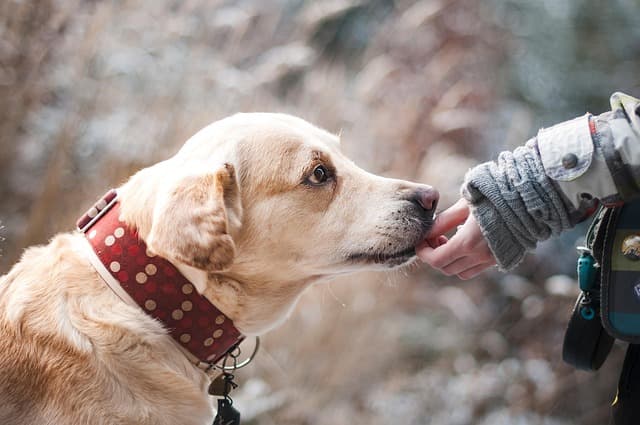
Constructive Training Approaches That Yield Results
Successful methodologies encompass:
- Desensitization: Slowly approaching the dog during meals while simultaneously introducing higher-value edible rewards.
- Value Exchange Games: Teaching the dog that the presence of people signals the imminent arrival of positive reinforcement.
- Hand-feeding (short-term application): Fosters dependence on you for provision, building trust.
- Routines: Established mealtimes decrease underlying uncertainty.
Engaging a certified trainer specializing in positive reinforcement can often yield significant positive transformation.
Estimated Expenditures for Labrador Ownership
Initial Investment
- Adoption charge: $150–$500
- Cost for a puppy from a breeder: $800–$2,000+
- Initial veterinary assessment and necessary inoculations: $200–$400
- Necessary equipment (crate, dishes, lead, resting mat): $150–$300
Recurring Monthly Outlay
- Premium canine nutrition: $50–$90
- Enrollment in training courses or consultation with a behaviorist: $50–$150
- Routine preventative medical care: $30–$60
- Enrichment items and toys: $20–$40
Addressing resource guarding in Labradors at an early stage is frequently more economical than attempting to correct entrenched behavior later on.
Mandatory Provisions When Dealing With Guarding Tendencies in Labradors
Useful Accoutrements
- Food bowls designed to prevent slippage
- Enrichment tools like treat puzzles or slow dispensers
- Safety barriers, such as adjustable child gates, for spatial separation during feeding
- Long-handled utensils for delivering rewards during training sessions
Items to Keep Out of the Environment
- Allowing highly prized provisions to remain accessible without oversight
- Placing food stations in highly trafficked areas of the home
- The practice of continuous, unstructured “free-feeding.”
Recommendations for Home Setup
Allocating Space and Establishing the Feeding Layout
- Designate a quiet, low-distraction location for meals.
- Arrange for separate feeding arrangements if multiple dogs reside together.
- Remove feeding vessels immediately once the allotted time concludes (once safety allows).
Preparing Family Members and Setting Household Directives
All members of the household must adhere to the following understanding:
- Never interrupt or approach a dog while it is consuming its resources.
- No unauthorized grabbing of food or bowls from the dog.
- Supervision is mandatory when children dispense food to dogs.
Uniform adherence is paramount in managing possession guarding in Labradors.
FAQ – Possession Guarding Labrador & Labrador Feeding Disputes
Is aggression over food frequent among Labradors?
It occurs more often than many first-time owners anticipate, largely due to the breed’s intense focus on food—but it is highly amenable to management through dedicated training.
Can a Labrador simply outgrow possession guarding?
With appropriate and consistent coaching, a significant improvement, or even full resolution, of feeding aggression can be achieved by many Labradors.
Should I relinquish a Labrador that guards its assets?
In the vast majority of scenarios, the answer is no. Through diligent management and consistent training, Labradors exhibiting resource guarding can flourish happily within supportive households.
Do puppies exhibit aggression around meals?
Yes, nascent warning signs may surface in very young puppies—but early intervention makes resolution substantially less complicated.
At what point must I engage a qualified trainer?
If growling escalates to biting actions, or if young children are present in the household, professional assistance should be sought without delay.
Conclusion– Living Assuredly With a Labrador
Possession guarding in Labradors and Labrador feeding aggression present hurdles—but they are not insurmountable barriers. Through perseverance, acquiring necessary knowledge, and employing positive training methods, the majority of Labradors learn that provisions are secure, predictable, and readily available.

Crucial Information for Potential Owners
- Select breeders with integrity or rescue organizations offering full transparency
- Address any food-related concerns proactively during early development
- Utilize positive reinforcement techniques exclusively, avoiding punitive measures
- Establish a calm, highly structured pattern for mealtimes
- Prioritize the safety parameters, especially when children reside in the home
A Labrador that feels entirely secure regarding its resources becomes a significantly more content, relaxed companion—and a true delight to share a life with for many years.