Belgian Malinois at a Glance
The Belgian Malinois is a medium-to-large herding breed built for work, not for lounging on a couch all afternoon. Short-coated, square-bodied, and remarkably athletic, the Malinois was bred to move livestock across long distances and stay alert to threats the whole time. That heritage still shapes the dog you bring home today. It’s intelligent, confident, quick to learn, and deeply attached to its handler — but it also needs a job, structure, and an owner who understands that “high energy” isn’t a marketing phrase. It’s a daily reality.
People sometimes describe the Malinois as a leaner, more intense German Shepherd, and there’s some truth to that comparison. But treating the Malinois as simply “GSD Lite” undersells how much drive and sensitivity this breed can carry. A Malinois that isn’t mentally and physically satisfied doesn’t just get bored — it often finds its own outlet, and that outlet is rarely convenient for the owner.
Key Belgian Malinois Facts
| Trait | Typical Range or Rating | What Owners Should Know |
| Height | Males 24–26 in, females 22–24 in | Athletic, squarely built frame — not meant to look bulky |
| Weight | Roughly 40–80 lbs depending on sex and line | Working lines may run leaner and more compact |
| Energy level | Very high | Daily walks alone rarely meet behavioral needs |
| Coat | Short, weather-resistant double coat | Sheds year-round with heavier seasonal blowouts |
| Lifespan | Approximately 12–14 years | Depends heavily on genetics and preventive care |
| Trainability | Very high | Learns fast — including habits owners didn’t mean to teach |
Why the Belgian Malinois Has Become So Popular
Military and police work has done more to popularize this breed than any advertising campaign could. Malinois are the preferred breed for many detection, patrol, and protection units worldwide, and that visibility has spilled into search-and-rescue programs, competitive dog sports, and a steady stream of social media clips showing the breed’s speed and precision. The American Kennel Club ranked the Belgian Malinois No. 32 among registered breeds for 2025, up one spot from No. 33 the year before.
That popularity is worth putting in context. Registration numbers reflect how many people are registering puppies, not how well the breed fits into an average household. A breed can be rising in the rankings and still be a poor match for most first-time dog owners — and the Malinois is a good example of exactly that tension.
History and Original Purpose of the Belgian Malinois
From Belgian Herding Dog to International Working Breed
The Malinois takes its name from the city of Malines (Mechelen) in Belgium, where it developed alongside three other Belgian shepherd varieties during the late 1800s. Farmers needed a dog that could herd sheep and cattle over open ground for hours, guard property overnight, and respond instantly to a handler’s direction. Those requirements produced a dog with serious stamina, sharp environmental awareness, and an unusually tight working bond with its handler.
As European agriculture modernized and herding work declined, the breed’s traits translated naturally into new roles. Malinois began appearing in police and military service through the 20th century, and by the 1959 AKC recognition of the breed in the United States, it was already establishing a reputation in detection, patrol, and protection work. Today, it competes at the top level in obedience, agility, tracking, French Ring, Mondioring, and IGP (formerly Schutzhund), alongside its continued use in law enforcement and military programs.
Is the Malinois a Separate Breed or a Belgian Shepherd Variety?
This is a point of genuine confusion for new owners, and the answer depends on which kennel club you ask. The AKC and several other national registries treat the Malinois, Tervuren, Groenendael, and Laekenois as four separate breeds, distinguished mainly by coat type and color. The Fédération Cynologique Internationale, by contrast, classifies all four as varieties of a single breed: the Belgian Shepherd Dog. Neither system is “wrong” — they’re just organized differently, and it’s useful to know that before you go looking at pedigrees or breed standards from different countries.
How Working Heritage Affects Pet Ownership
A dog bred to notice movement across a field, anticipate a shepherd’s next command, and sustain hours of physical effort doesn’t switch those instincts off in a suburban house. The same traits that make a Malinois exceptional at detection work — persistence, quick reactions, heightened awareness of its surroundings — can show up at home as chasing behavior, restlessness, or a dog that seems to be scanning every window and doorway. None of that is a flaw. It’s the breed doing exactly what it was built to do, just without an obvious job to point it at.
Belgian Malinois Appearance, Size, and Physical Characteristics
Height, Weight, and Body Structure
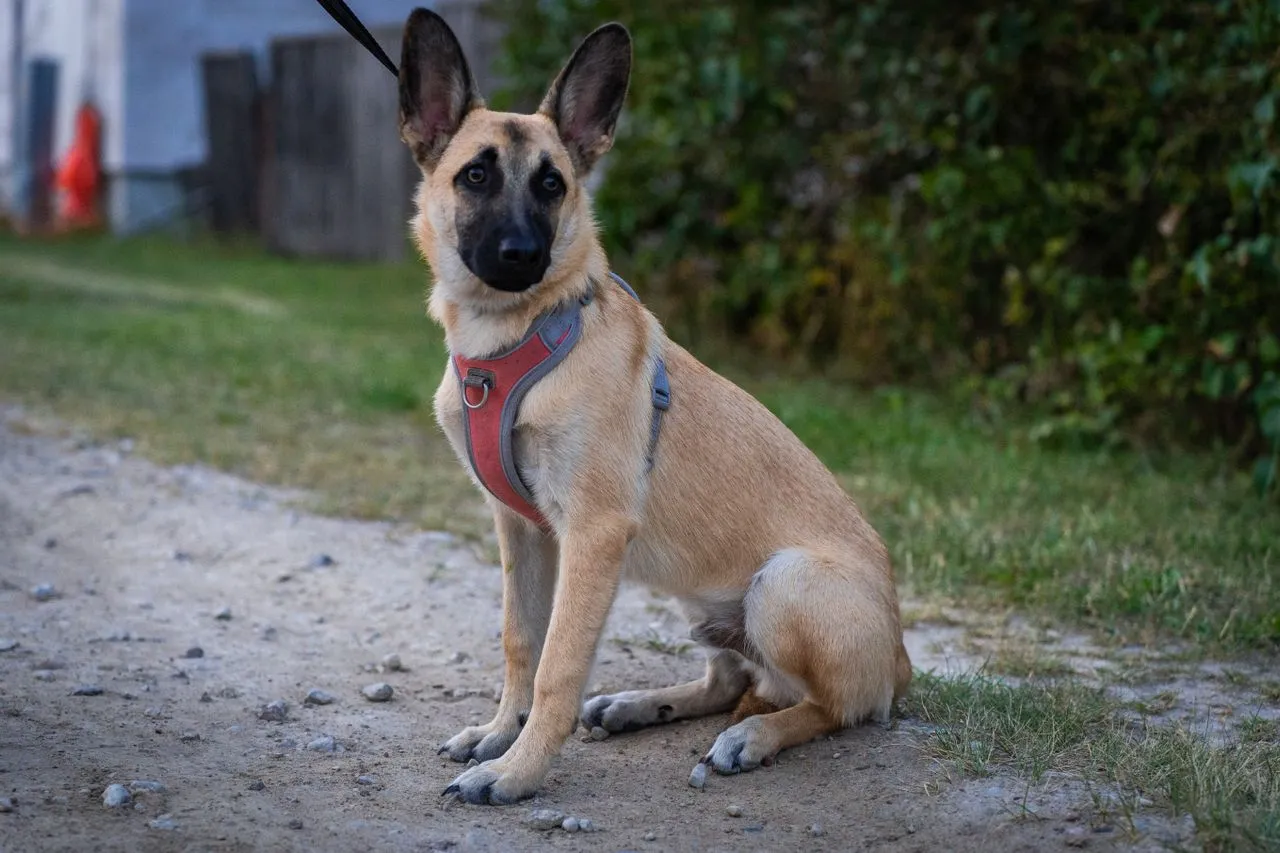
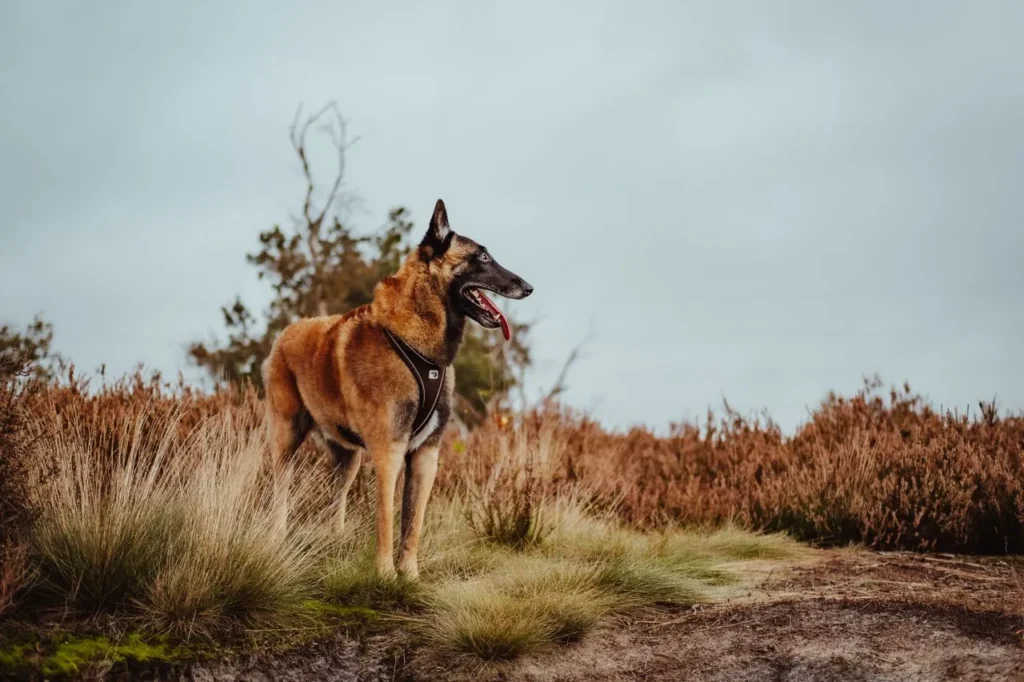
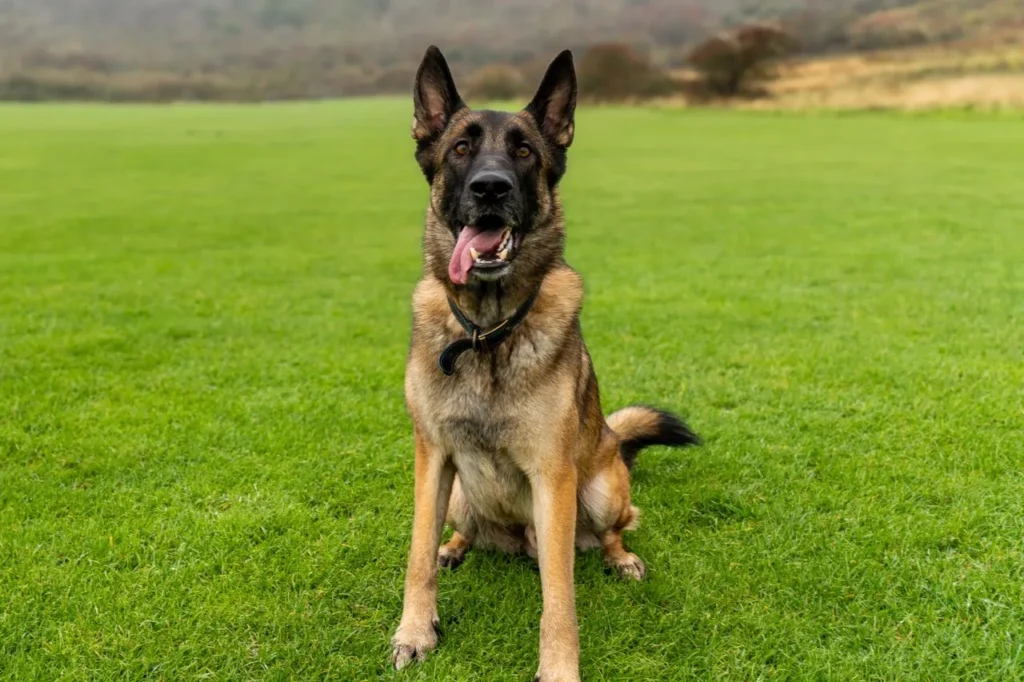
A correctly built Malinois is square in outline — meaning its body length roughly equals its height at the shoulder — with a lean, muscular frame designed for endurance rather than raw bulk. Males typically stand 24 to 26 inches at the shoulder, with females slightly smaller at 22 to 24 inches. Weight varies more by individual conditioning and line than by any fixed standard, but a healthy adult should show visible waist definition and a slight abdominal tuck. A heavier-boned or bulkier Malinois isn’t a “better” or more impressive specimen — it’s often working against the athleticism the breed was designed for.
Coat Colors, Mask, and Double Coat
The breed’s short double coat is weatherproof and low-maintenance in terms of grooming labor, even though it sheds steadily. Acceptable colors range from a rich fawn to a deep mahogany, typically overlaid with black tips on the coat and a black mask across the muzzle. White markings are usually limited to small patches on the chest or toes. Color has no bearing on temperament or working ability, and buyers should be skeptical of any breeder who prices puppies differently based on shade or markings.
Belgian Malinois vs German Shepherd Appearance
Side by side, the two breeds are easy to tell apart once you know what to look for. The Malinois is generally lighter-boned, more square in outline, and finished in a short coat, while the German Shepherd tends toward a longer body, a more substantial frame, and a broader range of coat lengths and colors, including the familiar long-coated variety. Neither difference tells you much about temperament on its own — that comes down to the individual dog and its breeding — but it does explain why the two are so often confused in photos and so easily separated in person.
Belgian Malinois Temperament and Personality
Intelligence, Drive, and Handler Attachment
Malinois learn quickly, sometimes unnervingly so. They pick up on routines, notice subtle environmental changes, and often anticipate what’s coming next in a training session or daily schedule. That intelligence pairs with a strong drive to work closely with one or two people rather than the household at large. Owners frequently describe their Malinois as “velcro” — a dog that wants to be in the room, watching, and ready to engage.
Protective Instincts Without Uncontrolled Aggression
A well-bred Malinois is watchful and can be reserved with strangers, but that’s different from fearfulness or unprovoked aggression. Neither trait is considered the correct temperament for the breed. The distinction matters in practice: a dog that assesses a stranger calmly and remains responsive to its handler is behaving normally, while one that reacts with panic, indiscriminate barking, or uncontrolled biting is showing a temperament problem that needs professional attention, not just “more training.”
Prey Drive, Chasing, and Movement Sensitivity
Fast-moving objects — bicycles, joggers, cars, squirrels, even running children — can trigger a strong chase response in this breed. This isn’t disobedience; it’s a hardwired response tied directly to the herding work the Malinois was developed for. Responsible management means secure fencing, reliable leash habits, and early training that redirects this instinct into acceptable outlets like flirt-pole play or structured retrieving games, rather than assuming the dog will simply grow out of it.
Differences Between Show, Sport, Working, and Companion Lines
Not every Malinois is bred for the same purpose, and that matters more in this breed than in many others. Lines developed for police or military work often carry higher arousal, stronger bite-related drives, and less tolerance for a relaxed household pace. Sport-bred lines may be intense but more biddable in a structured training environment. Companion-focused breeding programs try to soften some of that intensity while preserving intelligence and health. None of these categories guarantees a specific outcome in an individual puppy, but asking a breeder directly about the goals behind a litter is one of the most useful questions a buyer can ask.
Is a Belgian Malinois a Good Family Dog?
The honest answer is: sometimes, for the right family, with the right preparation. The Malinois isn’t a breed to bring home because a video looked impressive. It can do well in a household that understands its needs, but it isn’t a universal recommendation for family life the way some more moderate breeds are.
Belgian Malinois and Children
Structured introductions, clear household rules, and active supervision matter more with this breed than with a lower-drive dog. The American Belgian Malinois Club notes that Malinois can live successfully with children when properly raised or introduced, but the club also cautions that individual dogs may become territorial, possessive, jealous, or highly reactive to fast movement — all things that show up around kids running and playing. Resource management (food, toys, attention) and teaching children how to interact calmly with the dog go a long way toward preventing problems before they start.
Living With Cats and Other Dogs
Whether a Malinois gets along with other pets depends on genetics, early socialization, individual prey drive, and ongoing management — not on the breed label alone. Gradual, controlled introductions work better than assuming things will sort themselves out. Separate feeding areas, secure resting spaces for every animal in the house, and supervised access until the relationship is well established are reasonable precautions, especially with smaller pets that can trigger chase instincts.
Apartment Living and Limited Outdoor Space
A big backyard isn’t the deciding factor; people often assume it is. A committed owner can meet a Malinois’s needs through structured daily activity even without acreage. That said, apartment life brings its own complications: shared hallways, elevators, and thin walls make excessive barking or heightened arousal harder to manage, and a dog with no space to decompress after a stressful encounter may carry that tension longer than one with a private yard to retreat to.
Why the Breed Is Usually Difficult for First-Time Owners
The challenge isn’t a lack of intelligence — it’s the opposite. A Malinois learns behaviors fast, whether or not the owner intended to teach them. Timing, consistency, and follow-through matter enormously with a dog this quick to pick up patterns. The parent breed club specifically cautions that dogs bred for protection sport or intensive working roles may carry more energy and sharper temperaments than an average companion home is prepared to manage — a warning worth taking seriously before signing a deposit check.
How Much Exercise Does a Belgian Malinois Need?
There’s no single mileage number that fits every Malinois. Age, health, genetics, and the intensity of the individual dog’s working drive all shape what “enough exercise” actually looks like.
Physical Exercise vs Meaningful Work
Simply tiring a dog out isn’t the same as meeting its behavioral needs. A Malinois that runs five miles a day but never gets to problem-solve or use its nose can still be a handful indoors. Useful activities include structured walking, hiking, controlled retrieving, swimming, tracking, obedience work, agility foundations, scent work, and herding trials where available. Variety matters as much as volume.
Mental Stimulation and Problem-Solving
Training sessions, scent-based searches, puzzle feeders, shaping games, and supervised environmental exploration engage the brain in ways that a straight walk around the block never will. Many owners find that fifteen minutes of focused training work tires their Malinois more effectively than an hour of casual walking.
Teaching a High-Energy Dog to Settle
Ironically, one of the most important skills for this breed is learning how to do nothing. Place training, calm-reinforcement exercises, predictable daily routines, and comfortable crate conditioning all help a Malinois learn to switch off. Continually escalating exercise to “wear the dog out” tends to produce a better-conditioned athlete who still has no idea how to relax — which isn’t the goal.
Exercise Guidelines for Puppies and Adolescent Dogs
Young Malinois need age-appropriate activity: free play, coordination games, and short training sessions rather than repetitive high-impact exercise like forced long-distance running or jumping drills. Growth plates in large and giant breed puppies don’t fully close until somewhere around 12 to 18 months, and repetitive strain during that window is a known risk factor for orthopedic problems later on.
Belgian Malinois Training and Socialization
Start With Engagement and Communication
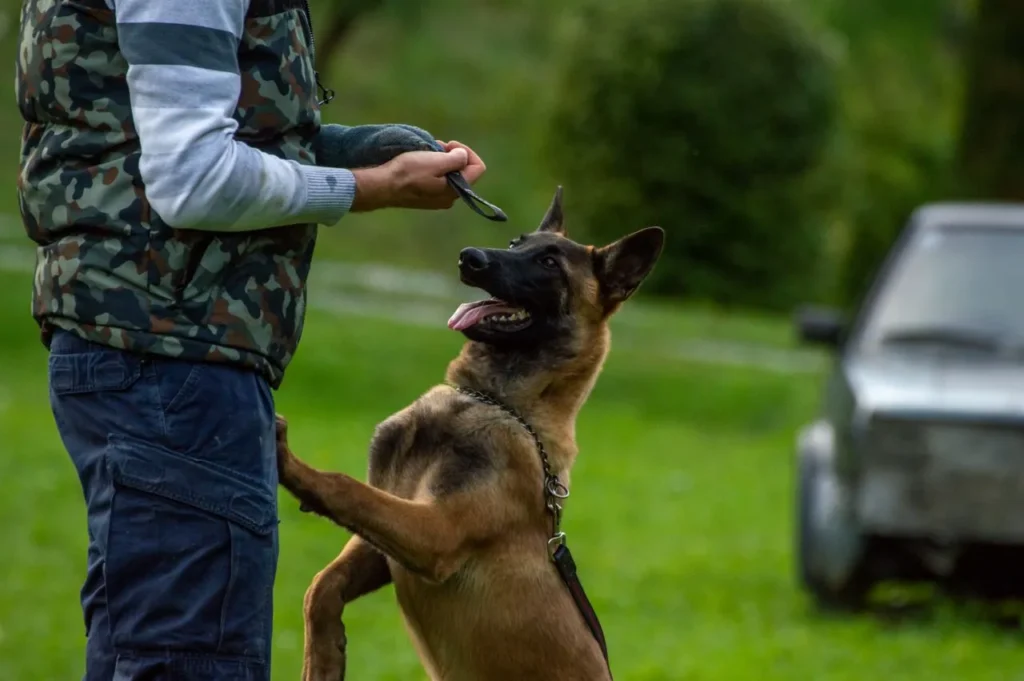
Before advanced obedience, focus on building attention: name recognition, marker training, food and toy motivation, and voluntary check-ins where the dog chooses to look at you without being asked. This foundation makes every later training goal easier to achieve.
Essential Skills Every Malinois Should Learn
- Reliable recall around controlled distractions
- Loose-leash walking and consistent handler focus
- “Leave it,” “drop it,” and safe toy-release cues
- Place training and calm settling on command
- Comfortable crate and vehicle behavior
- Cooperative handling for veterinary and grooming care
- An emergency stop or directional cue
- Neutral behavior around unfamiliar people, dogs, and movement
Socialization Means Neutrality, Not Constant Interaction
Good socialization builds confidence and calm responses to new situations — it doesn’t mean the puppy has to greet every person or dog it meets. Controlled, positive exposure to different surfaces, sounds, vehicles, buildings, and handling situations teaches the dog that novelty isn’t automatically threatening, without creating an expectation that every stranger is a friend to be approached.
Managing Mouthing, Biting, and Overarousal
Appropriate chew outlets, consistent toy-play rules, adequate sleep, and calm redirection all help manage the mouthiness common in Malinois puppies and adolescents. If biting or arousal escalates rather than fading with maturity, that’s a signal to bring in a qualified trainer rather than waiting it out. Formal protection or bite-work training belongs in the hands of experienced professionals and has no place in casual pet ownership.
When to Hire a Professional Trainer
Escalating reactivity, unsafe chasing, resource guarding, repeated biting, severe fear responses, an inability to settle, or growing conflict between the dog and household members are all reasons to bring in professional help early. Waiting rarely makes these issues easier to resolve.
Feeding and Maintaining a Healthy Body Condition
Choosing an Appropriate Dog Food
Look for a complete and balanced diet formulated for the dog’s actual life stage — growth, adult maintenance, or performance — backed by feeding trials and manufacturer quality control, rather than choosing a food based on breed-specific marketing claims.
How Much Should a Belgian Malinois Eat?
Feeding charts on a bag are a starting point, not a prescription. Rib coverage, waist definition, abdominal tuck, energy level, and stool quality all tell you more about whether the amount is right than any printed chart does.
Nutrition for Working and Highly Active Dogs
Dogs performing sustained physical work need more calories, careful hydration management, and attention to meal timing around exertion. Any significant diet change should happen gradually, and owners of dogs in demanding training or working programs benefit from a conversation with a veterinarian or veterinary nutritionist rather than guessing.
Preventing Obesity Without Underfeeding
A lean body condition supports joint health and athletic performance, but visible leanness in a working-bred dog shouldn’t be mistaken for poor nutrition. Muscle tone and energy level are better indicators of adequate feeding than a quick glance at the ribs.
Belgian Malinois Health Problems and Preventive Care
Hip and Elbow Dysplasia
Genetics, growth rate, body weight, and activity level all play a role in orthopedic health. Watch for stiffness after rest, reluctance to jump, changes in gait, reduced performance during exercise, or general discomfort following activity.
Eye Conditions
Inherited eye disease is a real concern in the breed, which is why examinations by a qualified veterinary ophthalmologist matter, especially for breeding stock. A normal-looking eye on casual inspection doesn’t rule out an inherited condition that only shows up on specialized testing.
Epilepsy and Neurological Concerns
Seizure disorders have been reported in the breed, and any seizure activity warrants prompt veterinary evaluation. Be cautious of any breeder or seller who presents a genetic test as a guarantee against complex neurological disease — the biology is rarely that simple.
Other Conditions Owners Should Monitor
Allergies, dental disease, activity-related injuries, heat stress, general bloat awareness, and repetitive-strain issues tied to high activity levels are all worth keeping on an owner’s radar, even though none of them are unique to this breed.
Recommended Health Tests for Breeding Dogs
The American Belgian Malinois Club’s core health-testing recommendations include an OFA (or equivalent) hip evaluation, an elbow evaluation, and a specialist eye examination. The OFA’s CHIC database lets prospective buyers verify that a breeder’s health claims match actual, publicly recorded results rather than taking a verbal assurance at face value.
Lifespan and Healthy Aging
Most Belgian Malinois live somewhere in the range of 12 to 14 years, though individual longevity depends heavily on genetics, injury history, preventive veterinary care, body condition, and lifestyle. As dogs age, senior wellness screening, pain assessment, adjusted exercise plans, and continued mental enrichment all help maintain quality of life.
Grooming and Routine Care
Brushing and Seasonal Shedding
Weekly brushing is usually enough to manage everyday shedding, with more frequent sessions during seasonal coat blowouts when the undercoat releases in larger amounts. Shaving a healthy double coat is generally unnecessary and can actually interfere with the coat’s natural insulating and weather-resistant properties.
Bathing, Nails, Ears, and Dental Care
Bathe as needed rather than on a fixed schedule, trim nails frequently enough to support healthy movement, check ears regularly for buildup or irritation, and introduce tooth brushing early using gradual, cooperative-care methods so the dog tolerates handling without stress.
Paw and Muscle Checks for Active Dogs
After demanding activity, a quick check of paw pads, nails, joints, and general movement can catch minor injuries before they turn into bigger problems. This is a five-minute habit that pays off over the life of a highly active dog.
Choosing a Belgian Malinois Puppy or Rescue Dog
How to Identify a Responsible Breeder
A responsible breeder talks openly about both the rewards and the real challenges of the breed, provides verifiable health-test documentation rather than verbal claims, evaluates temperament in their breeding stock, asks detailed questions about your lifestyle and experience, and works to match individual puppies to homes rather than handing out dogs on a first-come basis. Reputable breeders generally avoid breeding dogs younger than two years old, since many health clearances aren’t considered final until that age.
Questions to Ask Before Paying a Deposit
Ask about the temperament of both parents, request documentation of hip, elbow, and eye clearances, ask what the breeder’s goals are for the litter (companion, sport, working), find out how puppies are raised and socialized in the first weeks, and clarify the contract terms, including any return policy and the breeder’s long-term availability for support.
Red Flags in Belgian Malinois Advertising
Be cautious of sellers marketing puppies based on aggression, unusually large size, “rare” colors, extreme drive, or claims of instant protection or police-level ability straight out of the litter. Equally concerning are breeders who can’t produce searchable health-test results or who are willing to sell a puppy sight-unseen based on photos alone.
Adopting an Adult Belgian Malinois
Adopting an adult dog has a real advantage: you can evaluate actual temperament and energy level rather than guessing based on a puppy’s early behavior. Foster-based rescue organizations that provide honest behavioral histories, careful household matching, and post-adoption support make this a strong option for the right owner.
Belgian Malinois vs Similar Breeds
Belgian Malinois vs German Shepherd
Both are intelligent working breeds, but they differ in build, coat, and general working style. The Malinois tends to be lighter, more compact, and sometimes more environmentally sensitive; the German Shepherd is usually larger-framed with more coat variety and, in many lines, a somewhat steadier temperament. Both breeds show significant variation depending on the specific line.
Belgian Malinois vs Dutch Shepherd
These two share considerable working-dog overlap in drive and trainability. The main differences come down to breed history, coat variety (the Dutch Shepherd includes rough, short, and long coats, often in brindle patterns), and general availability, since Dutch Shepherds remain less common in the U.S.
Belgian Malinois vs Belgian Tervuren
The Tervuren is essentially the long-coated cousin of the Malinois, sharing much of the same origin and working temperament under FCI classification. The obvious difference is coat length and volume, but drive and trainability can be very similar between the two.
Which Working Breed Is Best for Your Lifestyle?
Rather than choosing based on reputation or how a breed looks in photos, evaluate your actual schedule, access to qualified training, the makeup of your household, and your realistic long-term goals for the dog. The “best” working breed is the one that matches your daily life, not the one with the most impressive resume.
The Real Cost of Owning a Belgian Malinois
First-Year Expenses
Beyond the purchase price, expect costs for initial veterinary visits, vaccinations, preventive medications, puppy training classes, secure containment, bedding, feeding supplies, grooming tools, and general puppy-proofing.
Ongoing Training and Enrichment Costs
Many Malinois owners invest continually in instruction, facility rentals, sport club memberships, travel to events, and enrichment toys and equipment. This isn’t a one-time expense category — it tends to continue for the dog’s working life.
Planning for Veterinary Emergencies and Injuries
Highly athletic dogs are prone to activity-related injuries, from soft-tissue strains to more serious orthopedic issues. Setting up pet insurance or a dedicated emergency fund before a crisis hits is far easier than scrambling for funds during one.
Is a Belgian Malinois Right for You?
A Malinois May Fit Your Home If…
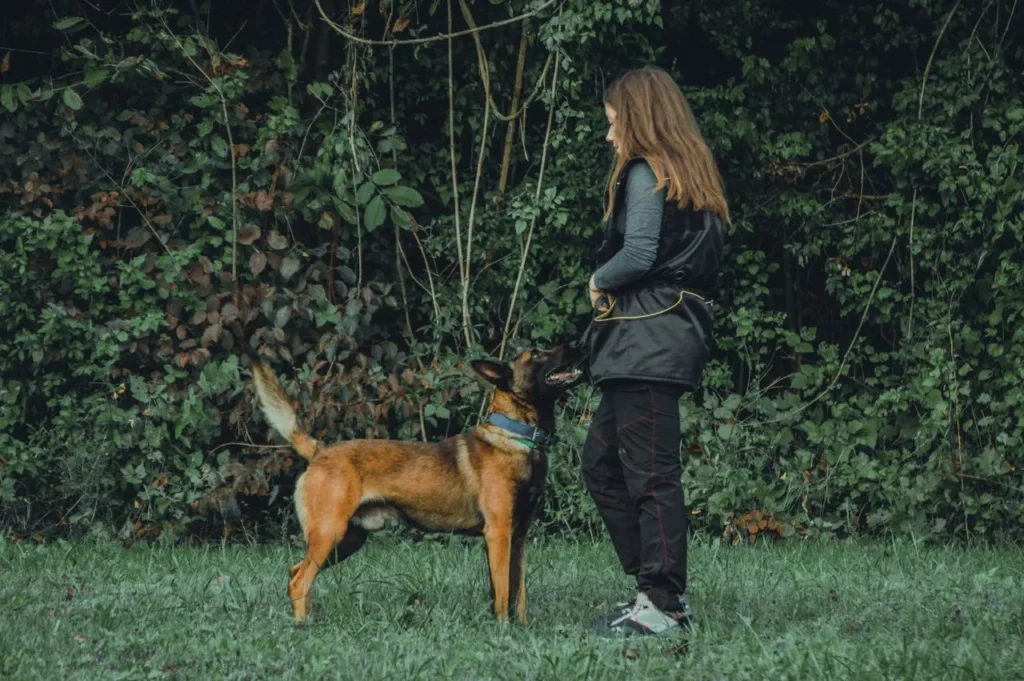
You genuinely enjoy daily training, have prior experience with driven or working breeds, can provide consistent structure and meaningful daily activity, value a close working relationship with your dog, and have access to skilled trainers or behaviorists if things get complicated.
Consider Another Breed If…
You want a low-maintenance companion, work long hours without support for the dog’s care, dislike ongoing training work, can’t guarantee secure containment, or are hoping that exercise alone will prevent behavior problems from developing.
Questions to Answer Before Bringing One Home
Who will be responsible for training day-to-day? How will the dog spend its time when no one is actively engaging with it? What’s the plan during travel or a household member’s illness? Does everyone in the home actually agree to take this on? And can you commit to managing this dog through an intense adolescence and into old age?
Frequently Asked Questions About Belgian Malinois
Are Belgian Malinois aggressive? Uncontrolled aggression isn’t a correct breed temperament. Genetics, socialization, training, health, and stress management all shape how an individual dog behaves.
Are Belgian Malinois good for first-time owners? Generally, they’re better suited to experienced, highly committed handlers, given their intensity, exercise needs, and training demands.
How much exercise does a Belgian Malinois need? Most require substantial daily physical activity along with structured training and mental work, individualized by the dog’s age, health, and drive.
Can Belgian Malinois live with children? Some can, provided temperament is suitable and interactions are carefully supervised. Chasing, possessiveness, and overarousal around kids need to be taken seriously and managed proactively.
Do Belgian Malinois shed? Yes. They have a double coat and shed year-round, with heavier seasonal coat changes in spring and fall.
How long do Belgian Malinois live? Approximately 12 to 14 years, though health testing, body condition, preventive care, and injury prevention matter more to an individual dog’s longevity than any single published number.
What is the difference between a Belgian Malinois and a German Shepherd? The Malinois is generally lighter, squarer, and shorter-coated; the German Shepherd is typically larger-framed with more coat variety. Temperament and working style both show considerable variation within each breed.
Can a Belgian Malinois be left alone? Every dog needs to learn age-appropriate independence, but long stretches of unstimulating isolation are especially hard on this handler-focused, working-bred dog.
Final Takeaway: Choose the Breed for Its Needs, Not Its Image
The Belgian Malinois is an intelligent, athletic, and genuinely capable working dog — qualities that come bundled with serious training, management, and enrichment obligations. It rewards owners who can meet those obligations with a level of engagement and partnership that few breeds can match. It punishes owners who bring it home for the wrong reasons with behavior problems that are entirely predictable in hindsight.
Before committing, meet mature dogs from the lines you’re considering, talk candidly with experienced breed professionals, verify health testing through the OFA database rather than taking a breeder’s word for it, and take an honest look at your actual daily schedule. The Malinois doesn’t need an owner who’s impressed by it. It needs one who’s prepared for it.