

Few dogs command a room the way a Cane Corso does. The broad head, the watchful eyes, the sheer physical presence of a 100-pound athlete standing at the door — it’s a lot to take in, even before the dog does anything at all. But behind that imposing frame is a breed known for deep loyalty, sharp intelligence, and an almost businesslike seriousness about protecting the people it loves. That combination has made the Cane Corso one of the fastest-rising breeds in the country, and it’s also exactly why this is not a dog to bring home on a whim. This guide walks through what the breed actually needs — in temperament, training, health, and daily life — so you can decide honestly whether a Cane Corso fits your household, and if it does, how to raise one well.
Cane Corso at a Glance
The name is pronounced “KAH-neh KOR-so,” and it comes from Italy, where the breed developed as an all-purpose farm and property guardian. The American Kennel Club places the Cane Corso in the Working Group, a category reserved for dogs bred to perform physically demanding jobs like guarding, pulling, and search work.
Adult Cane Corsos are large by any standard. Males typically stand between 25 and 27.5 inches at the shoulder, with females somewhat smaller at roughly 23.5 to 26 inches. Weight commonly exceeds 100 pounds, particularly in males with heavier bone structure. Life expectancy generally falls between 9 and 12 years — respectable for a dog this size, though not guaranteed for any individual animal. The coat is short and dense, shedding moderately year-round with a heavier seasonal blowout, which keeps grooming simple compared to longer-haired breeds. Exercise needs run moderate to high, and the breed is widely regarded as unsuitable for first-time dog owners due to its strength, independence, and guarding instincts.
Key Cane Corso Facts and Statistics
A few numbers give a useful snapshot before getting into details. The breed’s popularity has climbed sharply in the United States — it ranked around 50th among AKC-registered breeds roughly a decade ago and has since jumped to No. 11 in the AKC’s 2025 rankings, up from No. 14 the year before. That’s a rapid ascent for any breed, and it has real consequences discussed later in this article.
Height and weight vary by sex, lifespan sits in the 9-to-12-year range, shedding is moderate with seasonal spikes, and daily exercise requirements are substantial but not extreme. As with any breed standard, these are population averages — individual dogs will fall above or below them depending on genetics, nutrition, and conditioning.
| Characteristic | Typical Male | Typical Female | Owner Consideration |
| Height | 25–27.5 inches | 23.5–26 inches | Requires secure handling and adequate space |
| Weight | Often 100 pounds or more | Usually somewhat lighter | Food, veterinary, and equipment costs are higher |
| Temperament | Confident and protective | Confident and protective | Early socialization is essential |
| Lifespan | Approximately 9–12 years | Approximately 9–12 years | Preventive care supports healthy aging |
| Activity level | Moderate to high | Moderate to high | Daily physical and mental work is needed |
The AKC breed standard sets these height ranges separately for males and females, and veterinary sources note that many adults — especially males — weigh in above the 100-pound mark once fully mature.
History and Original Purpose of the Cane Corso
The Cane Corso wasn’t bred for the show ring or the family living room. It was bred to work, and its physical and temperamental traits still reflect that history closely.
From Ancient Molossian Dogs to the Italian Countryside
The Cane Corso descends from the broader family of European molosser-type dogs — heavy-boned, powerfully built breeds used across the continent for guarding and combat work going back centuries. Popular accounts often link the breed directly to Roman war dogs, but it’s more accurate to treat that connection as a general lineage rather than a documented, unbroken history. What is well established is the breed’s more recent past: in the farming regions of southern Italy, particularly Puglia, the Cane Corso became a fixture of rural life. It guarded homesteads and livestock, helped manage semi-wild pigs and cattle, and served as an all-purpose working partner on properties where hired help was scarce and the work was physical.
That functional role shaped everything about the breed. A farm guardian needed to be strong enough to intimidate or physically deter threats, athletic enough to move quickly across rough terrain, alert enough to notice trouble before it arrived, and attached enough to its family to actually care about protecting them. Those same traits — strength, alertness, athleticism, and intense loyalty — remain the defining characteristics of the breed today, whether the dog in question lives on a farm or in a suburban house.
Decline, Recovery, and Recognition in the United States
As Italian agriculture modernized through the mid-20th century, the traditional need for an all-purpose farm guardian declined, and the breed’s numbers dropped along with it. A small group of Italian enthusiasts is credited with pulling the Cane Corso back from the brink of disappearance during the 1970s and 1980s, working to preserve breed type and temperament even as its original job became less common.
The breed reached the United States in meaningful numbers during the late 20th century, and American breed clubs worked through the following decades to establish standards and build a registered population. The AKC granted the Cane Corso full recognition in 2010, formally placing it in the Working Group. That recognition set the stage for the growth that followed — growth that has accelerated dramatically in just the last several years, a trend worth keeping in mind as you read the sections ahead on temperament and responsible ownership.
Cane Corso Appearance, Size, and Physical Traits
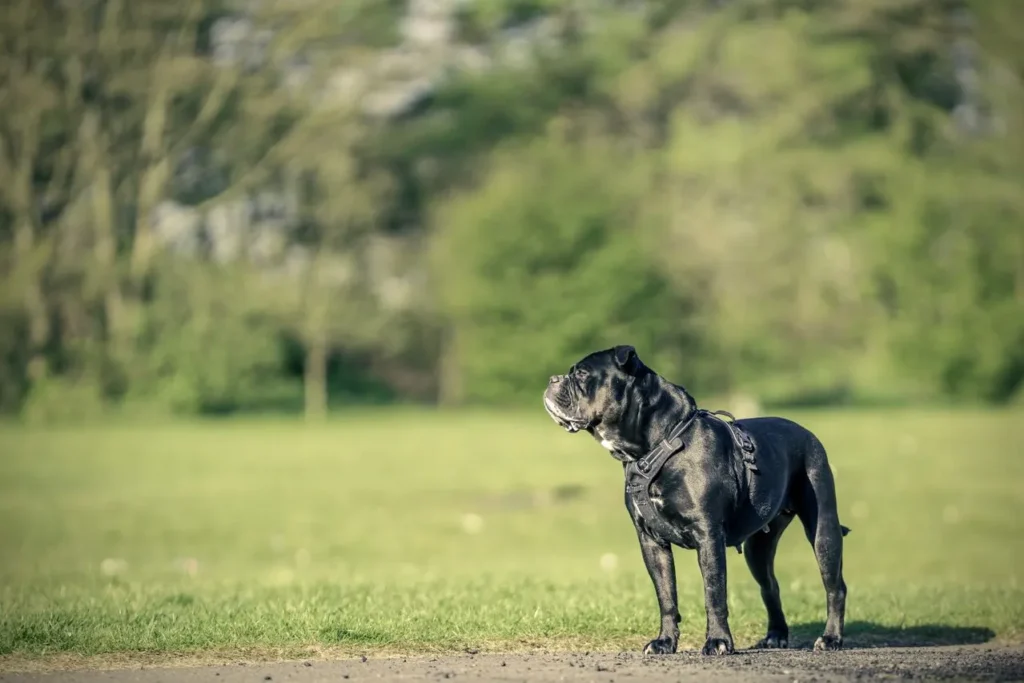
A well-built Cane Corso should look like what it is: a serious athlete, not a bodybuilder. The breed standard rewards balance and functional power over sheer bulk, and that distinction matters more than casual observers might assume.
Height, Weight, and Growth Rate
Males and females differ noticeably in size, with males typically running several inches taller and considerably heavier. Weight within either sex varies based on genetics, skeletal frame, muscle conditioning, and diet, so two Cane Corsos of the same height can differ by 20 pounds or more without either being unhealthy. It’s worth resisting the instinct — common on social media — to equate larger size with better breeding or superior health. A dog pushed toward extreme bulk through overfeeding or selective breeding for size alone often carries more joint stress, not less.
Large breeds also mature slowly. A Cane Corso may not reach full physical development until somewhere between 18 months and three years of age, with bone density and muscle mass continuing to fill in well after the dog reaches adult height. This extended growth window is exactly why puppy exercise and nutrition require special care, a point covered in more detail later.
Head, Body, and Athletic Build
The breed’s head is broad and substantial, with a strong, moderately long muzzle that gives the face its characteristic serious expression. The neck is thick and muscular, the chest deep, and the overall body structure is built for power without sacrificing mobility. Movement should look efficient and ground-covering, not labored. A Cane Corso that struggles to move freely or tires quickly on a normal walk is showing a structural or conditioning problem, not simply “big dog energy.”
Coat Colors, Shedding, and Natural Features
The coat is short, dense, and double-layered, which means it insulates reasonably well and sheds in two layers — a steady low-level shed most of the year plus a heavier seasonal shed as the undercoat turns over. Recognized colors include black, various shades of gray, fawn, red, and brindle patterns over those base colors.
Natural, uncropped ears and an undocked tail don’t limit a Cane Corso’s ability to be a loving, capable companion in any way, and increasing numbers of owners are choosing to leave both intact. Cosmetic ear cropping and tail docking remain a point of ongoing debate within the veterinary community; the American Veterinary Medical Association has taken the position that these procedures should not be performed purely for appearance when they offer no health benefit to the dog. Anyone considering either procedure should discuss the current medical consensus with their veterinarian rather than assuming it’s a routine or necessary step.
Cane Corso Temperament and Personality
Temperament is where most people’s understanding of this breed goes wrong in one direction or the other — either treating every Cane Corso as inherently dangerous or assuming any individual dog will be automatically gentle regardless of upbringing. Neither extreme holds up. What’s accurate is more nuanced: this is a breed with genuine guarding instincts, real intelligence, and a strong attachment to its people, all of which require active, informed management.
Loyalty and Attachment to Family
Cane Corsos tend to bond intensely with their households, often showing a clear preference for staying physically close to their people rather than roaming independently. That devotion is one of the breed’s most appealing traits, but it has a flip side. Without deliberate training toward independence and calm alone time, that closeness can tip into overdependence or anxiety when the dog is separated from its family. Healthy attachment looks like a dog who’s happy to see you and settles easily; overdependence looks like a dog who can’t function without constant proximity.
Natural Protective and Guarding Instincts
Watch a Cane Corso in an unfamiliar environment, and you’ll likely notice it scanning — tracking movement, assessing new people, positioning itself near an exit or a family member. This vigilance is instinctive, not trained, and it’s precisely what the breed was developed to do. The mistake some owners make is trying to amplify that suspicion, treating a naturally alert dog as though it needs encouragement to be more guarded. The opposite approach works far better: building neutrality around normal, everyday situations — visitors, delivery workers, other dogs on a walk — so the dog’s guarding instinct stays available for genuine threats rather than being triggered by routine life.
Intelligence, Independence, and Trainability
This is a smart breed, and smart dogs are rarely simple to raise. A Cane Corso learns new behaviors quickly, which is good news in training sessions, but that same intelligence means the dog is equally quick to identify inconsistency, boredom, or gaps in your follow-through. Left without clear structure, an intelligent, independent-minded dog will start making its own decisions about what’s appropriate — and those decisions won’t always match what the household wants. Consistency, predictable routines, and frequent reinforcement of good choices aren’t optional extras with this breed; they’re the foundation the whole relationship rests on.
Why Individual Temperament Varies
No two Cane Corsos are temperamentally identical, and breed generalizations only go so far. Genetics from the specific parents, the breeder’s selection priorities, the puppy’s prenatal environment, early socialization experiences, ongoing health, and the owner’s training all shape how an individual dog actually behaves. Veterinary behavior organizations increasingly emphasize evaluating dogs based on demonstrated behavior rather than breed assumptions, and that framing applies directly here: a Cane Corso’s temperament is the product of its whole life story, not a fixed trait stamped in at birth.
Is a Cane Corso a Good Family Dog?
The honest answer is conditional. A Cane Corso that comes from health- and temperament-tested parents, gets thorough early socialization, and lives with attentive, consistent owners can be an affectionate, stable family companion. But the breed’s size, physical strength, and guarding tendencies mean that “good family dog” here comes with a much higher bar for supervision and management than it would for a smaller, less guardy breed.
Cane Corsos and Children
A Cane Corso doesn’t need to be aggressive to hurt a small child — an enthusiastic 100-pound dog can knock over a toddler simply by being excited. Active adult supervision during any interaction between the dog and young children isn’t a suggestion; it’s a requirement. Children should also be taught to leave a resting or eating dog alone, and the dog should have a quiet space it can retreat to when it needs a break from household chaos. These aren’t breed-specific quirks so much as universal good practice for large dogs, applied with extra seriousness here.
Living With Other Dogs and Household Pets
Compatibility with other animals varies from dog to dog and can’t be promised in advance. Gradual, controlled introductions matter, as does ongoing supervision, especially around food, toys, and other resources a dog might want to guard. Prey drive is also worth considering around small pets — cats, small dogs, and other animals may register as something to chase rather than to live alongside. Some Cane Corsos become more selective about unfamiliar dogs as they reach social maturity, even if they were sociable as younger puppies, so early good behavior isn’t a lifetime guarantee without continued management.
The Importance of Household Rules
Consistency across the whole family cuts down on confusion for the dog. If one person allows jumping on the couch and another doesn’t, or one person lets the dog rush the door at visitors while another tries to prevent it, the dog gets mixed signals about what’s actually expected. Establishing shared rules around doors, furniture, feeding, play, and personal space — and making sure every family member enforces them the same way — makes training dramatically more effective.
Cane Corso Training and Socialization
If there’s one section of this article worth reading twice, it’s this one. Behavioral preparation is arguably the single most important responsibility that comes with owning a Cane Corso, more consequential than diet, grooming, or even exercise. The goal is a dog that’s confident and cooperative, not one controlled through fear or force.
Begin Socialization During Puppyhood
Early, positive exposure shapes how a Cane Corso views the world for the rest of its life. That means pleasant, low-pressure introductions to different types of people, various walking surfaces, everyday noises, car rides, gentle handling, and visits to the veterinary clinic that don’t only happen when something’s wrong. The American Veterinary Society of Animal Behavior recommends that this kind of socialization start before puppies complete their full vaccination series, while still steering clear of high-traffic, unsanitary areas like public dog parks where disease risk is elevated. Waiting until vaccinations are complete to begin socialization means missing the developmental window when it matters most.
Teach Essential Everyday Skills
Beyond socialization, a Cane Corso needs functional obedience skills that make daily life manageable: responding to its name, a reliable recall, walking on a loose leash instead of pulling, settling calmly on command, waiting politely at doors instead of bolting through them, dropping objects on cue, tolerating handling for grooming and vet visits, staying calm when visitors arrive, and maintaining focus on its owner even around distractions.
Essential Training Priorities for a Cane Corso:
- Reliable recall and emergency recall
- Loose-leash walking without pulling
- Calm greetings without jumping
- Place or settle behavior
- Leave-it and drop-it cues
- Comfortable muzzle conditioning
- Cooperative grooming and veterinary handling
- Neutral behavior around unfamiliar people and dogs
Use Reward-Based Training Rather Than Force
Food, play, praise, access to a favorite activity, and other rewards the dog actually wants can all reinforce good decisions effectively. The American Veterinary Society of Animal Behavior specifically recommends reward-based training methods and states that aversive techniques — physical corrections, intimidation-based tools, and similar approaches — aren’t necessary and can damage both the dog’s welfare and its relationship with its owner. For a breed already inclined toward guarding and territorial behavior, harsh handling tends to backfire, increasing defensiveness rather than resolving it.
Address Warning Signs Before They Escalate
Certain behavioral patterns deserve prompt attention rather than a wait-and-see approach: persistent freezing in response to a person or situation, hard, fixed staring, resource guarding, lunging that’s difficult to interrupt, extreme fearfulness, or a dog that can’t seem to calm back down after something stressful happens. These signs call for a qualified reward-based trainer, a veterinary behaviorist, or a veterinarian — not a harsher hand at home, which tends to suppress the visible warning signs without resolving the underlying problem.
Continue Training Throughout Adulthood
Puppy class is a beginning, not a finish line. Adolescence and social maturity — often arriving between one and three years of age — can bring new confidence, increased territorial behavior, or growing selectivity around other dogs, even in a puppy who seemed easygoing early on. Ongoing training and consistent management through these developmental stages matter just as much as the early socialization work, if not more.
Exercise and Mental Enrichment
A Cane Corso needs real daily activity, but this isn’t a breed that thrives on being run into exhaustion, nor should exercise be treated as the only outlet the dog needs.
Daily Exercise for Adult Cane Corsos
Brisk walks, controlled hikes, obedience practice woven into outings, scent work, tracking exercises, and appropriate structured dog sports all serve the breed well. The right amount of activity depends on the individual dog’s age, health status, and fitness level, along with weather conditions — there’s no single mileage number that applies to every Cane Corso. Pay attention to how the dog recovers after activity as a practical guide to whether you’ve found the right balance.
Protecting a Growing Puppy’s Joints
Because large-breed puppies are still developing their skeletal structure well into their second year, repetitive high-impact activity — forced running alongside a bike, frequent jumping, excessive stair climbing, or exercise on slippery flooring — can put unnecessary strain on joints that aren’t fully formed yet. Free-form play, short walks appropriate to age, a lean body condition, and veterinary guidance on activity levels all help protect a puppy’s long-term joint health.
Productive Jobs and Enrichment Activities
Beyond physical exercise, a Cane Corso benefits from activities that engage its brain and satisfy its working instincts in a controlled way: scent searches hidden around the house or yard, food puzzles, structured tug games with clear rules, obedience sequences that require focus, supervised carrying tasks, and thoughtfully designed obstacle work. The aim is to channel the breed’s natural drive into productive outlets, rather than leaving that drive with nowhere appropriate to go — which is often when unwanted guarding behavior fills the gap.
Cane Corso Health Problems and Preventive Care
Understanding common health concerns helps owners recognize problems early and make informed decisions about preventive care — without assuming every Cane Corso will develop every condition listed here.
Hip and Elbow Dysplasia
Abnormal development of the hip or elbow joints can lead to pain, reduced mobility, and progressive arthritis over time. Maintaining a lean body condition, avoiding excessive strain during the puppy growth period, and getting prompt veterinary evaluation for any limping or stiffness all support long-term joint health.
Bloat and Gastric Dilatation-Volvulus
Deep-chested large breeds like the Cane Corso face an elevated risk for gastric dilatation-volvulus, a condition in which the stomach fills with gas and can twist on itself. This is a true emergency. Warning signs include sudden abdominal swelling, unproductive attempts to vomit, restlessness, weakness, or collapse — any of which warrants immediate veterinary care, not a wait-and-watch approach.
Eyelid and Eye Conditions
Entropion, where the eyelid rolls inward, and ectropion, where the lower lid droops outward, both occur in the breed. Either condition can cause irritation or injury to the eye if untreated. Redness, discharge, squinting, or visible discomfort around the eyes should prompt a veterinary visit rather than a wait-and-see approach.
Epilepsy, Cardiac Conditions, and Obesity
Seizure disorders and cardiac issues both appear in the breed, which is part of why cardiac screening is included in recommended breeding tests. Obesity deserves particular attention in a large breed like this one, since excess weight compounds joint stress and can worsen other underlying health problems.
Genetic Conditions Relevant to the Breed
Two inherited conditions are specifically relevant to Cane Corsos: neuronal ceroid lipofuscinosis, a neurological storage disease, and dental-skeletal-retinal anomaly, which affects multiple body systems as its name suggests. Responsible breeders test for both using DNA screening, allowing them to avoid pairing two carriers and producing affected puppies.
Recommended Health Tests for Breeding Dogs
The breed’s parent club currently recommends the following health screenings for breeding stock:
- Hip evaluation
- Elbow evaluation
- Patella evaluation
- Cardiac examination
- NCL1 DNA test
- DSRA DNA test
Prospective buyers should verify actual results in a public health database rather than relying on a breeder’s word, a screenshot, or a verbal claim. It’s also worth understanding what a CHIC number actually confirms: it means the required tests were completed and the results submitted publicly, not that every result came back normal. Reading the individual results themselves is the only way to know what they actually show.
Feeding and Weight Management
Nutrition plays a direct role in how well a Cane Corso’s joints, muscles, and overall body condition hold up over a lifetime. There’s no single food or feeding amount that works for every dog, so this section focuses on principles rather than specific brands or quantities.
Feeding a Cane Corso Puppy
A complete diet formulated specifically for large-breed growth supports appropriate development without pushing the puppy to grow too quickly. Portions should be adjusted based on body condition, growth rate, and the calorie density of the specific food, ideally with veterinary input. Adding calcium or other mineral supplements without professional guidance is a common mistake that can actually disrupt healthy skeletal development rather than support it.
Feeding an Adult or Senior Cane Corso
As dogs move through adulthood and into their senior years, food choices should track their current life stage, activity level, health status, and calorie needs — which typically decline somewhat with age. Regularly checking waist definition, rib coverage, and overall muscle tone gives a practical, hands-on way to monitor whether current feeding amounts are working.
Meal Practices and Bloat Awareness
Dividing the daily food ration into two or more smaller meals, rather than one large one, is a common recommendation for deep-chested breeds. Discouraging frantic, rapid eating and avoiding strenuous exercise right around mealtimes are both sensible precautions. For dogs considered at elevated risk for gastric dilatation-volvulus, it’s worth discussing preventive gastropexy — a surgical procedure that tacks the stomach in place — along with an individualized feeding plan with your veterinarian.
Grooming and Routine Maintenance
Coat care for a Cane Corso is genuinely low-effort compared to many breeds, but nail, dental, ear, and general handling care still require consistent attention.
Brushing, Bathing, and Shedding
Regular brushing removes loose hair and gives you a chance to check the skin for any irritation, lumps, or parasites, with more frequent brushing being useful during the heavier seasonal shed. Bathing frequency should follow the dog’s actual dirt and odor level and any skin conditions, rather than a fixed calendar schedule — over-bathing can dry out the skin unnecessarily.
Nail, Ear, and Dental Care
Routine nail trims, regular ear checks, and frequent toothbrushing round out basic maintenance. Given the dog’s size and strength, investing time early in cooperative-care training — teaching the dog to willingly accept nail trims, ear cleaning, and toothbrushing — pays off enormously once the dog is a fully grown adult who could otherwise make these tasks physically difficult.
Housing, Costs, and Everyday Ownership Challenges
Superficial breed profiles often skip the practical realities of actually living with a dog this size. They matter as much as temperament and health.
Space, Fencing, and Apartment Living
A yard is not a substitute for real exercise — a Cane Corso left alone in a backyard all day won’t get the structured activity and mental engagement it actually needs. That said, the breed can do reasonably well in smaller housing, including apartments, provided the owner commits to consistent walks, training, and enrichment. Sturdy physical fencing is strongly preferable to relying solely on invisible or electronic boundaries, given the breed’s size, strength, and territorial instincts.
The Financial Cost of a Giant Working Dog
Owning a dog this size comes with real financial commitments: larger quantities of food, preventive medications dosed by weight, oversized crates and beds, training classes, boarding costs when travel comes up, and the potential for expensive emergency or orthopedic care. It’s worth researching pet insurance options carefully, including any breed-specific exclusions, and setting aside an emergency fund before you need one.
Rental, Insurance, and Local Legal Restrictions
Before bringing home a Cane Corso, check your landlord’s pet policies, your homeowners or renters insurance for breed restrictions, and any municipal regulations that might apply in your area. Some jurisdictions maintain breed-specific rules, and insurance companies vary widely in how they handle large or guardian breeds. These rules shift over time and differ by location, so verify current requirements directly rather than assuming last year’s information still applies.
Finding a Responsible Cane Corso Breeder or Rescue
Where a Cane Corso comes from has an outsized influence on how the rest of its life goes. Taking time here pays off for years afterward.
Signs of a Responsible Breeder
Reputable breeders health-test both parents and can produce verifiable documentation, actively assess temperament in their breeding dogs, raise litters in an enriched environment with early exposure to varied stimuli, interview prospective buyers rather than simply accepting payment, use clear contracts, and remain available as a resource throughout the dog’s entire life — not just through the sale.
Red Flags to Avoid
Be cautious of breeders advertising “XXL,” “rare,” or unusually aggressive dogs as though these traits represent superior quality; who always seem to have puppies available with no waiting list; who won’t produce health testing records; who sell primarily through social media posts and direct messages; who separate puppies from their mother and littermates too early; or who won’t discuss the temperament and behavior of the puppy’s parents.
Choosing a Puppy for Temperament, Not Appearance
Coat color, head size, or simply picking the boldest puppy in the litter are all poor ways to choose a Cane Corso. A better approach involves matching the puppy’s confidence level, recovery from mild startles, sociability, and general energy to what your household can realistically support, ideally with guidance from the breeder, who has watched the whole litter develop.
Adopting an Adult Cane Corso
Breed-specific rescues and general shelters both place adult Cane Corsos, and adopting an adult comes with a real advantage: an established temperament you can actually observe, rather than guess at from an eight-week-old puppy. Foster-based rescues, in particular, often provide detailed behavioral assessments. Ask specifically about the dog’s handling tolerance, behavior around visitors, history with children and other animals, any resource guarding, known medical history, and how it handles being left alone.
Current Cane Corso Trends and Emerging Concerns
Rising popularity brings real benefits in terms of breed visibility and resources, but it also introduces genuine risks worth understanding.
Rapid Growth in Breed Popularity
The climb from roughly 50th place a decade ago to No. 11 in the AKC’s 2025 registration rankings represents an unusually fast rise. Rapid demand like this tends to attract inexperienced buyers drawn by appearance or reputation rather than a clear understanding of what the breed requires, and it can also draw high-volume breeders more focused on meeting demand than on health testing or temperament selection.
Social Media, Exaggerated Size, and “Status Dog” Marketing
Online spaces increasingly reward Cane Corsos bred or presented for oversized heads, extreme muscle mass, unusual coat colors, or overtly intimidating behavior. These preferences frequently run counter to sound structure, stable temperament, and the breed’s actual functional standard — a dog bred to look intimidating on camera isn’t necessarily a dog bred to be healthy or well-adjusted in a home.
Greater Emphasis on Genetic Testing and Owner Education
On the more encouraging side, public health testing databases, breed-specific DNA panels, structured puppy socialization programs, and reward-based training education have all become more accessible in recent years. Genetic testing is a valuable tool, but it’s a complement to orthopedic screening, careful temperament selection, and thoughtful puppy-raising — not a replacement for any of them.
Who Should — and Should Not — Own a Cane Corso?
Rather than a blanket verdict, it’s more useful to think through specific circumstances.
A Cane Corso May Be Suitable When…
You genuinely value structured training and are willing to invest real time in it, you understand what owning a guardian breed involves, you can physically manage a strong adult dog on leash and in the home, your housing situation is stable and appropriate for a large dog, you can financially support veterinary care including potential emergencies, and you’re prepared to keep learning and adapting your approach throughout the dog’s life.
Consider Another Breed When…
You’re looking for a dog that’s instantly social with strangers, an easy first-time pet, one that needs minimal training investment, an outdoor-only guard dog with little household integration, or a companion you can regularly leave unsupervised around visitors or children. None of these describe what a Cane Corso realistically offers, and trying to force the fit tends to go poorly for both the dog and the family.

Frequently Asked Questions About Cane Corsos
Are Cane Corsos aggressive? Not inherently — they’re naturally protective and reserved with strangers, but actual behavior depends heavily on genetics, early development, health, socialization, and ongoing training. No responsible source can guarantee how any individual dog will behave.
Are Cane Corsos good for first-time owners? Generally not recommended. The breed’s strength, guarding instincts, training requirements, and the real consequences of management mistakes make it a demanding choice for someone without prior large-breed or guardian-breed experience.
How big does a Cane Corso get? Males typically stand 25 to 27.5 inches at the shoulder, females 23.5 to 26 inches, with many adults — particularly males — weighing 100 pounds or more depending on sex and individual build.
Do Cane Corsos shed or drool? They shed moderately year-round, with heavier seasonal shedding as the coat turns over. Drooling varies by individual and is influenced by head and lip structure.
Can a Cane Corso live with other dogs? Some do so successfully, particularly with careful early socialization and consistent management, but compatibility is individual and can shift as the dog reaches social maturity.
How long do Cane Corsos live? Roughly 9 to 12 years on average, though genetics, preventive veterinary care, body condition, nutrition, and any disease processes all influence an individual dog’s actual lifespan.
Final Considerations Before Bringing Home a Cane Corso
A well-raised Cane Corso can be an exceptionally loyal, intelligent, and capable companion — the kind of dog that genuinely feels like a member of the family rather than just a pet. But that outcome depends entirely on the choices made before and after the dog arrives. Careful breeder or rescue selection, early reward-based training, safe and thorough socialization, real physical control over a large adult dog, preventive healthcare, and management that continues for the dog’s entire life all matter far more than the breed’s imposing looks or protective reputation. The dog’s appearance and natural instincts alone won’t get you there — the work does.