Most dog owners know they’re supposed to brush their dog’s teeth. Far fewer actually do it, and even fewer do it well. That gap matters more than it might seem, because dental disease is quietly one of the most common health problems dogs face, and it’s largely preventable with a habit that takes less time than pouring a bowl of kibble.
This guide walks through the technique, the timing, the equipment, and the training that make brushing possible for dogs who aren’t naturally thrilled about having a brush near their mouth. It also covers what brushing can’t do, when to skip it, and how it fits alongside professional veterinary care.
Why Brushing Your Dog’s Teeth Matters
Regular brushing isn’t about giving your dog fresher breath before a visit to the in-laws. It’s preventive medicine. Clean gumlines support comfortable chewing, stable teeth, and a mouth that isn’t quietly harboring infection. Dogs are stoic about oral pain — many keep eating normally even with significant disease — so brushing is one of the few tools owners have to intervene before problems become visible or painful.
How Plaque Develops Into Dental Disease
Bacteria in the mouth form a soft, sticky film called plaque along the teeth and gumline within hours of a cleaning. Left alone, that plaque mineralizes into calculus, the hard tartar you can see and feel. Calculus buildup irritates the gums, leading to gingivitis, and if it progresses, bacteria work their way beneath the gumline. From there, the disease can destroy the ligaments and bone anchoring the teeth in place, resulting in loose teeth, chronic pain, and bone loss that doesn’t reverse on its own.
How Common Is Dental Disease in Dogs?
The scale of the problem is bigger than most owners assume. The American Veterinary Medical Association reported in a February 2026 advisory that periodontal disease affects nearly 80% of dogs by the time they turn three. A separate 2024 study that followed 1,096 dogs found a one-year prevalence of 56.7% for gingivitis, showing that gum inflammation is already widespread well before advanced disease sets in. Because so much of the damage happens below the gumline, a dog’s teeth can look reasonably clean while significant disease is already underway.
Why Bad Breath Should Not Be Considered Normal
“Dog breath” gets treated as an inevitable quirk of pet ownership, but persistent bad odor is usually a sign of bacterial buildup rather than a fixed trait. If it’s accompanied by red or swollen gums, visible deposits on the teeth, drooling, or a change in how your dog eats, it’s worth a closer look rather than a shrug.
Which Dogs Have the Highest Dental Risk?
Some dogs need more vigilant oral care than others. Small and toy breeds tend to have crowded teeth relative to jaw size, which traps plaque and food debris. Retained baby teeth compound the problem by creating extra crowding. Short-muzzled breeds face similar spacing issues, and senior dogs and dogs with a history of periodontal disease are more vulnerable to recurrence. A 2025 study found dental disease prevalence of 57.7% in small breeds compared with 26.4% in medium breeds — a gap wide enough that it should shape how closely owners monitor their dog’s mouth.
How Often Should You Brush a Dog’s Teeth?
Daily is the standard veterinary organizations recommend, and the reasoning is straightforward: plaque starts reforming almost immediately after a cleaning, so consistency matters more than any single thorough session.
Why Daily Brushing Is the Veterinary Standard
Groups including AAHA, AVMA, WSAVA, and the Merck Veterinary Manual identify daily brushing as the most effective form of home plaque control available to owners. Brushing every other day can still help, but the protective effect declines as the gaps between sessions widen, since plaque has more time to mineralize into something a toothbrush can no longer remove.
What to Do When Daily Brushing Is Not Yet Realistic
If your dog isn’t ready for a daily brush, don’t scrap the whole plan. Start with brief training sessions a few times a week and build frequency gradually. In the meantime, wiping the outer teeth with damp gauze every two or three days can provide some limited plaque removal for dogs that aren’t yet tolerating a brush.
Why Occasional Brushing Cannot Remove Tartar
It’s worth being clear-eyed about what brushing can and can’t accomplish. It disrupts soft plaque before it hardens. It cannot scrape off calculus that has already mineralized, and it can’t reverse periodontal damage that’s already occurred. Once tartar has formed, only a professional cleaning will remove it.

What You Need to Brush Your Dog’s Teeth
You don’t need an elaborate kit. A few well-chosen items are enough to get started.
Choosing the Right Dog Toothbrush
Long-handled pet toothbrushes work well for medium and large dogs and make it easier to reach the back teeth. Small-headed brushes suit smaller mouths. Finger brushes give some dogs a gentler introduction since they feel more like a touch than an object. Soft children’s toothbrushes are a reasonable substitute if they fit your dog’s mouth comfortably. The right choice is whichever one reaches the outer gumline without causing your dog to flinch or pull away.
Choosing a Dog-Safe Toothpaste
Canine toothpaste is formulated to be swallowed, since dogs don’t spit and rinse, and it typically comes in flavors like poultry or peanut butter to make the process more appealing. That said, the flavor is mostly there to build cooperation — the physical brushing motion is what actually disrupts plaque, not the paste itself.
Why Human Toothpaste Is Unsafe for Dogs
Never substitute your own toothpaste. Because dogs swallow it rather than spit it out, ingredients that are harmless for humans can cause real problems for dogs. Some human toothpaste contains xylitol, a sweetener that can trigger a dangerous drop in blood sugar and, in some cases, liver damage in dogs.
Optional Supplies That Can Make Training Easier
A non-slip mat for stable footing, a stash of high-value treats, a quiet room free of distractions, some gauze for the early stages, good lighting so you can actually see what you’re doing, and a consistent verbal cue all help. None of these replace the brushing itself, but they smooth out the training process considerably.
Dog Tooth-Brushing Tools Compared
| Tool | Best suited for | Main limitation |
| Long-handled dog toothbrush | Medium and large dogs, or reaching rear teeth | May feel intimidating at first |
| Small soft-bristled toothbrush | Small dogs and precise gumline cleaning | Requires careful, controlled handling |
| Finger brush | Dogs already comfortable with fingers near the mouth | May not clean crowded areas effectively |
| Gauze wrapped around a finger | Early training and dogs rejecting brushes | Provides less thorough cleaning |
| Dental wipes | Transitional care or limited cooperation | Less effective than actual brushing |
How to Prepare Your Dog for Tooth Brushing
Skipping the prep work is the single biggest reason brushing attempts fail. Cooperation needs to be built before you ever pick up a toothbrush.
Choose the Right Time and Environment
Pick a moment when your dog is already calm — not right after a walk full of excitement, and not when they’re wound up before dinner. Use the same location each time so the routine becomes predictable rather than novel.
Teach Your Dog to Accept Face and Lip Handling
Start with short sessions of simply touching the muzzle, gently lifting the lip, and briefly exposing the teeth, rewarding calm, relaxed behavior each time. Stop before your dog shows any sign of discomfort — ending on a good note matters more than pushing for one more second of contact.
Introduce the Toothpaste Before the Brush
Let your dog smell and lick a small amount of dog toothpaste off your finger before it’s ever paired with a brush. This builds a positive association with the flavor before you introduce a new object into the mix.
Introduce a Finger, Gauze, and Then the Toothbrush
Work through a progression: touching the outside of the lips, rubbing a few outer teeth with a finger or gauze, and only then moving to an actual toothbrush. Some dogs move through this in a matter of days. Fearful or previously mishandled dogs may need weeks, and that’s a normal pace, not a failure.
Recognize Signs That the Training Is Moving Too Fast
Watch for turning away, lip licking, freezing, pawing at the face, hiding, growling, snapping, or refusing treats they’d normally take eagerly. Any of these means it’s time to back up a step, not push through.

How to Brush Your Dog’s Teeth Step by Step
Once your dog tolerates having their mouth handled, the actual brushing technique is straightforward.
Step-by-step method:
- Gather the toothbrush, dog toothpaste, and rewards before bringing your dog into position.
- Let your dog inspect or taste a small amount of toothpaste first.
- Position your dog comfortably without pinning or tightly restraining them.
- Gently lift one side of the lip rather than forcing the mouth open.
- Hold the brush at a slight angle toward the gumline.
- Use small, gentle circular or back-and-forth motions.
- Concentrate on the outer surfaces of the canine teeth, premolars, and molars.
- End with praise or a reward while your dog is still calm.
Position Your Dog Comfortably
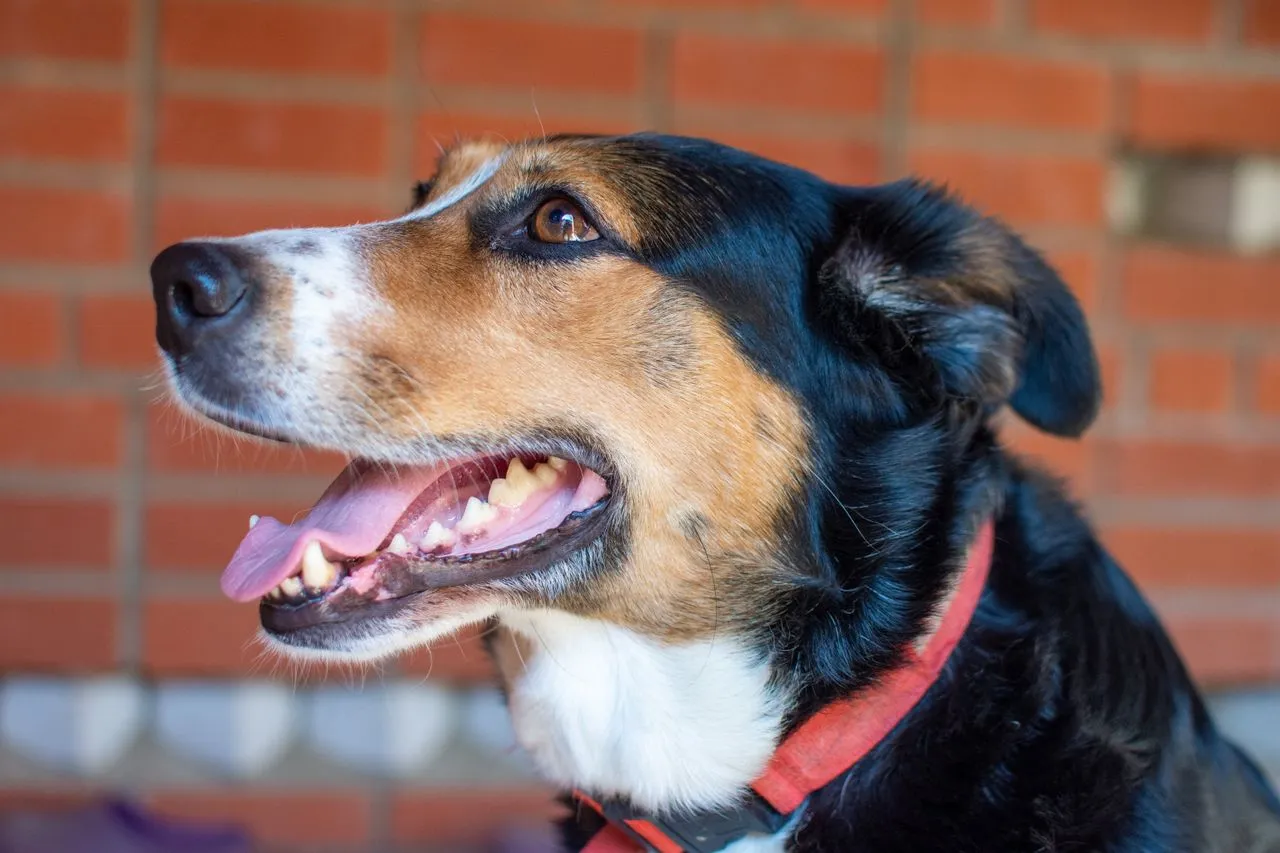
For small dogs, sitting them on your lap or on a table at a comfortable height often works well. For larger dogs, sitting beside them on the floor — rather than facing them head-on, which can feel confrontational — tends to go more smoothly. Whatever the position, prioritize stable footing and calm support over any form of restraint.
Lift the Lips Without Forcing the Jaw Open
You generally don’t need your dog’s mouth wide open to brush effectively. Most of the plaque control that matters happens on the cheek-facing surfaces of the teeth, which you can reach with the mouth closed or only slightly parted.
Aim the Bristles Toward the Gumline
Periodontal disease starts exactly where plaque collects: along and just beneath the gum margin. Angle the brush so the bristles make gentle contact there, rather than only scrubbing the flat, visible centers of the teeth.
Focus on the Outer Tooth Surfaces
Your dog’s tongue does a fair amount of natural cleaning on the inner surfaces of the teeth, which is part of why veterinary home-care guidance prioritizes the outer surfaces. Pay particular attention to the rear premolars and molars, where deposits tend to build up fastest and where owners are most likely to skip out of habit.
Keep Early Sessions Brief
Start with just a few teeth, or a handful of seconds total. Let the duration grow naturally as your dog gets more comfortable rather than aiming for a complete, perfect cleaning on day one.
Reward Cooperation, Not Resistance
Reinforce calm pauses, willing lip lifts, and brief tolerance of the brush — not just the end of a session that involved a struggle. The goal is voluntary participation, and rewards timed to calm behavior build that far more effectively than rewards given only as relief after a fight.
How to Brush a Puppy’s Teeth
Puppyhood is the easiest window to build these habits, even though a young dog’s teeth don’t yet carry much plaque or tartar.
When to Begin Tooth-Brushing Training
Once a puppy has settled into your home and routine, gentle mouth handling can begin. Early practice pays off well beyond dental care — it also makes future veterinary exams and any necessary mouth checks far less stressful.
Brushing During Teething
While puppy teeth are falling out and adult teeth are coming in, mouths can be tender, so lighter handling is appropriate. If you notice significant pain, swelling, persistent bleeding, or a tooth that looks abnormal, check in with a veterinarian rather than continuing to brush through it.
Watching for Retained Baby Teeth
Sometimes baby teeth don’t fall out on schedule and end up sitting alongside the adult tooth that’s supposed to replace it. These retained teeth crowd the mouth and trap plaque, particularly in small breeds. Routine puppy visits are a good time to have your veterinarian check for this.
What to Do When Your Dog Refuses Tooth Brushing
Refusal is common, and it’s worth treating as information rather than stubbornness.
Identify Why the Dog Is Resisting
Unfamiliar equipment, previous rough handling, fear, sensitive gums, underlying oral pain, or sessions that ran too long can all cause pushback. If a previously cooperative dog suddenly starts resisting, that shift is worth paying attention to — it may point to something physical rather than behavioral.
Return to an Easier Training Step
Drop back to whatever step your dog handled comfortably before — lip lifting, muzzle touching, or just tasting toothpaste — and only move forward again once they’re relaxed there.
Use Cooperative-Care Training
Predictable cues, brief pauses, clear reward markers, and letting your dog move away when they need to all build trust over time. Dogs who have some say in the process tend to comply more consistently than dogs who are simply held still.
Avoid Punishment and Forced Restraint
Scolding or physically pinning a resistant dog tends to backfire, deepening fear and raising the risk of a bite. If mouth handling has become a safety issue, a veterinarian or a qualified trainer experienced in cooperative care is a better resource than pushing through alone.
Rule Out Dental Pain
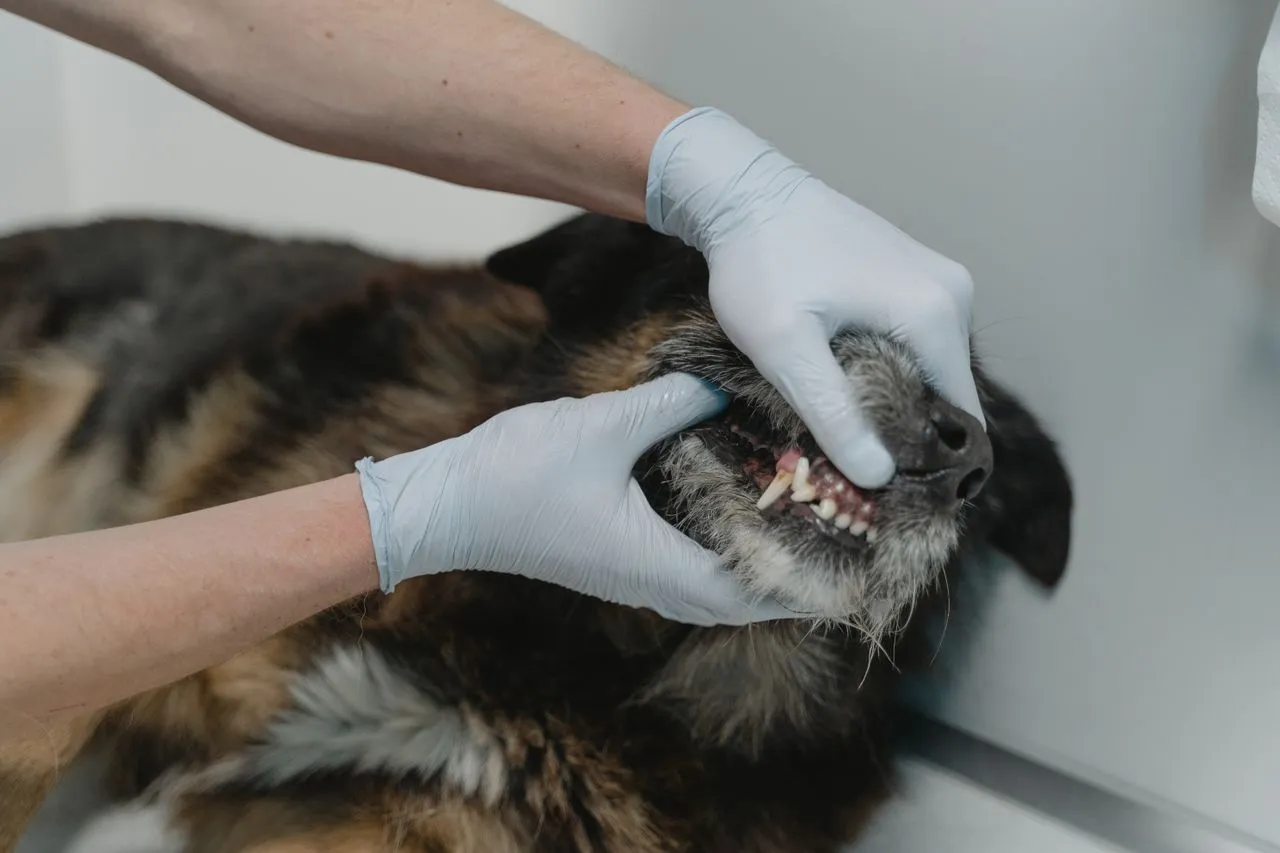
If refusal is sudden, severe, or paired with drooling, pawing at the mouth, facial swelling, bleeding, or trouble eating, schedule a veterinary exam before trying to resume brushing.
Common Dog Tooth-Brushing Mistakes
A few recurring errors undercut owners’ efforts even when the intent is right.
Using human toothpaste. The xylitol and other ingredients not meant to be swallowed make this a real risk, not just a technicality.
Brushing too hard. Excess pressure irritates already-inflamed gums and teaches your dog to dread the next session. Soft bristles and gentle, controlled motion are enough.
Scraping tartar at home. Sharp tools and DIY scaling can injure gums, damage teeth, and leave disease untreated below the gumline where you can’t see it — while giving a false sense that the problem is handled.
Brushing only the front teeth. The incisors are easy to reach, which is exactly why they get disproportionate attention while the rear premolars and molars — where deposits accumulate fastest — get skipped.
Expecting brushing to cure existing periodontal disease. Brushing is prevention and maintenance, not treatment. Painful, loose, fractured, or heavily coated teeth need veterinary evaluation, not just a more diligent brushing schedule.
Waiting until the dog is older. Training is considerably easier before dental disease or sensitivity has set in, so earlier is better whenever possible.
Dental Chews, Diets, Wipes, and Water Additives
These products can play a useful supporting role, but they’re not a substitute for daily mechanical brushing.
How Dental Chews May Help
Chewing can provide some mechanical plaque control when a product is well-designed and used consistently. Match the chew to your dog’s size, chewing style, calorie needs, and current dental condition — an aggressive chewer with existing gum disease needs a different product than a gentle chewer with a healthy mouth.
Dental Diets and Kibble Claims
Ordinary dry kibble isn’t automatically dental care, despite the assumption that “dry food cleans teeth.” Diets specifically formulated for dental health may use particular fiber structures or kibble shapes engineered to reduce plaque or tartar — but that’s a deliberate design feature, not a property of dry food in general.
Dental Wipes, Gels, Sprays, and Water Additives
These can serve as supplementary or transitional tools, especially for dogs who aren’t yet tolerating a brush. Effectiveness varies quite a bit by product and active ingredient, so it’s worth some scrutiny before assuming a product does what its packaging implies.
What the VOHC Seal Means
The Veterinary Oral Health Council reviews evidence submitted by manufacturers for plaque or calculus control claims. Products carrying the VOHC seal have cleared that bar. Marketing language like “fresh breath” or “dental” on a package doesn’t carry the same weight and isn’t independently verified in the same way.
Why Brushing Remains the Preferred Home-Care Method
Supplementary products can strengthen an oral-care routine, but they generally don’t disrupt plaque at the gumline as directly as a toothbrush does. The Merck Veterinary Manual describes daily or every-other-day brushing as the most effective home method available.
When Brushing Is Not Appropriate
Some situations call for a veterinary visit before you pick up a toothbrush at all.
Signs of painful or advanced dental disease include loose teeth, heavy calculus, significant gum redness, bleeding, swelling, pus, broken teeth, persistent bad breath, reduced appetite, dropped food, or chewing only on one side.
After dental surgery or tooth extraction, follow your veterinarian’s specific recovery instructions. Brushing often needs to pause while tissue heals, and the right timeline depends on the procedure.
Dogs with oral masses, injuries, or bleeding disorders shouldn’t have unexplained lumps, wounds, or persistently bleeding areas manipulated at home before a veterinarian has assessed them.
Professional Dental Care Versus Home Brushing
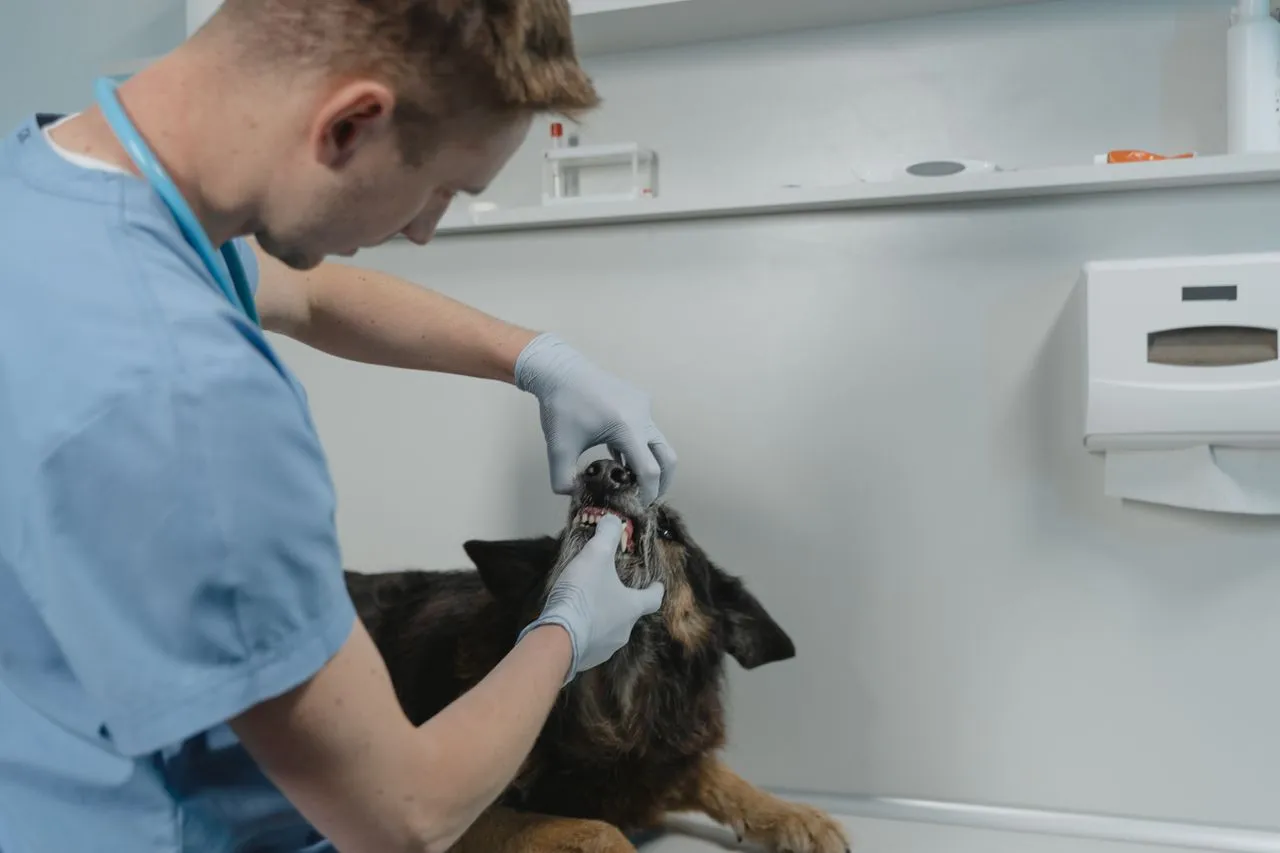
Home brushing and professional treatment aren’t competing options — they’re two halves of the same plan.
What Happens During a Veterinary Dental Procedure?
A full dental procedure typically includes an oral exam, dental charting, cleaning above and below the gumline, polishing, periodontal probing, and dental radiographs when warranted. Diseased teeth may be extracted or repaired as part of the same visit.
Why Dental X-Rays Are Important
Much of each tooth sits below the gumline, invisible to a visual exam alone. X-rays reveal root disease, bone loss, retained root fragments, and other problems that would otherwise go undetected until they become serious.
Why Complete Dental Cleaning Requires Anesthesia
Anesthesia allows the veterinary team to protect the airway, examine every tooth individually, capture radiographs, and clean thoroughly below the gumline while the dog stays completely still. The AVMA has noted that anesthesia-free procedures can’t provide the same level of inspection or below-the-gum cleaning.
Why Groomer Brushing Is Not a Professional Dental Cleaning
A groomer’s brushing service might leave a dog’s mouth smelling fresher temporarily, but it can’t diagnose disease, remove deposits from beneath the gumline, capture X-rays, or treat a painful tooth. It’s cosmetic maintenance, not dental care in the medical sense.
How Often Do Dogs Need Veterinary Dental Evaluations
Oral health should be checked at routine veterinary visits, but the right frequency for professional cleanings is individual. Breed, age, mouth anatomy, prior dental disease, how consistent home care has been, and current exam findings all factor into the schedule your veterinarian recommends.
Building a Sustainable Dental-Care Routine
Knowing brushing matters and actually doing it consistently are two different things. Closing that gap is mostly about habit design.
Attach brushing to an existing daily habit. Pairing it with an evening walk or a bedtime routine and keeping the brush and toothpaste somewhere visible and within reach cuts down on missed days.
Set a realistic starting goal. A few calm seconds each day beat one long, stressful session once a week. Daily repetition, even brief, is what builds the habit for both of you.
Track progress instead of demanding perfection. Notice which areas of the mouth your dog accepts and add more gradually. Progress might look like calmer handling, a longer session, or finally reaching those back molars — not a flawless full-mouth clean on day one.
Adapt the routine as your dog ages. Arthritis, cognitive changes, vision loss, pain, or dental treatment may call for new positioning, shorter sessions, or updated guidance from your veterinarian.
Emerging Trends in Canine Dental Care
The field keeps shifting in ways that are worth knowing about, even if the fundamentals of daily brushing aren’t going anywhere.
Veterinary practice is placing growing emphasis on preventive home care rather than waiting for visible tartar or advanced disease to prompt action. Cooperative-care and low-stress handling techniques — consent-based approaches that let animals participate rather than simply endure procedures — are becoming more standard for both dental care and general veterinary visits. Owners are also getting more attentive to evidence-based product selection, favoring independently evaluated chews, diets, and additives over unverified marketing claims. Newer prevalence studies continue to confirm that small and toy breeds carry disproportionate dental risk, reinforcing the case for earlier, more individualized intervention in those dogs. And scrutiny of anesthesia-free dentistry keeps growing, with professional organizations maintaining a clear line between visible cosmetic scaling and a complete periodontal treatment performed under anesthesia.
Frequently Asked Questions About Brushing a Dog’s Teeth
Do I really need to brush my dog’s teeth every day? Daily brushing offers the most consistent plaque control. That said, a gradual routine or every-other-day brushing still beats skipping home care altogether.
Can I use a human toothbrush on my dog? A small, soft-bristled human toothbrush can work fine if it fits your dog’s mouth comfortably — just make sure the toothpaste is formulated for pets, not people.
Can I brush my dog’s teeth with water only? The mechanical brushing action itself disrupts plaque, so water-only brushing still provides some benefit. Dog toothpaste mainly helps with acceptance and may include ingredients tailored for pet oral care.
Can coconut oil or baking soda replace dog toothpaste? Home ingredients aren’t automatically safe or effective substitutes for a properly formulated pet toothpaste. Check with your veterinarian before using any homemade oral-care mixture.
Is it too late to start brushing an older dog’s teeth? Older dogs can absolutely learn the routine, but they should be checked for painful disease first — brushing over inflamed gums or loose teeth can cause real discomfort.
Why do my dog’s gums bleed during brushing? Minor bleeding often points to gum inflammation or brushing that’s a bit too forceful. Bleeding that’s persistent, unexplained, or substantial warrants a veterinary check.
How long should each brushing session last? Consistently reaching the outer gumline matters more than hitting an exact time target. Early sessions might last only seconds and grow more thorough as your dog adjusts.
Are dental chews enough without brushing? Good dental chews can reduce plaque and tartar to some degree, but they’re best treated as a supplement to brushing rather than a replacement for it.
A Simple Lifelong Dental Plan for Your Dog
The core plan doesn’t need to be complicated: start mouth handling early, brush daily with dog-safe supplies, add evidence-based supplements where they make sense, check the mouth regularly for anything unusual, and schedule veterinary dental care based on your dog’s individual risk factors. A short, calm routine done consistently will do more for your dog’s mouth than an occasional deep-clean effort ever could — and it’s a habit that pays off in comfort, fewer surprises, and fewer trips to the vet for problems that could have been caught or avoided, much earlier.