Why Dog Dental Care Matters in 2026
Dental health is more than fresh breath
Ask most dog owners what “dental care” means for their pup, and you’ll probably hear something about bad breath. Maybe a chew toy gets mentioned. But here’s the thing: your dog’s mouth is connected to the rest of their body in ways that go far beyond a stinky nuzzle. Bacteria from untreated dental disease can travel into the bloodstream and affect the heart, kidneys, and liver. A sore mouth changes how a dog eats, plays, and even how they interact with you. Dental health isn’t a cosmetic afterthought — it’s a foundational part of your dog’s overall wellbeing, right up there with diet, exercise, and regular vet visits.
Why many owners ignore dental care until symptoms appear
Dogs are remarkably good at hiding discomfort. It’s an instinct left over from their wild ancestors, who couldn’t afford to look vulnerable. That means a dog with a painful tooth abscess might still wag their tail, eat (carefully), and act mostly normal — right up until the problem becomes severe. Because the signs are subtle, dental care tends to slide to the bottom of the priority list. Owners brush their own teeth twice a day without thinking, but a toothbrush for the dog? That’s the task that gets postponed, week after week, until a vet visit reveals just how far things have progressed.
Quick overview of what readers will learn
This guide walks through everything you need to know about keeping your dog’s mouth healthy in 2026 — from the statistics that show just how widespread dental disease really is, to the warning signs you shouldn’t ignore, to a practical, low-effort routine you can actually stick with. Whether you have a new puppy, a senior dog, or anything in between, you’ll walk away with a clear plan.
Key Dog Dental Care Statistics Every Owner Should Know
How common periodontal disease is in dogs
The numbers here are genuinely eye-opening. Periodontal disease affects nearly 80% of dogs by the time they turn three years old. Cornell’s veterinary researchers put the figure even higher for older dogs, estimating that 80 to 90% of dogs over age three show some degree of periodontal disease. In other words, dental disease isn’t a rare problem that happens to unlucky dogs — it’s closer to the default outcome if a mouth goes uncared for.
Why dental problems often start before age 3
Plaque begins forming within hours of a meal, and if it isn’t removed, it hardens into tartar within days. Left alone, that tartar creeps below the gumline, where it starts breaking down the tissue and bone that hold teeth in place. Because this process is gradual and largely invisible without a close look (or a dental probe), it can be well underway by a dog’s first or second birthday — long before most owners think to worry about it.
Why small dogs are at higher risk
Small-breed dogs like Yorkies, Chihuahuas, and Dachshunds face a tougher dental reality than their larger counterparts. Their teeth are often proportionally large for their jaw size, which leads to crowding — and crowded teeth trap more plaque and food debris. Combine that with a longer average lifespan, and you get more years of cumulative wear and tear on the gums. This is a big part of why small-breed dental awareness has become such a strong focus for veterinarians and product makers alike.
The growing pet dental care market in 2026
The numbers on the industry side reflect how seriously the pet world is now taking this issue. The global pet oral care market is projected at $2.2 billion in 2026, on its way to $3.5 billion by 2033. Zoom out to the broader pet dental health market, and the figures are even larger — an estimated $10.91 billion in 2026, climbing toward $15.52 billion by 2031. Dental chews alone are expected to grow by $166.6 million between 2026 and 2030, a 7.5% compound annual growth rate. Translation: more brands, more products, and more research are being funneled into helping dogs keep healthier mouths than ever before.
What Is Periodontal Disease in Dogs?
Plaque vs. tartar: what is the difference?
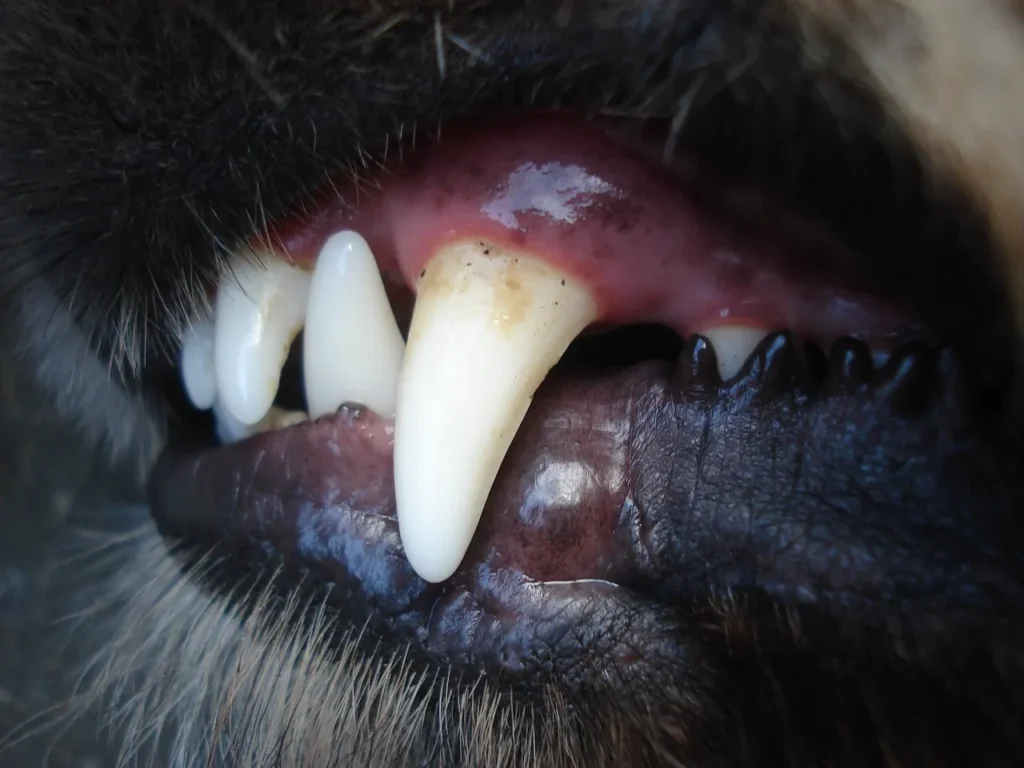
Plaque is the soft, sticky film of bacteria that builds up on teeth after eating. It’s colorless at first, which is exactly why it’s easy to miss. If plaque isn’t removed — through brushing, chewing, or a professional cleaning — it mineralizes within a few days and hardens into tartar (also called calculus). Tartar is the yellow-brown crust you can actually see and feel, and unlike plaque, it can’t be brushed away. At that point, only a scaling procedure, usually done by a vet, can remove it.
Gingivitis and gum inflammation
Gingivitis is the earliest stage of periodontal disease, and it’s also the only stage that’s fully reversible. It shows up as redness and swelling along the gumline, sometimes with a bit of bleeding when your dog chews something firm. If you catch a mouth at this stage and start a consistent care routine, you can often stop the disease from progressing any further.
How untreated dental disease can lead to pain and tooth loss?
If gingivitis isn’t addressed, it advances into true periodontal disease, where the infection starts to destroy the ligaments and bone anchoring the teeth. Teeth can become loose, abscesses can form, and eventually teeth may need to be extracted. This isn’t just uncomfortable — it’s genuinely painful, and dogs living with advanced dental disease often experience chronic, low-grade pain that affects their appetite and mood.
Why can bad breath be a warning sign?
A little “dog breath” is normal. But breath that’s sharply unpleasant, sour, or metallic-smelling is often a sign that bacteria have built up to a problematic level. Think of bad breath as an early warning light on the dashboard — easy to ignore, but worth paying attention to before something more serious develops.
Common Signs Your Dog Needs Dental Care
Bad breath
Persistent, noticeably foul breath — beyond typical “dog breath” — is usually the first sign owners notice, and often the reason a dental exam gets scheduled in the first place.
Yellow or brown tartar
Take a look along the gumline, especially on the back molars. A yellow or brown crusty buildup is tartar, and its presence means active bacterial colonies are sitting right against the gum tissue.
Red, swollen, or bleeding gums
Healthy gums are pale pink and firm. Gums that look red, puffy, or bleed during chewing or brushing are signaling inflammation that needs attention.
Trouble chewing or dropping food
A dog who suddenly favors one side of their mouth, chews more slowly, or drops kibble while eating may be avoiding pressure on a painful tooth.
Pawing at the mouth or face
Repeated pawing, rubbing the face against furniture, or reluctance to be touched near the mouth can all point to oral discomfort that’s bothering your dog more than they’re able to show otherwise.
- Persistent bad breath that doesn’t improve with food changes
- Visible tartar buildup, especially yellow-brown crust near the gumline
- Red, swollen, or bleeding gums, particularly during chewing or brushing
- Reluctance to eat hard food or chew toys, or chewing only on one side
- Pawing at the mouth, face-rubbing, or general mouth sensitivity
- Loose or missing teeth, or visible drooling with blood-tinged saliva
Best At-Home Dog Dental Care Methods
Brushing your dog’s teeth
Brushing remains the single most effective thing you can do at home. It physically disrupts plaque before it has the chance to harden into tartar, the same way brushing works for us. It takes some patience to get a dog comfortable with it, but a slow, positive introduction pays off for years.
Choosing dog-safe toothpaste
Human toothpaste is off-limits for dogs — more on why in a moment — so look for a toothpaste made specifically for pets. These usually come in dog-friendly flavors like poultry or peanut butter, which makes the whole process much less of a battle.
Dental chews and treats
Chews work through mechanical action: the physical act of gnawing helps scrape plaque off the tooth surface, and many modern formulas also include ingredients designed to reduce bacteria or freshen breath. They’re not a replacement for brushing, but they’re a strong supplement, especially on days when brushing doesn’t happen.
Dental wipes, sprays, and water additives
For dogs who won’t tolerate a toothbrush, these lower-effort options can still make a difference. Wipes let you manually remove some plaque without a brush. Water additives are poured into the daily water bowl and work passively over time. Sprays applied directly to the gumline can help reduce bacteria between brushings.
Dental powders and supplements
Powders sprinkled over food are one of the newer categories gaining traction, often built around enzymes or probiotics that target the bacteria responsible for plaque formation. They’re especially popular with owners of dogs who are resistant to almost every other method.
| Dental care method | Best for | Limitations |
| Tooth brushing | Dogs tolerant of handling; owners wanting the gold-standard result | Time-consuming; requires training and daily consistency |
| Dental chews | Supplementing brushing; dogs who enjoy chewing | Not a substitute for brushing; calorie content adds up |
| Water additives | Low-effort, passive daily care | Milder effect; some dogs are picky about taste changes |
| Dental wipes | Dogs who resist brushes but tolerate handling | Less thorough than brushing; needs daily use to matter |
| Dental powders | Picky or handling-averse dogs; food-based routines | Effects are gradual; not ideal alone for existing tartar |
How Often Should You Brush Your Dog’s Teeth?
Daily brushing as the gold standard
Veterinary dentists generally agree: daily brushing is the most effective home routine, since it removes plaque before it has a chance to mineralize into tartar. Even brushing a few times a week is far better than nothing, but daily is where you see the biggest payoff.
What to do if your dog refuses brushing
Not every dog takes to a toothbrush right away — and some never do. If brushing is a nonstarter, lean on the alternatives: dental wipes, chews, water additives, and powders can all contribute meaningfully, even if brushing isn’t part of the picture. The goal is consistency in whatever method your dog will actually tolerate.
Building a routine slowly
Rushing the introduction is the most common reason brushing attempts fail. Start by simply letting your dog lick a bit of dog toothpaste off your finger for a few days. Then progress to touching the teeth and gums with a finger. Only after that’s comfortable should you introduce the brush itself. Short, positive sessions — paired with praise or a treat — build trust far faster than forcing a full brushing session on day one.
Mistakes to avoid when brushing
Skipping the back molars (where tartar builds up fastest), brushing too aggressively, or giving up after one bad session are the most common missteps. Also worth noting: never use human toothpaste. Many formulas contain xylitol, a sweetener that’s toxic to dogs, along with fluoride levels that aren’t meant for a swallowing animal.
Best Dental Products for Dogs in 2026
What to look for in dental chews
Not all chews are created equal. Look for a texture that encourages sustained chewing rather than a quick bite-and-swallow, and check that the size is appropriate for your dog’s mouth and chewing strength.
Why VOHC-approved products matter
The Veterinary Oral Health Council (VOHC) evaluates dental products against a set of scientific standards for plaque and tartar reduction. A product carrying the VOHC seal has actual data behind its claims, which matters in a market flooded with vague “supports dental health” marketing language.
Ingredients to avoid
Be cautious of chews with excessive artificial coloring, added sugars, or unnecessary fillers. And avoid anything advertised as “extremely hard” — very hard chews (think antlers, hooves, or real bones) are a leading cause of fractured teeth in dogs.
Size and texture based on breed
A chew sized for a Labrador isn’t appropriate for a Chihuahua, and vice versa. Match the chew’s size and firmness to your dog’s jaw strength and breed tendencies — small breeds in particular benefit from chews designed with crowded, delicate teeth in mind.
Professional Dog Dental Cleaning: What Owners Should Know
What happens during a veterinary dental cleaning
A professional cleaning goes well beyond what’s visible at home. The vet examines each tooth, takes dental X-rays to check below the gumline, scales away tartar, and polishes the enamel to slow future plaque buildup.
Why anesthesia is commonly used
Anesthesia allows the vet to safely and thoroughly clean below the gumline, take clear X-rays, and address any problems found — none of which is possible with a fully awake, moving dog. While the idea of anesthesia can make owners nervous, modern veterinary protocols include monitoring designed specifically to make the process safe.
How often dogs may need professional cleanings
This varies by dog, but many vets recommend a professional cleaning every one to two years, with more frequent visits for small breeds or dogs with a history of dental issues.
Estimated cost factors
Cost depends on the dog’s size, the complexity of the cleaning, whether extractions are needed, and regional pricing differences. Pre-anesthetic bloodwork and X-rays also factor into the total, but they’re a worthwhile investment in catching problems early.
Dog Dental Care by Breed and Age
Puppies: starting early
The earlier a puppy gets used to having their mouth handled, the easier dental care becomes for life. Gentle handling and short brushing introductions during puppyhood build tolerance long before serious dental issues can develop.
Adult dogs: prevention and maintenance
For adult dogs, the focus shifts to consistency — a steady brushing routine, quality chews, and regular vet checkups to catch problems before they escalate.
Senior dogs: managing pain, tooth loss, and gum disease
Older dogs often carry years of accumulated dental wear, and some may already have missing teeth or chronic gum disease. Softer chews, gentler brushing, and closer monitoring for pain become especially important here.
Small breeds vs. large breeds
Small breeds tend to need more frequent dental attention due to overcrowding, while large breeds often deal with different challenges, like a higher risk of tooth fractures from aggressive chewing. Tailoring the approach to your dog’s specific breed tendencies makes a real difference.
Dog Dental Care Mistakes to Avoid
Using human toothpaste
As mentioned earlier, this one’s non-negotiable — human toothpaste can be genuinely toxic to dogs and should never be substituted for a pet-formulated version.
Relying only on treats
Dental chews help, but they can’t fully replace brushing. Treating them as the entire dental care plan often leaves plaque building up in spots the chew never reaches.
Ignoring bad breath
It’s tempting to write off bad breath as “just a dog thing,” but persistent odor is frequently the first sign of a developing problem.
Skipping vet exams
Home care catches a lot, but only a vet can spot issues below the gumline. Skipping regular exams means problems can progress silently for months or years.
Giving unsafe hard chews
Bones, antlers, and similarly hard chews might seem durable, but that same hardness is exactly what leads to slab fractures — a painful and common dental injury in dogs who chew enthusiastically.
2026 Trends in Dog Dental Care
Dental chews becoming more functional
Chews today are formulated to do more than scrape plaque — many now target bacteria directly or include ingredients that support long-term gum health, not just short-term freshness.
Probiotic and enzyme-based oral care
Products that combine oral probiotics and enzymes are becoming more common, aiming to shift the bacterial balance in a dog’s mouth toward one less prone to plaque formation.
Natural breath-freshening sprays
Owners are increasingly drawn to sprays with natural ingredients, offering a quick, low-effort way to freshen breath between full brushing sessions.
More focus on preventive care
The overall shift in 2026 is toward prevention rather than reaction — owners are starting dental routines earlier and treating them as a standard part of care, not an emergency response.
Personalized dental routines for small breeds and seniors
Rather than one-size-fits-all products, more brands are designing dental care specifically around the needs of small breeds and senior dogs, two groups with distinctly different dental challenges.
Simple Dog Dental Care Routine for Busy Owners
Daily routine
Brush if possible, or use a dental wipe as a lower-effort alternative. Offer a dental chew as part of the day’s treats.
Weekly routine
Do a visual check of the gums and teeth for any redness, swelling, or new tartar buildup. Refresh water additives if you’re using them.
Monthly routine
Take a closer look at overall mouth condition, note any changes in eating habits or breath, and assess whether it’s time to schedule a vet checkup.
When to call the vet
Any sign of bleeding gums, loose teeth, refusal to eat, facial swelling, or a sudden change in chewing behavior warrants a call to the vet sooner rather than later.
Conclusion
Dental care protects your dog’s comfort and long-term health
Dog dental care isn’t about achieving a picture-perfect smile — it’s about protecting your dog from a slow-building source of pain and, potentially, more serious health complications down the line. With periodontal disease affecting the vast majority of dogs by adulthood, this is one area where prevention truly is easier, cheaper, and kinder than treatment after the fact.
Start small, stay consistent, and combine home care with vet checkups
You don’t need a perfect routine from day one. Start with whatever your dog will tolerate — a wipe, a chew, a few seconds of brushing — and build from there. Pair consistent home care with regular veterinary checkups, and you’ll be giving your dog one of the most meaningful, if underrated, gifts of a longer and more comfortable life.