
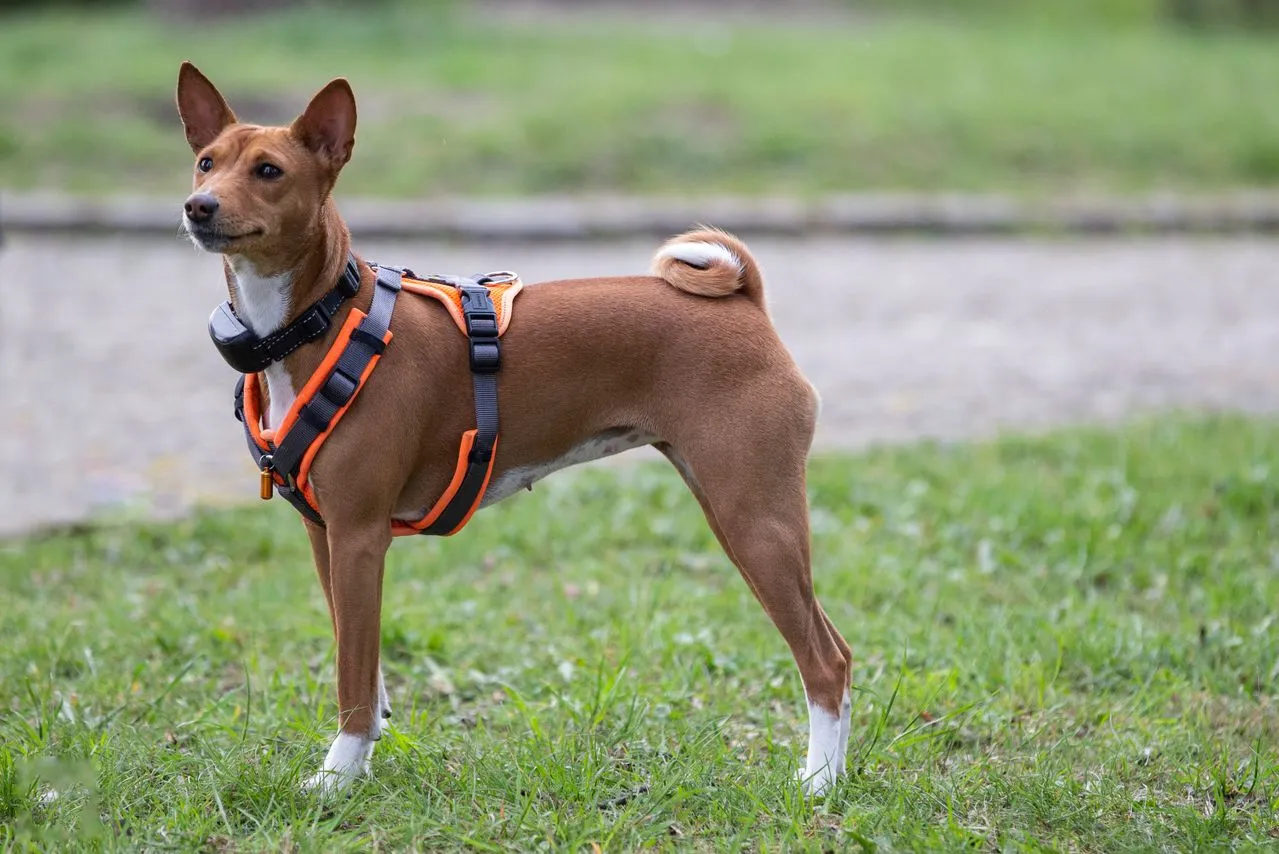
A smart dog collar promises a lot: instant alerts if your dog slips out the back gate, a daily readout of how much they moved and slept, maybe even an early warning that something’s off with their health. Some of that promise holds up. Some of it depends heavily on where you live, how the device is set up, and how much you’re willing to pay every month to keep it running.
This guide walks through what these collars actually do, how the underlying technology works, where the real limitations show up, and how to figure out whether one makes sense for your dog. Along the way, we’ll cover tracking accuracy, health monitoring, virtual fences, subscription costs, privacy, and the mistakes that trip up a lot of first-time buyers.
What Is a Smart Dog Collar?
A smart dog collar is a collar built around electronics rather than a collar with a gadget clipped onto it as an afterthought (though plenty of products blur that line). It typically combines a location system, some form of wireless connectivity, a rechargeable battery, and often an accelerometer for movement tracking, all controlled through a companion phone app.
It’s worth separating this from three things people often lump together: a basic ID tag, a microchip, and a Bluetooth item tracker. An ID tag is passive — it just displays your phone number. A microchip is also passive; it stores an identification number that a vet or shelter can read with a scanner, but it has no power source and can’t tell you where your dog is right now. A smart collar, by contrast, is an active device. It’s trying, continuously, to determine and report your dog’s location or activity, which is exactly why it needs a battery and a network connection in the first place.
How smart dog collars actually work
Most systems combine a few pieces of hardware. A GPS or broader GNSS (Global Navigation Satellite System) receiver calculates the collar’s position by triangulating signals from orbiting satellites. But calculating a position isn’t the same as sending it to your phone — for that, the device typically needs a separate connection, usually a cellular network, though some rely on Wi-Fi or Bluetooth for shorter-range communication. An onboard accelerometer picks up movement patterns, which software then classifies as walking, running, resting, or scratching. All of this gets pushed to a cloud server and surfaced in an app.
Smart collars versus clip-on trackers
Some products are full collars with the electronics built into the material. Others are small modules that clip onto a collar you already own. The clip-on approach tends to be lighter and easier to swap between collars, but it can also be less secure, more prone to falling off, and sometimes limited in battery size compared to a built-in design. Neither approach is universally better — it depends on your dog’s size, coat, and how rough they are on gear.
Smart collars versus microchips
These aren’t competing technologies; they’re complementary ones. A tracker can run out of battery, lose signal, or get knocked off during a scuffle with another dog. A microchip has none of those failure points, but it also can’t tell you where your dog is at 2 a.m. when they’ve gone missing — it only works once someone finds your dog and scans them. Relying on a smart collar alone, without a current microchip registration, leaves a real gap in your safety net.

Why Smart Dog Collars Are Becoming More Popular
Two trends are feeding this category’s growth: more households have dogs, and more of those households are comfortable spending on connected devices for them.
A growing population of dog owners
The American Pet Products Association’s 2025 data puts dog ownership at roughly 71 million U.S. households, up from about 51% to 53% of all households. That’s a large and still-expanding base of potential buyers, though owners are also increasingly price-conscious, which puts pressure on companies to justify recurring subscription costs rather than relying on novelty alone.
A market that’s still figuring out its own size
Estimates for this space vary quite a bit depending on what’s being counted. The broader pet-wearables market — which includes health devices, activity trackers, and GPS products — was valued at an estimated $4.16 billion in 2025, with projections reaching $13.12 billion by 2034. Narrower estimates focused specifically on smart or connected collars land much lower: one puts the smart-pet-collar market at $632.4 million in 2025, with location tracking making up close to 47% of that figure, while another pegs the “smart connected collar” segment at $561 million. None of these numbers are wrong exactly — they’re just measuring different slices of the same general industry, which is a good reminder to treat any single market forecast with some skepticism.
More interest in catching problems early
There’s also a broader shift toward preventive pet care — owners wanting to know if something has changed before it becomes an emergency. A collar that quietly learns your dog’s normal sleep and activity levels and flags a meaningful deviation from that baseline is often more useful in practice than any single data point on its own.
The Main Types of Smart Dog Collars
Not every smart collar does the same job, and buying based on a long feature list rather than your actual problem is one of the most common mistakes in this category.
GPS location trackers are built primarily around live tracking, escape alerts, and location history. Most rely on cellular service and a paid data plan to function.
Activity and fitness trackers log things like active minutes, distance, rest, and sleep. Keep in mind that activity “scores” are usually proprietary to each brand, so a number from one product doesn’t translate directly to another.
Health-monitoring collars go a step further, estimating things like resting respiratory rate, heart-rate trends, sleep disruption, or unusual scratching and barking. These can surface patterns worth mentioning to your vet, but they’re not diagnostic tools.
GPS virtual-fence systems let you draw a digital boundary and get an alert — or trigger a trained cue — if your dog crosses it. These are fundamentally different from a physical fence and require training, testing, and the right kind of environment to work safely.
Training-enabled collars use sound, vibration, or other cues to reinforce commands. Used well, alongside reward-based methods and professional guidance when needed, they can support training. Used carelessly, they can create fear or confusion rather than clarity, so gradual, positive conditioning matters more than the technology itself.
Smart Dog Collar Features Explained
GPS, GNSS, and location updates
A receiver in the collar calculates position using satellite signals. To get that position onto your phone, the device needs a second connection — almost always cellular. This is why a “GPS collar” is really a combination of two separate systems working together.
Cellular, Wi-Fi, Bluetooth, and satellite connectivity
Each connection type serves a different purpose. Cellular covers wide areas wherever a supported network reaches. Wi-Fi can improve accuracy near home and reduce battery drain. Bluetooth handles short-range setup and communication. And a newer category — satellite-supported tracking — is starting to extend coverage into places cellular networks don’t reach, such as remote trails or rural properties. This is a genuinely useful development for people who spend time off the grid, though pricing, battery impact, and real-world reliability are still evolving as the technology matures.
Safe zones and escape notifications
Geofencing lets you set a boundary and get notified if your dog crosses it. Alert speed depends on the collar’s location-update interval, and GPS “drift” — small positioning errors — can occasionally trigger false alerts right at the boundary edge. It’s worth testing this in a controlled setting before trusting it fully.
Activity, sleep, and behavior monitoring
Accelerometers and pattern-recognition software classify movement into categories like walking, resting, or playing. Collar fit, body type, scratching, and even car rides can all throw off the interpretation, so treat any single reading as an estimate rather than a precise measurement.
Health trend alerts
Some collars attempt to estimate respiratory rate, detect sleep disruption, or flag unusual scratching. The science behind these features is still developing, and accuracy can vary meaningfully between individual metrics and between products.
Location history and shared access
Route maps, historical location logs, and the ability to share access with a dog walker or family member are genuinely convenient. They also mean more people have access to your dog’s — and by extension, your household’s — location data, so permission settings deserve some attention.
Lights, sounds, and recall cues
An LED light can improve visibility on evening walks. Conditioned sounds or vibrations may support recall training, but they work best as reinforcement for training you’ve already done, not a substitute for it.

Comparing Collar Types at a Glance
| Collar category | Primary purpose | Typical connection | Main limitation |
| GPS cellular tracker | Live location and escape alerts | GPS plus cellular network | Usually requires a subscription |
| Bluetooth tracking tag | Nearby item finding | Bluetooth and nearby device network | Less dependable in sparsely populated areas |
| Activity tracker | Exercise, rest, and sleep trends | Bluetooth or Wi-Fi sync | Activity scores may be proprietary |
| Health-monitoring collar | Physiological and behavioral trends | Sensors plus cellular or Wi-Fi | Doesn’t replace veterinary diagnosis |
| GPS virtual-fence collar | Boundary alerts and trained cues | GNSS, app, sometimes cellular | Not a physical barrier; needs training |
| Satellite-supported tracker | Tracking beyond cellular coverage | GPS/GNSS plus satellite network | Higher cost, evolving availability |
A lightweight cellular tracker tends to be the right call if escape recovery is your main worry. A health-focused wearable makes more sense if you’re trying to spot long-term trends. A virtual-fence collar solves a different problem entirely and shouldn’t be treated as an automatic upgrade over a basic tracker.
How Accurate and Reliable Are Smart Dog Collars?
This is the question that matters most, and it breaks down into three separate issues: positioning accuracy, communication reliability, and health-sensor validity.
GPS accuracy is affected by tree cover, buildings, terrain, weather, and how many satellites the receiver can see at a given moment. The dot on your app screen is always an estimate, and it can drift by a meaningful distance, especially in dense urban areas or heavy woods.
Live tracking isn’t always instant. To save battery, many collars only update periodically until you activate a live-tracking mode. Even then, network congestion, weak coverage, and server delays can slow things down.
Bluetooth tags aren’t GPS trackers, even though they’re sometimes marketed alongside them. Bluetooth-based tags generally depend on nearby compatible devices to detect and relay their location, which makes them a reasonable backup for identification but far less predictable for finding a fast-moving dog in a rural area with few other devices around.
Activity and health measurements are useful but uneven. Some commercial wearables have research behind specific metrics; others haven’t been validated to the same degree. Accuracy shifts based on device placement, coat thickness, body size, and how the measurement compares to an accepted clinical reference.
The most practical approach is to let the device establish a baseline for your specific dog and pay closer attention to sustained, unexplained changes rather than any single reading. A quiet day after a long hike is normal. A week of unusually low activity paired with other symptoms is worth a call to your vet.
Real Benefits of Smart Collars
Used with realistic expectations, these devices offer a few concrete advantages.
A faster response to an escape is probably the clearest one — a timely alert means you start searching sooner, though this only holds if the collar is charged, attached, and connected when it matters.
Long-term activity records can reveal gradual changes in exercise, rest, or routine that are easy to miss day-to-day but obvious over a month of data.
Activity data can also support a vet-approved weight-management plan, though it shouldn’t be treated as a substitute for a proper assessment of body condition, diet, and overall health.
Trend reports give you something concrete to bring to a veterinary appointment — not a diagnosis, but a timeline of when a change started and how long it lasted, which is often more useful to a vet than a vague description from memory.
And for households with dog walkers, sitters, or frequent travel, shared tracking access adds a layer of reassurance, provided account permissions are set up carefully.

Limitations and Risks Worth Understanding
Battery life takes a real hit from live tracking, weak signal, cold weather, and frequent updates. Compare real-world battery performance across reviews rather than trusting the maximum advertised figure alone.
Coverage gaps are unavoidable. Dead zones, incompatible networks, international roaming restrictions, app outages, and limited satellite visibility all mean no connected tracker can promise uninterrupted reporting.
Subscription costs frequently aren’t obvious at the point of purchase. Cellular data, extended location history, family sharing, and premium health reports are often locked behind a monthly fee, so it’s worth calculating the full one-, two-, and three-year cost before buying.
False alerts — from GPS drift, misclassified activity, or overly sensitive health notifications — can create genuine anxiety for pet parents. Look for collars that let you customize alert thresholds.
Physical loss or damage is always possible. Even a rugged collar can be chewed through, snagged, or knocked off, which is exactly why visible ID and a registered microchip still matter.
And perhaps the biggest risk is overreliance on the technology itself. A tracker is not a substitute for secure fencing, leash use, active supervision, recall training, or routine veterinary care.
Privacy and Cybersecurity Questions to Ask
Smart collars collect more than most people realize — precise location history, home coordinates, daily routines, and sometimes health-related data tied to an account with your name on it.
Before buying, it’s worth checking what the company actually stores: location history, addresses, route data, activity patterns, and any information pulled from connected services. Find out who can access that data — employees, analytics vendors, advertisers, cloud providers, or third-party integrations — and don’t assume that “pet data” is too mundane to say something meaningful about the humans in the household. Long-term walking routes and home coordinates can reveal quite a lot about daily patterns.
Retention periods matter too. The longer a company holds onto location history, the longer that data exists somewhere outside your control. Look for baseline security features: unique passwords, multi-factor authentication where offered, encrypted connections, regular software updates, and a clear way to delete your account and exported data.
The FTC’s guidance on connected devices generally emphasizes transparency, meaningful consumer control, reasonable security practices, limited data retention, and careful handling of precise location information — all reasonable benchmarks to hold a smart collar company to.
How to Choose the Right Smart Collar for Your Dog
Start by naming the actual problem you’re trying to solve — lost-dog recovery, rural tracking, activity monitoring, health trends, boundary awareness, or nighttime visibility. Buying the most feature-packed option rarely makes sense if it doesn’t address your specific concern.
From there, check the practical details. Confirm the device fits your dog’s size and won’t interfere with eating, sleeping, or wearing a harness. Look into network coverage everywhere your dog actually goes — home, regular walking routes, parks, and any travel destinations — with particular attention to offline or satellite-supported options if you’re in a rural area. Compare update speed for both routine tracking and live/recovery mode, and check how quickly boundary alerts actually fire.
Battery expectations deserve real scrutiny too. Look at battery life under typical use rather than idle standby, and check charging time, low-battery warnings, and whether a spare unit is available. Durability ratings matter for water resistance, mud, dust, chewing, and temperature extremes — read the warranty exclusions carefully, since “waterproof” doesn’t always mean what you’d assume.
Finally, add up the complete cost of ownership: device price, subscription, replacement straps, and any premium app features, and look into the company’s support history, software-update track record, and what happens to the device if the service is ever discontinued.
Smart Collar Buying Checklist
- Appropriate weight, dimensions, and fit for your dog
- Reliable coverage in the places you actually go
- Update frequency and a live-tracking mode
- Realistic battery life and recharge time
- Waterproof and dust-resistance rating
- Fast, customizable escape alerts
- Full subscription and replacement costs, calculated over time
- Clearly explained health and activity metrics
- Transparent privacy and data-deletion policies
- Strong account security options
- Reasonable warranty and support terms
- Compatibility with your phone’s operating system
Introducing and Using a Smart Collar Safely
Give your dog time to adjust before expecting continuous wear — short, positive sessions work better than putting it on and walking away. Watch for scratching, avoidance, or attempts to chew at the device, which usually signal that it needs adjustment.
Check the fit regularly. It should sit securely without restricting breathing or rubbing the skin, and this matters even more for puppies, growing dogs, short-coated breeds, and dogs with sensitive skin.
Before trusting any safe-zone or alert feature, test it. Walk your leashed dog across the boundary and confirm the notification speed, map accuracy, and that the right people actually receive the alert.
Build a charging habit — before hikes, travel, or boarding — and set a low-battery reminder so the collar doesn’t become useless right when you need it most. And regardless of how good the tracker is, keep a visible ID tag, current contact information, and a registered, up-to-date microchip as backup.
How Veterinarians Recommend Using Wearable Data
The most useful role for a smart collar, from a clinical standpoint, is documentation — a timeline of activity, sleep, or behavior that helps you describe what changed and when it started. What it shouldn’t do is replace a vet’s judgment. Coughing, breathing changes, collapse, repeated vomiting, or severe lethargy warrant a vet visit regardless of what an app says.
When you do bring data to an appointment, concise trend graphs and specific alert dates are far more useful than a full data dump. It’s also reasonable to ask the manufacturer what a given metric actually measures, how the underlying algorithm was tested, and whether it was validated against an accepted clinical reference. Veterinary organizations generally see real potential in AI-assisted wearables for continuous monitoring, but that potential depends entirely on proper validation and integration with professional care — not on the technology alone.
Where the Technology Is Headed
A few developments are shaping where this category goes next. AI-generated summaries are increasingly turning raw sensor data into plain-language explanations and comparisons against a dog’s own baseline — helpful for readability, though an easy-to-understand summary isn’t automatically a more accurate one. Satellite-supported tracking is extending coverage beyond cellular networks, which should particularly benefit rural owners, hikers, and working dogs, likely at some cost to price and battery life. Health sensing continues to expand into respiratory monitoring, bark analysis, and temperature alerts, though these remain wellness indicators rather than regulated diagnostic tools. And there’s a broader shift toward individualized baselines — algorithms that learn what’s normal for your specific dog rather than applying a one-size-fits-all threshold — along with early moves toward integrating owner-approved data into veterinary telehealth platforms.
Common Mistakes to Avoid
The most frequent misstep is buying based on the longest feature list rather than the problem you actually need solved. A close second is ignoring subscription costs until after purchase, only to discover that key features stop working without a paid plan. “Waterproof” doesn’t mean indestructible — it usually says nothing about chewing, impact, or saltwater exposure. Virtual boundaries are not physical containment and can’t stop another animal, vehicle, or a highly motivated dog from crossing the line. Wellness scores aren’t medical diagnoses, no matter how confidently the app presents them. And it’s easy to forget the basics once a flashy tracker is in the picture — an outdated microchip registration undermines the whole point of having identification in the first place.

Are Smart Dog Collars Worth the Cost?
There’s no universal answer here — it depends on your dog, your environment, and how you’ll actually use the data. A smart collar tends to be worthwhile for dogs with a history of escaping, off-leash working dogs, frequent travelers, rural households, highly active dogs, and owners who will consistently act on the trends the device surfaces.
A simpler setup may be entirely sufficient for other households: a secure collar, visible ID, a registered microchip, a reliable leash, a physical fence, and consistent supervision cover a lot of ground on their own. Even among smart-collar shoppers, a basic tracker is sometimes more practical than a full health-monitoring system that goes largely unused.
Before paying, it’s worth being honest about a few things: whether you’ll actually charge the device regularly, whether coverage is solid where your dog spends time, what the ongoing fees really add up to, and whether you’ll act on the alerts and reports you receive.
Frequently Asked Questions
Do smart dog collars work without cellular service? GPS can calculate a position without cellular service, but most consumer collars still need cellular or another network to send that position to your phone. Radio-based and satellite-supported systems work differently and may not require the same cellular connection.
Do all smart dog collars require a monthly fee? No. Activity-only or Bluetooth-based products often skip subscriptions entirely, while cellular GPS trackers typically charge for network service and cloud features.
Can a smart collar replace a microchip? No. A collar can lose battery, break, or fall off. A registered microchip provides permanent identification but doesn’t offer live tracking on its own.
How accurate is a GPS dog collar? It depends on the device, satellite visibility, terrain, nearby buildings, and how frequently it updates its location. Treat the location shown as a close estimate rather than an exact position.
Can a smart collar tell if a dog is sick? It may flag unusual activity, rest, respiratory, or behavioral patterns, but it can’t confirm most medical conditions on its own. Concerning changes still need veterinary evaluation.
Are smart collars safe to wear all day? Many are designed for extended wear, but fit, weight, heat, moisture, and your dog’s skin sensitivity all matter. Check both the collar and your dog’s skin and coat regularly.
Will a GPS collar work indoors? Satellite positioning generally becomes less reliable inside buildings. Some products fall back on Wi-Fi or Bluetooth to estimate indoor location or recognize when a dog is home.
What happens if the smart-collar company shuts down? Cloud-dependent features can stop working if servers or subscriptions go away. That’s a good reason to weigh company stability, data-export options, and warranty terms before you buy.
Conclusion
Smart dog collars can genuinely add a useful layer of location safety, activity tracking, and health-trend awareness — but only when the coverage is reliable, the fit is right, the costs are clear upfront, and the privacy practices hold up to scrutiny. They work best as one part of a larger safety system, alongside secure handling, solid identification, real training, active supervision, and regular veterinary care, not as a replacement for any of it.