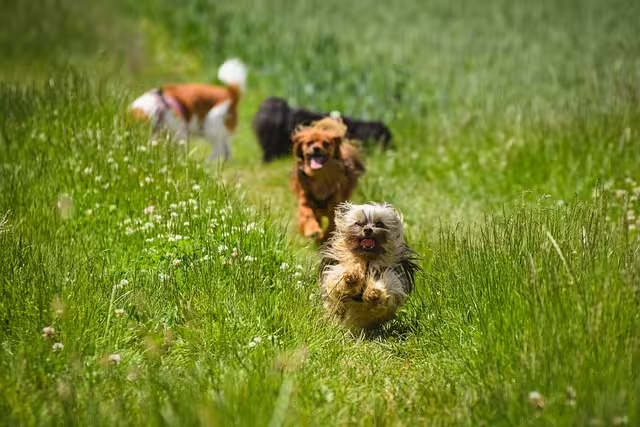
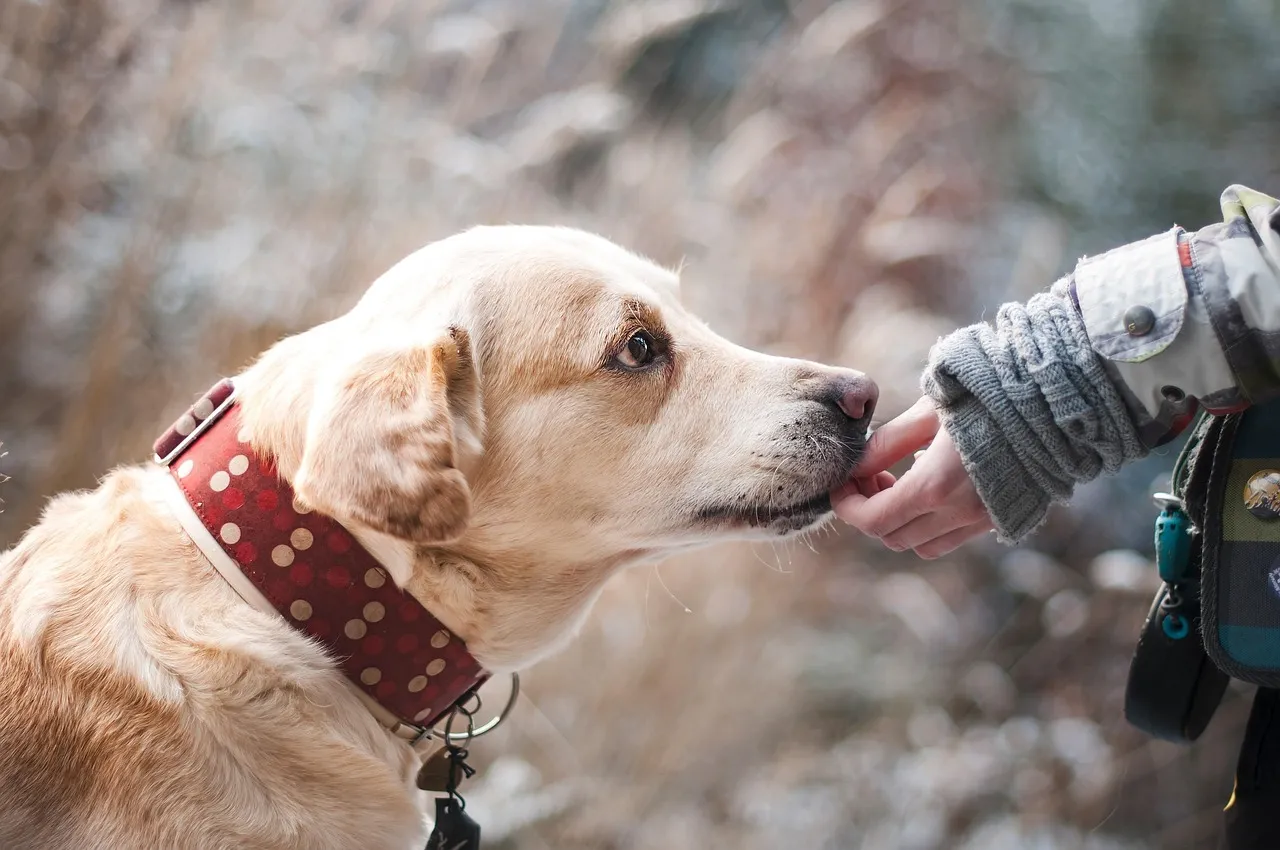
If you’ve ever watched a Labrador Retriever bound across a yard, tennis ball clenched triumphantly in its jaws, tail whipping like a helicopter rotor, you already know two things about this breed: they are ridiculously smart, and they have energy to burn. That combination makes Labs some of the most trainable dogs on the planet — but it also means an untrained Lab can turn into a 65-pound bundle of chaos in your living room.
The good news is that training a Labrador doesn’t require harsh corrections, rigid schedules, or hours of your day. It requires consistency, patience, and an understanding of how this breed actually thinks. Whether you’ve just brought home an eight-week-old puppy or you’re trying to course-correct a boisterous adult dog, this guide walks you through everything you need to know to raise a calm, confident, well-mannered Labrador in 2026.
We’ll cover foundational behavior science, age-appropriate training milestones, core obedience commands, potty and leash training, socialization, common behavior problems and how to fix them, mental enrichment, and the mistakes that quietly sabotage even well-intentioned owners. By the end, you’ll have a practical roadmap you can start using today.
Understanding Labrador Behavior Before Training
Before you teach a single command, it helps to understand why Labradors behave the way they do. Training becomes dramatically easier once you’re working with your dog’s instincts instead of against them.
Why Labradors Learn So Quickly
Labrador Retrievers were bred to work closely alongside people — originally helping fishermen haul nets and retrieve catches in the cold waters off Newfoundland, and later as retrieving gun dogs in the field. That history shaped a breed that is naturally cooperative, food-motivated, and eager to receive direction from a human partner. Unlike more independent breeds, Labs generally want to know what you’d like them to do, which is exactly why reward-based methods work so well with them.
Natural Instincts That Influence Training
A few built-in traits show up in almost every Labrador, and they matter enormously when you’re building a training plan:
- Retrieving drive. Many Labs have a genetic pull toward carrying things in their mouths — sticks, shoes, the occasional couch cushion. This isn’t defiance; it’s instinct, and it can actually be channeled into productive games.
- Food motivation. Labs tend to be enthusiastic eaters, which makes treat-based training especially effective, but also means you’ll need to manage portions carefully so training treats don’t lead to weight gain.
- High energy. Especially in the first two to three years, Labs have substantial exercise needs. A tired brain learns better than a wired one, so physical activity and training go hand in hand.
- People-oriented personality. Labradors tend to form strong bonds with their people and genuinely enjoy making them happy, which gives training a real head start. The flip side is that this closeness can turn into separation-related struggles if alone time isn’t introduced gradually and with care.
Common Training Challenges
Even with all these advantages, Labradors are notorious for a specific cluster of behaviors that catch new owners off guard: jumping on visitors, chewing furniture or shoes, pulling on the leash, excessive barking, and general over-the-top excitement in stimulating situations. None of these are signs of a “bad dog” — they’re signs of an untrained, under-exercised, or under-stimulated one. Every section below is designed to help you get ahead of these issues before they become habits.
When Should You Start Training a Labrador?
One of the most common questions new owners ask is when training should actually begin. The honest answer: earlier than most people expect, and it never truly stops.
8–12 Weeks
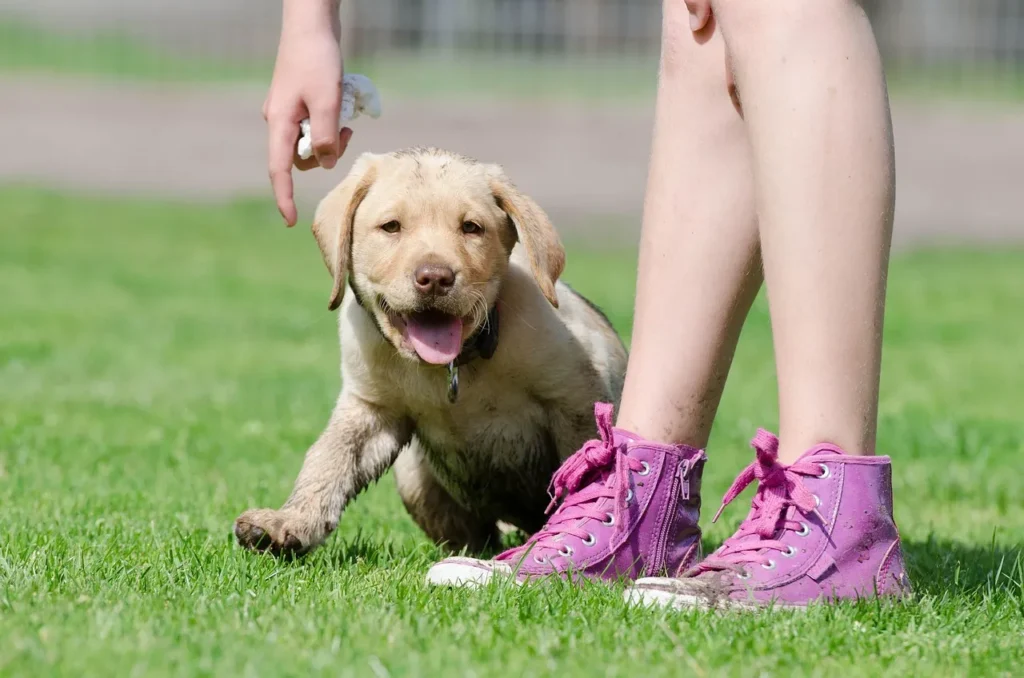
This is prime time for foundational work. At this age, puppies are absorbing information rapidly and forming lasting associations with the world around them. Focus on gentle name recognition, simple markers like “yes” or a clicker, potty training routines, and lots of positive exposure to new people, sounds, and surfaces. Formal obedience isn’t the priority yet — building trust and comfort is.
3–6 Months
With house manners starting to take shape, this is the ideal stage to layer in structured commands like sit, down, come, and the basics of loose-leash walking. Puppies at this age still have short attention spans, so keep sessions brief and fun rather than pushing for long drills. This period also happens to be prime socialization time, so make room for supervised introductions to other dogs and plenty of new environments.
6–12 Months
Welcome to Labrador adolescence — a stage that can feel like training regression even though it’s completely normal. Hormonal changes and growing independence mean a dog who seemed reliable at five months may suddenly “forget” commands at eight months. Stay consistent rather than assuming something went wrong; this phase passes with patience.
Adult Labrador Training
Here’s some reassurance for anyone who adopted an older dog or feels behind schedule: Labradors of any age can learn new skills. Adult dogs often have longer attention spans and fewer distractions than puppies, which can actually make certain lessons easier. It’s never too late to start.
Essential Labrador Training Tips for Beginners
Before diving into specific commands, a handful of principles will make every training session more effective.
Keep Sessions Short
Five to ten minutes of focused training, done consistently, tends to outperform long, drawn-out sessions. Labradors — especially puppies — lose focus quickly, and pushing past that point often causes frustration rather than progress. Several short bursts throughout the day beat one marathon session.
Be Consistent
Use the same word for the same behavior every time, and make sure everyone in the household is on the same page. If one person says “down” to mean lie down, and another uses it to mean get off the couch, your dog isn’t being stubborn — they’re genuinely confused.
Reward Good Behavior Immediately
Timing matters. Reward within a second or two of the desired behavior so your dog connects the treat, praise, or toy with exactly what they just did.
Use Clear Commands
Give the cue just once, using a calm, confident tone, instead of repeating it over and over. Repeating yourself teaches your dog that they can tune out the first few tries and only respond once you’ve said “sit” for the fifth time.
End Every Session Positively
Wrap up training while your dog is still engaged and successful, ideally on an easy win. Ending on a high note keeps your Lab looking forward to the next session instead of dreading it.
Teaching Basic Obedience Commands
These six commands form the backbone of a well-mannered Labrador and set the stage for everything more advanced later on.
Sit
Hold a treat near your dog’s nose, then slowly move it upward and back over their head. As their head tilts up, their bottom naturally lowers. The moment they sit, say “sit” and reward immediately.
Stay
Once sit is reliable, ask for a sit, then take a single step back before rewarding. Gradually increase distance and duration, always returning to reward rather than calling your dog to you (which can blur the line between “stay” and “come”).
Come
This is arguably the single most important safety command you’ll teach. Practice in a low-distraction area first, using an enthusiastic tone and a high-value reward. Never call your dog to you for something unpleasant, like ending playtime at the park — this teaches them that “come” leads to something they’d rather avoid.
Down
From a sit, lower a treat straight to the floor between your dog’s paws. As they follow the treat downward, their body will naturally lie down. Mark the moment with the word “down” and reward.
Leave It
Show a treat in a closed fist. Let your dog sniff and paw at it, and the instant they lose interest and back away, reward with a different treat from your other hand. This teaches self-control without creating a negative association with your closed hand.
Heel
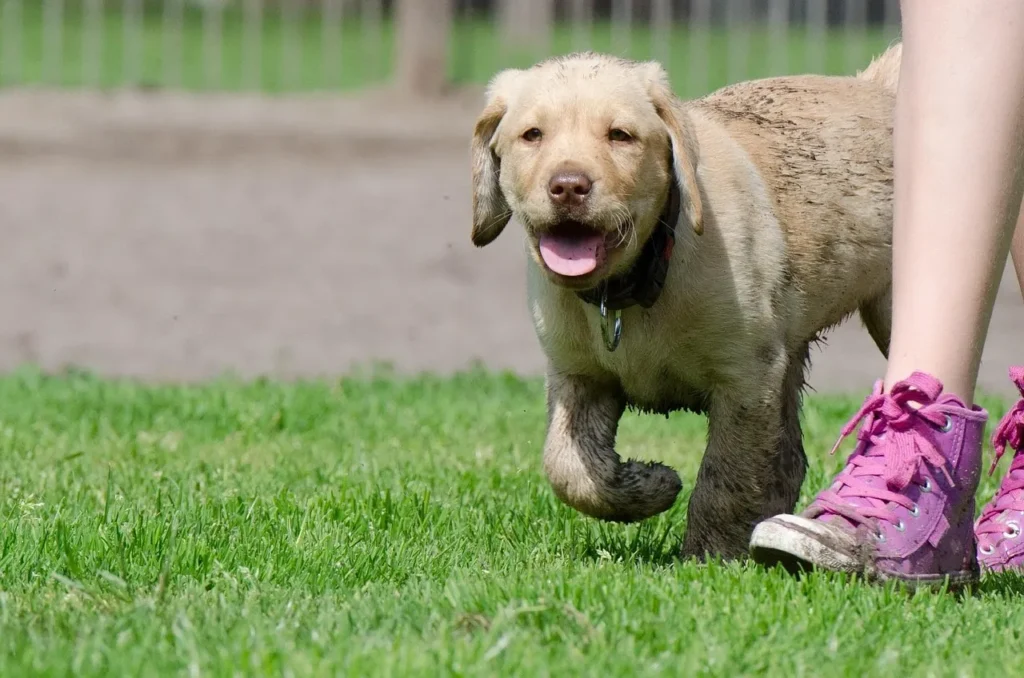
Start in a quiet space with your dog on a leash beside your leg. Reward frequently for staying in position as you take a few steps, gradually extending the distance before rewarding.
Comparison of Core Labrador Training Skills
Here’s a quick-reference table to help you plan which skills to prioritize and when:
| Skill | Difficulty | Recommended Age |
| Sit | Easy | 8 weeks+ |
| Recall | Medium | 10 weeks+ |
| Loose-Leash Walking | Medium | 12 weeks+ |
| Stay | Moderate | 12 weeks+ |
Use this as a rough guide rather than a strict rulebook — every dog progresses at their own pace, and it’s completely normal for one skill to click faster than another.
Potty Training Your Labrador Puppy
Housetraining is often the first real test of an owner’s patience, but a structured approach makes it far less stressful.
Creating a Schedule
Take your puppy out at consistent times: first thing in the morning, after meals, after naps, after play sessions, and right before bed. Puppies have limited bladder control, so frequent, predictable trips outside prevent most accidents before they happen.
Preventing Indoor Accidents
Watch for early signals like sniffing the floor, circling, or heading toward a door. Supervise closely during the early weeks, and consider confining your puppy to one easily monitored area when you can’t watch them directly.
Crate Training Tips
A properly sized crate — big enough to stand and turn around in, but not so large it becomes a bathroom in one corner and a bed in another — leverages a dog’s instinct not to soil their sleeping space. Introduce the crate gradually with treats and short, positive stays so it becomes a safe retreat rather than a punishment.
Nighttime Potty Routine
Limit water intake in the hour or two before bed, take a final potty trip right before lights out, and expect at least one nighttime wake-up call in the early weeks. This settles down considerably as bladder control matures.
Leash Training Without Pulling
Few things test an owner’s arm strength quite like an untrained Labrador on a leash. Fortunately, loose-leash walking is very teachable with the right approach.
Choosing the Right Equipment
A front-clip harness or a properly fitted flat collar typically offers better control and comfort than a standard back-clip harness. In fact, back-clip harnesses can unintentionally encourage pulling, since they make it easier for a dog to lean their weight into the leash.
Reward Loose Leash Walking
Rather than only correcting pulling, reward the moments when the leash is slack. Frequent treats for walking calmly beside you teach your Lab that staying close pays off.
Handling Distractions
Squirrels, other dogs, and interesting smells are a Labrador’s kryptonite. When you spot a distraction coming, increase your reward rate and encourage your dog’s attention before they have a chance to lock onto it.
Common Mistakes
Letting the leash go tight and then following your dog forward is one of the biggest culprits behind chronic pulling — it accidentally rewards the exact behavior you’re trying to stop. Instead, stop moving the instant the leash tightens, and only continue once it’s slack again.
Socializing Your Labrador
Early socialization remains one of the strongest predictors of a confident, well-adjusted adult dog, and it deserves just as much attention as formal obedience work.
Meeting New People
Expose your puppy to a variety of people — different ages, appearances, and mannerisms — in calm, positive settings. Let your dog approach at their own pace rather than forcing interactions.
Introducing Other Dogs
Controlled, supervised meetings with calm, vaccinated dogs help puppies learn appropriate play and communication skills. Puppy classes are a great low-pressure environment for this.
Exposure to New Environments
Car rides, different flooring surfaces, elevators, busy sidewalks — the wider the variety of experiences during the early months, the less likely your adult dog will be fearful of ordinary things later on.
Building Confidence
Let your dog investigate new sounds and objects voluntarily, and reward curiosity rather than rushing or forcing exposure. A dog who chooses to explore builds far more lasting confidence than one who is pushed into a situation.
Solving Common Labrador Behavior Problems
Even a well-trained Lab will test a few boundaries. Here’s how to address the most frequent issues.
Excessive Jumping
Turn away and remove attention the instant paws leave the ground, then reward calm, four-on-the-floor greetings. Consistency from every visitor is key — one person allowing jumping undoes the lesson for everyone else.
Chewing Furniture
Provide plenty of appropriate chew toys and rotate them to keep interest high. Puppy-proof problem areas, and redirect to an approved chew item the moment you catch unwanted chewing.
Counter Surfing
Keep counters clear of food, and teach a solid “leave it” alongside a reliable place command so your dog has something better to do than hover near the kitchen.
Pulling on Walks
Revisit the loose-leash principles above — reward slack leash frequently and stop moving the moment tension appears.
Barking Excessively
Identify the trigger first. Boredom, alert barking, and attention-seeking barking each call for different responses, from more mental enrichment to simply not rewarding the behavior with attention.
Poor Recall
Practice “come” daily in low-distraction settings, always with a high-value reward, and never punish a dog after they’ve come to you, even if it took a while. Punishment after the fact only teaches dogs that coming to you is risky.
Mental Stimulation and Enrichment
Physical exercise matters, but Labradors also need to use their brains. Mental fatigue is often just as effective as physical fatigue for producing a calm, settled dog.
Puzzle Toys
Treat-dispensing puzzles turn feeding time into a hands-on puzzle, letting your Lab put both their love of food and their natural smarts to good use.
Scent Games
Hiding treats around a room or yard and encouraging your dog to sniff them out taps into a Labrador’s natural nose-work ability and tires them out surprisingly fast.
Fetch Training
Structured fetch — with a clear start, retrieve, and release cue — channels the breed’s natural retrieving instinct into a productive, bonding activity rather than an unstructured chase.
Advanced Obedience
Teaching more complex behaviors, like multi-step sequences or distance commands, keeps a mentally sharp Labrador engaged well beyond the basics.
Daily Labrador Training Routine
A sample daily rhythm can help you build enrichment and training into your existing schedule rather than treating it as an extra chore:
- Morning obedience practice
- Short leash walk
- Recall exercises
- Puzzle toy session
- Afternoon socialization
- Evening fetch game
- Calm settling routine
You don’t need to hit every item every single day — think of this as a flexible menu rather than a rigid checklist.
Training Mistakes to Avoid
Even well-meaning owners fall into a few predictable traps.
Being Inconsistent
Mixed signals — different rules from different family members, or rules that change based on mood — create confusion that slows down every other part of training.
Repeating Commands
Saying “sit, sit, sit, SIT” teaches your dog that the first few repetitions don’t actually matter.
Training Too Long
Sessions that drag on past your dog’s attention span tend to produce frustration rather than learning. Shorter and more frequent almost always wins.
Skipping Socialization
Owners sometimes wait until a puppy is “fully trained” before exposing them to the world, missing the critical early window when new experiences are most easily absorbed.
Punishing Instead of Teaching
Harsh corrections can suppress a behavior temporarily while damaging trust and increasing anxiety. Reward-based methods remain the standard recommendation among veterinary behaviorists for a reason — they build the behaviors you want instead of just punishing the ones you don’t.
Advanced Labrador Training
Once the fundamentals are solid, many Labrador owners look to build on that foundation with more advanced pursuits.
Off-Leash Reliability
This is the culmination of a strong recall and impulse control foundation, built gradually in increasingly distracting environments and always within a securely fenced or otherwise safe area.
Agility
Labradors’ athleticism and eagerness to work with their handler make them naturals for agility courses, which combine physical exercise with mental focus.
Retrieving Games
Beyond basic fetch, structured retrieving drills — including multiple retrieves or scent-marked items — tap directly into the breed’s original working purpose.
Scent Work
Formal nose-work training, whether recreational or competitive, gives Labradors an outlet that’s both mentally exhausting and deeply satisfying for the dog.
Therapy and Service Training
The Labrador’s temperament — patient, people-oriented, and highly trainable — makes the breed one of the most common choices for therapy and service dog work, though this path requires specialized, professional training programs.
Frequently Asked Questions
How long does it take to train a Labrador? Basic obedience can take a few weeks to a few months of consistent practice, but training is really an ongoing relationship rather than a task with a finish line.
Are Labradors easy to train? Generally, yes. Their food motivation and eagerness to work with people make them one of the more trainable breeds, though their high energy and enthusiasm can be challenging for first-time owners.
What is the hardest age for Labradors? Most owners find the 6–12 month adolescent stage the most challenging, as growing independence can make previously reliable behaviors seem to disappear temporarily.
Should you use treats forever? Not at full rate. As behaviors become reliable, treats can be phased down to intermittent rewards mixed with praise and play, though occasional reinforcement helps maintain strong responses long-term.
How much daily training does a Labrador need? A combination of short structured sessions (a few five-to-ten-minute bursts) plus ongoing enrichment and exercise throughout the day tends to produce the best results.
Conclusion
Training a Labrador Retriever isn’t about achieving perfection in a week or memorizing a rigid set of rules. It’s about consistency, patience, and building a genuine partnership with a dog who, by nature, wants to work alongside you. Every short session, every well-timed reward, and every calm correction adds up over time into a dog who is not just obedient, but genuinely a joy to live with.
Focus on the relationship first, and the obedience tends to follow. And if you’re raising a puppy, remember that even a fully grown, food-motivated, tennis-ball-obsessed adult Labrador is still capable of learning something new. There’s no expiration date on good training.
So start small. Pick one command, one five-minute session, one moment today — and build from there. A few consistent minutes a day is really all it takes to raise the well-mannered, confident Labrador you’ve been picturing.