Bringing a puppy home is one part joy, one part chaos, and at least three parts “why is my couch cushion missing a corner.” Somewhere between the sleepless nights and the puddle accidents, most new owners realize that toys aren’t a nice-to-have. They’re a survival tool — for the furniture, for your shoes, and honestly, for your sanity.
But toys do a lot more than keep a puppy occupied for twenty peaceful minutes. During the first year of life, a puppy’s brain and body are developing at a pace they’ll never hit again. The right toys support that growth: they soothe sore, teething gums, they teach a puppy what’s okay to chew and what isn’t, and they give an anxious or bored brain something productive to do instead of your baseboards.
The trouble is, the pet aisle (or the endless scroll of an online store) is overwhelming. Squeaky toys, rope toys, rubber toys, puzzle feeders, things shaped like broccoli for reasons nobody has ever explained — how do you know what’s actually good for your puppy versus what’s just good marketing?
That’s what this guide is for. We’ll walk through why puppies need toys in the first place, how play changes as they grow, the different categories of toys worth having in the house, and how to actually choose the right ones for your dog’s size, age, and chewing style. Along the way, you’ll get a comparison table, two practical checklists, and answers to the questions new puppy owners ask most often. By the end, you’ll be able to walk into a pet store — or shop online — with a lot more confidence and a lot less guesswork.
Why Puppies Need Toys
It’s tempting to think of toys as entertainment, full stop. In reality, they’re doing several jobs at once during the first year of a dog’s life.
Physical Development
Puppies are building muscle, coordination, and jaw strength almost every time they play. Tugging, chasing, and chewing all engage muscle groups that support healthy growth, and toys that encourage movement — fetch balls, tug ropes, and flirt-pole style toys — help puppies develop coordination and stamina in a way that’s fun rather than forced. Chewing itself is a physical developmental task too, strengthening jaw muscles as adult teeth push through.
Mental Stimulation
A tired puppy is often a mentally tired puppy, not just a physically tired one. Puzzle toys, treat-dispensing toys, and snuffle mats ask a puppy to think, problem-solve, and use their nose — all skills that translate into a calmer, more confident adult dog. Mental enrichment has become such a priority for owners that puzzle feeders and treat-dispensing toys are increasingly treated as essential gear rather than an occasional extra, precisely because boredom is one of the biggest drivers of unwanted behavior in young dogs.
Preventing Destructive Chewing
Puppies chew. It’s not optional, and it’s not a phase you can train away entirely — it’s how they explore the world and how they manage the discomfort of teething. The goal isn’t to stop chewing; it’s to redirect it. A puppy with access to satisfying, appropriate chew toys is far less likely to turn your favorite shoes into a science experiment.
Building Confidence
Toys also play a quiet but important role in emotional development. A puppy that learns to happily entertain itself with a toy — in a crate, in a new room, or when left alone briefly — is building the foundation for independence and reducing the risk of separation anxiety later on. Confidence-building toys aren’t flashy, but they matter just as much as the ones that make noise or bounce.
How Puppies Play at Different Ages
Play isn’t static. What excites and challenges an 8-week-old puppy will bore a 6-month-old one, and using age-appropriate toys helps you match the toy to the actual developmental stage your dog is in.
8–12 Weeks
At this age, puppies are soft, small, and just beginning to explore the world beyond their litter. Toys should be lightweight, easy on tiny developing teeth, and soft enough not to cause discomfort. This is also the stage where baby teeth are coming in, so gentle chew toys and soft plush options tend to be the most appropriate.
3–4 Months
This is prime teething territory. Puppies in this window are losing baby teeth and cutting adult ones, which often means increased chewing, some mild discomfort, and a stronger drive to gnaw on anything within reach. Rubber teething toys — especially ones that can be frozen — tend to be the most useful category during this stretch.
5–6 Months
By now, most puppies have their adult teeth in and are testing out a stronger bite. This is when many owners notice their puppy going through toys faster than expected. Toys need to step up in durability, and this is a good stage to introduce more structured play like tug-of-war (with rules) and early puzzle toys.
6–12 Months
Adolescence. Puppies in this range have more energy, more jaw strength, and often more mischief in mind. Toys should be sturdier, and enrichment becomes especially valuable here, since adolescent dogs are notorious for channeling boredom into destructive behavior. This is also a great window to lean into treat-dispensing and puzzle toys that keep an increasingly clever brain occupied.
Different Types of Puppy Toys
Not all toys serve the same purpose, and a well-rounded toy box usually includes a mix of the categories below.
Chew Toys
The backbone of any puppy’s toy collection. Chew toys satisfy the natural urge to gnaw, support jaw development, and — when made of the right material — help ease teething discomfort. This remains the single largest category in the puppy toy world, and for good reason: almost every puppy needs at least one durable chew toy in rotation at all times.
Plush Toys
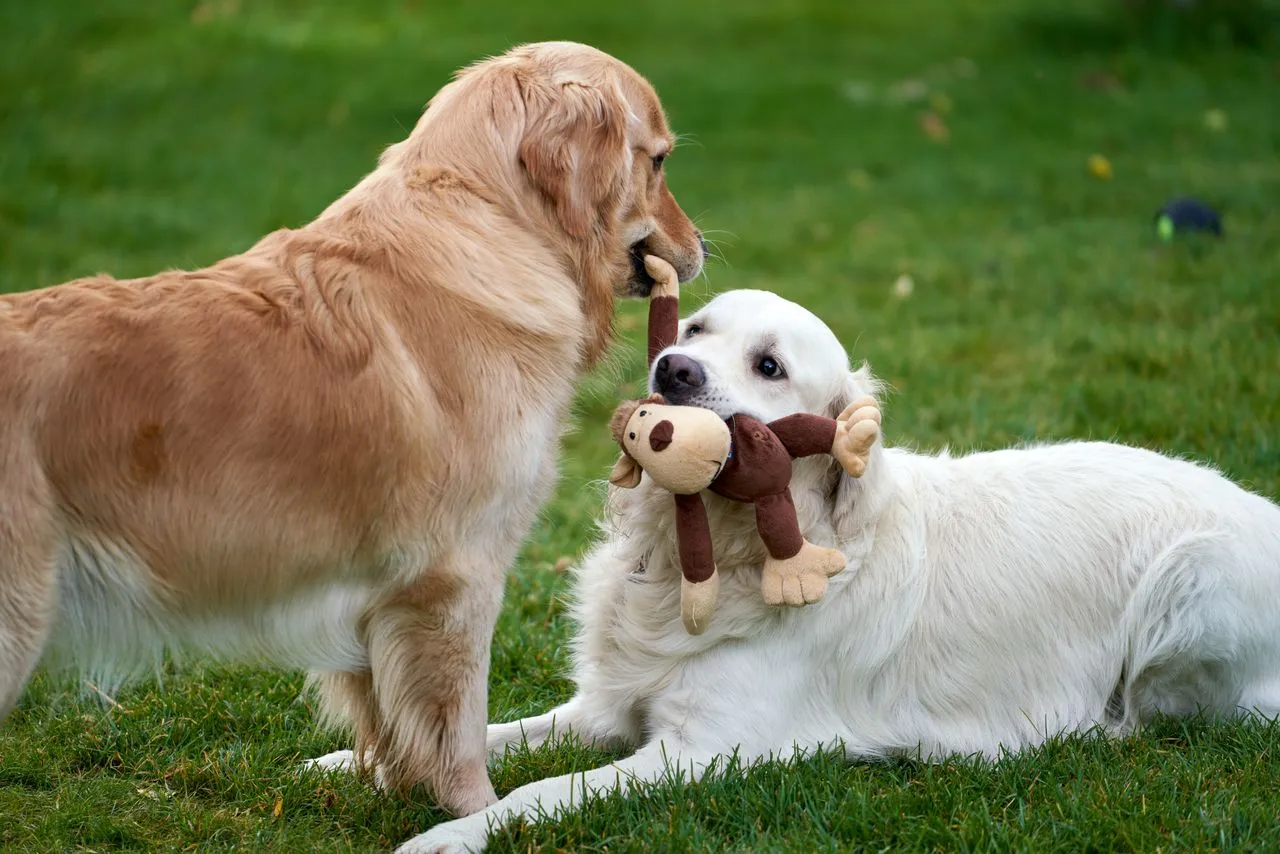
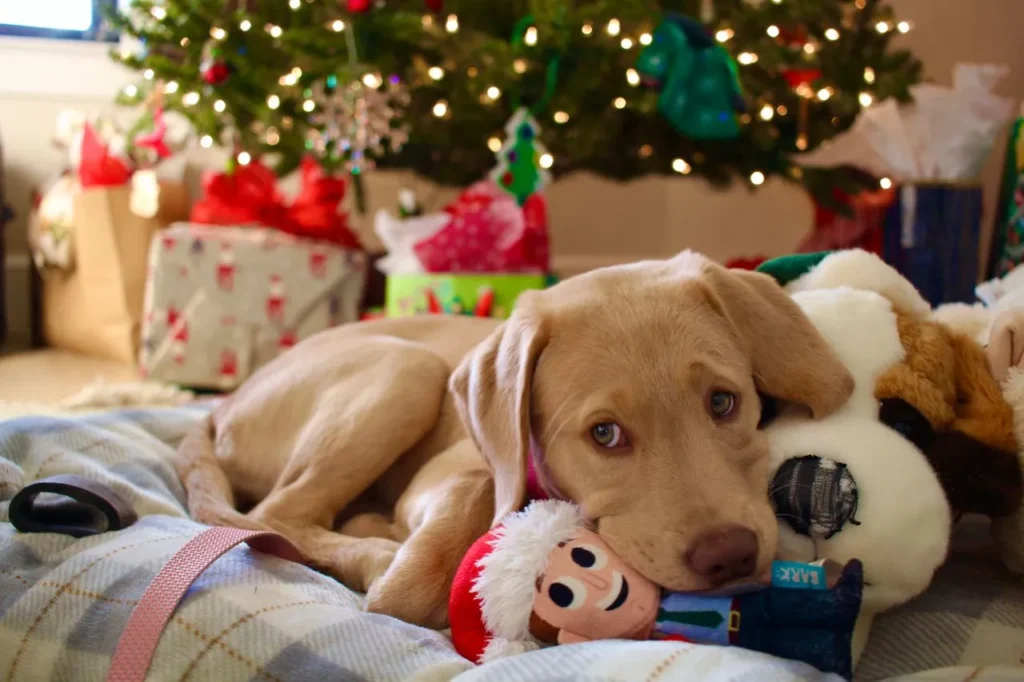
Soft, comforting, and great for gentle play or simply keeping a puppy company. Plush toys aren’t built for aggressive chewing, but they’re excellent for cuddling, light tugging, and encouraging a puppy to “carry” something around, which many dogs find soothing.
Rope Toys
Great for interactive tug play and light dental cleaning, as the fibers can help remove plaque as a puppy chews and tugs. Rope toys work well for supervised play but should be inspected regularly since loose strands can become a swallowing hazard.
Ball Toys
A classic for a reason. Balls encourage movement, chasing, and fetch — a great outlet for physical energy. Size matters enormously here; a ball that’s too small is a choking risk, so always size up rather than down.
Puzzle Toys
These ask a puppy to work for a reward, whether that’s sliding a panel, flipping a lid, or nosing through compartments. Puzzle toys are one of the fastest-growing categories in the puppy toy market because they directly address the mental stimulation piece that simpler toys can’t.
Treat-Dispensing Toys
A close cousin of puzzle toys, these reward chewing, nudging, or rolling with small treats. They’re particularly useful for slowing down food-motivated puppies and for providing solo enrichment when you can’t actively play.
Tug Toys
Built specifically for interactive tug-of-war, these toys strengthen the human-dog bond while also reinforcing impulse control if you incorporate simple “take it” and “drop it” cues during play.
Choosing the Right Toy for Your Puppy
With so many options, the decision usually comes down to six practical factors.
Breed Size
A toy that’s perfectly safe for a Chihuahua puppy could be a serious choking hazard for a Labrador, and a toy built to withstand a Mastiff’s bite might be unnecessarily heavy or awkward for a Yorkie. Always check the size and weight recommendations on packaging, and when in doubt, size up.
Age
As covered above, teething puppies need different toys than adolescents. A soft toy that’s perfect at 10 weeks may not hold up to the stronger jaws of a 7-month-old.
Chewing Strength
Some puppies are gentle chewers who’ll happily gnaw on the same plush toy for months. Others are what trainers affectionately call “power chewers,” capable of destroying a toy in minutes. Know your puppy’s style and shop accordingly — power chewers generally need rubber or reinforced nylon rather than plush or thin rope.
Material Safety
Look for BPA-free plastics, natural rubber, and non-toxic dyes. Cheaply made toys can contain fillers or chemicals that aren’t meant for repeated chewing, so it’s worth checking materials even on toys marketed specifically for puppies.
Durability
A toy doesn’t need to be indestructible, but it should hold up to reasonable use without falling apart into small, swallowable pieces after a single session.
Washability
Puppy toys get dirty fast — drool, dirt, the occasional trip through mud. Toys that can be tossed in the wash or wiped down easily are far more practical for daily life than ones that require special care.
Best Types of Puppy Toys Compared
| Toy Type | Best For | Main Benefits |
| Rubber Chew Toy | Teething | Soothes sore gums, highly durable |
| Puzzle Toy | Mental stimulation | Reduces boredom, encourages problem-solving |
| Plush Toy | Comfort | Gentle play, soothing companionship |
| Rope Toy | Tug & dental play | Interactive exercise, helps clean teeth |
| Treat-Dispensing Toy | Slow, rewarding play | Encourages patience, solo enrichment |
Best Puppy Toys for Teething
Teething is arguably the single biggest driver of toy purchases in the first six months of a puppy’s life, and for good reason — it’s uncomfortable, and puppies need an outlet.
Rubber Toys
Natural rubber toys are the gold standard for teething relief. They’re firm enough to satisfy the urge to chew but gentle enough not to damage emerging adult teeth, and this category continues to be the fastest-growing segment of the puppy toy market as more owners look specifically for teething relief.
Cooling Toys
Some toys are designed with textures or materials that feel cool to the touch, offering a soothing sensation against inflamed gums without needing to be frozen first.
Frozen Stuffable Toys
A favorite among experienced owners: rubber toys with a hollow center can be stuffed with puppy-safe treats or a bit of plain yogurt and frozen. The cold provides longer-lasting relief for sore gums, and it turns a simple chew toy into a slow, engaging activity.
Dental Chews vs Toys
Dental chews (edible products designed to reduce plaque) and dental toys (reusable rubber or nylon products with ridges) serve overlapping but distinct purposes. Chews are consumed and offer a concentrated cleaning benefit, while toys are reusable and provide ongoing chewing relief. Many owners find a combination of both works best.
Interactive Toys That Keep Puppies Busy
Enrichment isn’t a buzzword — it’s become one of the most important categories in puppy care, precisely because a mentally engaged puppy is a calmer, better-behaved one.
Puzzle Feeders
These replace or supplement a regular food bowl, requiring a puppy to manipulate the feeder to access kibble. They slow down fast eaters and turn mealtime into a brain exercise.
Treat Balls
Simple in concept: a puppy rolls or noses the ball, and treats fall out. It’s an easy, low-maintenance way to add enrichment to a normal play session.
Snuffle Mats
Fabric mats with strips or folds where treats can be hidden, snuffle mats tap into a puppy’s natural foraging instinct and sense of smell — a wonderfully tiring activity for a young nose.
Slow Feed Toys
Designed to prevent puppies from eating too quickly, these toys use ridges or mazes built into the design to slow down mealtime, which can also help reduce the risk of digestive discomfort.
Safe Toy Materials
Not all “puppy-safe” labels are created equal, so it helps to know what you’re actually looking for.
Natural Rubber
Durable, non-toxic when sourced properly, and gentle enough for teething gums — natural rubber is widely considered one of the safest and most versatile materials for puppy toys.
Food-Grade Silicone
Soft, easy to clean, and often used in cooling or freezable toys. Food-grade silicone is a good option for puppies who need something gentler than rubber.
Durable Nylon
Common in toys meant for stronger chewers. Nylon holds up well over time but should be chosen in appropriate hardness levels for a puppy’s age, since overly hard nylon can be tough on younger teeth.
Cotton Rope
Natural and reasonably safe, though it should be monitored for fraying, since loose threads can be swallowed.
Materials to Avoid
Steer clear of toys with unclear material sourcing, strong chemical odors, brittle plastic that can crack into sharp pieces, or toys explicitly marketed for adult dogs with tougher jaws, as these are often too hard for a puppy’s developing teeth.
Signs It’s Time to Replace a Puppy Toy
Even the best toys don’t last forever, and knowing when to retire one is just as important as choosing it in the first place. Watch for:
- Deep cracks or splits in rubber or plastic
- Loose stuffing poking through seams
- Broken or exposed squeakers
- Missing pieces, especially small parts that could be swallowed
- Sharp or jagged edges from chewed plastic
- Excessive wear that changes the toy’s shape or structure
If you spot any of these, it’s time to toss the toy rather than risk a vet visit.
Common Puppy Toy Mistakes
Even well-meaning owners fall into a few predictable traps.
Buying Toys That Are Too Small
A toy that seems “cute-sized” for a small puppy can quickly become a choking hazard, especially as that puppy grows. Always size up when unsure.
Leaving Unsafe Toys Unsupervised
Some toys — particularly those with squeakers, small parts, or loosely woven rope — are best reserved for supervised play sessions rather than left in a crate overnight.
Choosing Toys for Adult Dogs
Toys marketed for adult dogs are often too hard, too heavy, or too large for a growing puppy’s mouth and jaw strength.
Ignoring Cleaning
Toys accumulate drool, dirt, and bacteria over time. Skipping regular cleaning turns a fun object into a genuinely unhygienic one.
Not Rotating Toys
Leaving the same five toys out all the time leads to boredom fast. Puppies, much like small children, tend to get excited about a “new” toy that’s really just an old one reintroduced after a break.
How to Rotate Puppy Toys
Weekly Rotation
Keep a portion of your puppy’s toys out of sight and swap them in every week or so. This keeps play sessions fresh without requiring a constant stream of new purchases.
Seasonal Rotation
Consider swapping in cooling or freezable toys during teething-heavy months and leaning more on puzzle or plush toys once teething calms down.
Cleaning Schedule
Rubber and nylon toys can typically be washed with warm, soapy water weekly, while plush toys often do well in a mesh laundry bag through a gentle wash cycle. Always check manufacturer guidance first.
Storage Tips
A simple bin or basket keeps toys contained and makes rotation easy — and it teaches puppies, over time, that toys have a “home,” which can be a small but useful early step in household routine.
Features to Look for When Buying Puppy Toys
When you’re standing in the aisle or scrolling through options, a quick mental checklist can save a lot of trial and error. Look for:
- Non-toxic, BPA-free materials
- Size appropriate for your puppy’s current and expected adult size
- Strong durability suited to your puppy’s chewing style
- Easy-to-clean surfaces or machine-washable fabric
- Age-specific design, especially for teething puppies
- Interactive or enrichment features that go beyond simple chewing
- Veterinary or trainer recommendations, where available
Frequently Asked Questions
What toys are safest for puppies?
Toys made from natural rubber, food-grade silicone, or well-constructed plush fabric tend to be the safest choices, especially when sized appropriately and free of small, detachable parts.
When should puppies start using toys?
Puppies can start using soft, age-appropriate toys as early as 8 weeks old, once they’re settled into their new home.
Can puppies sleep with toys?
Soft, simple toys without squeakers or loose parts are generally fine for supervised crate time or sleep, though it’s worth choosing something specifically low-risk for unsupervised hours.
How many toys should a puppy have?
There’s no strict number, but most trainers suggest having a small rotating collection — enough variety to prevent boredom without overwhelming a young dog with too many choices at once.
Which toys help with teething?
Rubber chew toys, especially ones that can be frozen with a puppy-safe treat inside, tend to offer the most relief during the teething stage.
Are squeaky toys safe?
Squeaky toys can be safe for supervised play, but the squeaker mechanism itself can become a choking hazard if the toy is torn apart, so they’re best avoided during unsupervised time.
How often should toys be replaced?
Replace toys as soon as you notice cracks, missing pieces, exposed stuffing, or significant wear — there’s no fixed timeline, since it depends entirely on how hard your individual puppy chews.
Conclusion
Choosing the right toys for a puppy isn’t about buying the biggest bin at the pet store — it’s about matching the right toy to the right stage of development, the right chewing style, and the right moment in your puppy’s day. A well-rounded toy box usually includes a sturdy chew toy for teething relief, a puzzle or treat-dispensing toy for mental stimulation, and a soft plush option for comfort and quiet play.
Beyond the shopping list, the habits matter just as much as the toys themselves. Inspect toys regularly for wear, rotate them often to keep play interesting, and adjust your choices as your puppy grows from a wobbly 8-week-old into a confident, adolescent troublemaker. Do that, and you’ll give your puppy exactly what they need — not just to stay entertained, but to grow into a healthy, well-adjusted dog.