If you’ve spent any time around dog trainers, you’ve probably heard the distinctive click-click of a small plastic box. Clicker training has been a staple of positive reinforcement training for decades, and for good reason: it gives dogs a precise, consistent signal that tells them exactly which behavior just earned a reward.
But a clicker isn’t magic. It won’t fix behavior problems on its own, and it isn’t a substitute for treats, toys, or the other things your dog actually wants. What it offers is clarity — a way to communicate the exact instant your dog did something right, even when you can’t hand over a reward that same second.
This guide covers what clicker training actually is, what current research says about how well it works, how to get started, and where the method fits into everyday life with your dog. Along the way, we’ll look at common mistakes, troubleshooting tips, and situations where a clicker might not be the right tool at all.
What Is Clicker Training?
Clicker training is a form of positive reinforcement training built around a marker signal — usually a small mechanical device that makes a short, sharp click. The core idea is simple: when your dog does something you want, you click at that exact moment, then follow up with a reward. Over time, the dog learns that the click itself predicts good things, which makes it a powerful way to communicate precisely which behavior earned reinforcement.
Unlike training methods built on physically guiding or correcting a dog, clicker training rewards the behavior you want rather than punishing the behavior you don’t. It’s a teaching tool, not a control mechanism.
What the Click Actually Communicates
It helps to separate two things that often get lumped together: cues and markers. A cue is a request — “sit,” “down,” a hand signal — that asks the dog to do something. A marker is confirmation that the dog already did the right thing. The click doesn’t ask for anything; it simply says, “Yes, that. That’s what earned your reward.”
This distinction matters because it changes how you think about timing. You’re not clicking to get your dog’s attention or to interrupt something. You’re clicking to mark a specific moment that already happened.
How a Neutral Sound Becomes Meaningful
On its own, a click means nothing to a dog. It becomes meaningful through repetition — click, then reward, click, then reward — until the dog forms an association between the sound and something valuable. Trainers often call this process “charging” or “loading” the clicker. Once that association is solid, the click itself functions almost like a reward because the dog knows what’s coming next.
Clicker Training vs. General Positive Reinforcement
All clicker training is reward-based, but not all reward-based training uses a clicker. Some trainers reinforce behavior directly, without any marker at all. Others use a verbal marker word, a whistle, or a hand signal instead of a mechanical device. The clicker is one tool among several, not a separate training philosophy.
Does Clicker Training Work? What the Research Shows
The honest answer is: it depends on what you’re comparing it to and what you’re trying to teach.
Evidence Supporting Marker Training
A 2025 controlled study followed 28 candidate detection dogs, splitting them evenly between marker-training and reward-only groups. The dogs trained with a clicker completed their training in fewer trials, gave more accurate alerts, pinpointed odor locations more precisely, and held up better against extinction — meaning their trained behavior didn’t fade as quickly when reinforcement became less frequent. This kind of result makes sense in the context of detection work, where the reward often can’t be delivered the instant the dog finds what it’s searching for. A marker bridges that gap.
Why Studies of Basic Behaviors Have Mixed Results
Not every study paints the same picture. Research involving mixed-breed shelter puppies found no measurable improvement in learning speed when a clicker was added to food-based training. In other words, for simple behaviors taught at close range, the clicker didn’t necessarily make training faster than food alone.
This isn’t a contradiction so much as a matter of context. A clicker earns its keep most clearly in situations where reward delivery is delayed, where precision matters, or where the trainer is shaping a complex behavior step by step. For a puppy learning to sit while a treat is already in hand, the marker may add little.
Handler Skill May Matter More Than the Device
A survey of 586 dog owners and training professionals found that “clicker training” gets used as a catch-all term covering both mechanical clickers and verbal markers, and that people apply the method in noticeably different ways. Respondents generally rated the approach as successful, but they also stressed that a trainer’s timing and mechanical skill — not the device itself — often determine how well it works.
A broader review of clicker-training research reported generally moderate effects overall, but it also flagged wide variation in study design, terminology, conditioning procedures, and trainer experience. That variation helps explain why results across studies don’t always agree.
There’s also a practical finding worth knowing: research comparing dogs rewarded after every click against dogs rewarded after only 60% of clicks found no advantage to the partial-reward group. This supports a rule most experienced trainers already follow — reward every click, particularly while a dog is still learning.
The Practical Evidence-Based Conclusion
Reward-based training has strong, consistent support. The clicker itself is better understood as a precision communication tool than a universally superior method. It tends to shine with complex behaviors, shaping, and situations involving delayed rewards. For everyday cues, good timing and the right reward often matter more than the tool in your hand. The American Veterinary Society of Animal Behavior continues to recommend reward-based methods for training and behavior modification, and specifically advises against aversive techniques.
Benefits and Limitations of Clicker Training
Potential Benefits
A clicker offers precise, consistent feedback that’s hard to replicate with your voice alone. Because the sound doesn’t vary the way tone of voice can, it gives dogs an unusually clean signal. This precision makes shaping — building a behavior through small successive steps — considerably easier. A clicker also works at a distance, reduces the need to physically guide your dog into position, and can turn ordinary training into a form of mental enrichment.
Possible Limitations
The device itself creates a coordination challenge. You need to manage the clicker, a leash, and treats simultaneously, which takes practice. A poorly timed click — even a fraction of a second late — can accidentally mark the wrong behavior, like a dog standing up rather than sitting down.
Dogs That May Dislike the Sound
Some dogs startle at the sharp sound of a standard box clicker, and that’s worth taking seriously rather than pushing through. If your dog seems uneasy, try increasing the distance between the clicker and your dog, muffling the sound with a hand or pocket, switching to a softer clicker model, or using a gentle verbal marker instead. The AVSAB notes that a startle response to the sound isn’t unusual at first, but it shouldn’t be forced through repeated exposure.
When a Verbal Marker May Be More Practical
A word like “yes” or “good” has one major advantage: it’s always with you. No fumbling for a device, no free hand required. A clicker may offer sharper consistency and precision, but a verbal marker is often more realistic for daily life — on walks, during meals, or any time your hands are full.
| Marker method | Main advantages | Possible limitations | Best uses |
| Mechanical clicker | Distinctive and precise | Requires an extra device | Shaping and new skills |
| Verbal marker | Convenient and hands-free | Tone may vary | Daily-life training |
| Direct reward without marker | Simple setup | Less precise when delivery is delayed | Easy behaviors at close range |
| Whistle or other sound | Audible at a distance | Must be carefully conditioned | Recall and distance work |
What You Need Before Starting
Choosing an Appropriate Clicker
Clickers come in a few common designs — box clickers, button clickers, finger-strap models, and volume-adjustable versions. The right choice comes down to comfort and consistency. You want something you can operate reliably without looking at it, and ideally something with a volume that won’t startle a sensitive dog.
Selecting Rewards Your Dog Truly Values
Reinforcement is defined by its effect on your dog’s behavior, not by what you assume they should like. Some dogs will work hard for a small piece of chicken; others are more motivated by a tug toy, a game of fetch, or the chance to sniff a particular patch of grass. Pay attention to what your dog actually chooses when given options, rather than defaulting to whatever’s convenient for you.
Preparing the Training Space
Start in a quiet, familiar space with minimal distractions and solid, non-slip footing. Save the busy park or crowded sidewalk for later. Difficulty should increase gradually — testing a brand-new skill in a chaotic environment sets your dog up to fail before they’ve had a fair chance to learn it.
Managing Treat Size and Daily Calories
Training treats should be small enough to eat in one bite, so sessions don’t get bogged down in chewing. It’s also worth factoring training treats into your dog’s overall daily calorie intake, especially during longer or more frequent sessions. If your dog has allergies, digestive sensitivities, weight concerns, or a prescribed diet, check with your veterinarian before making treats a regular part of training.
How to Charge the Clicker
The Click-Then-Reward Sequence
Before you use the clicker to teach anything, you need to build the basic association. Click once, then deliver a reward — no sit, no eye contact, no behavior required at this stage. Repeat this simple sequence multiple times. The click should always come first, before you reach for the treat, so your dog learns the sound predicts the reward rather than the other way around.
How Many Pairings Are Needed?
A commonly cited starting point is somewhere around 10 to 20 repetitions, though individual dogs vary. Rather than counting to a fixed number, watch your dog’s behavior for signs that the association has formed.
How to Test Whether the Association Has Formed
One way to check: wait until your dog is calmly looking away from you, then click once and watch their reaction. If they turn toward you expecting a reward, that’s a good sign the click has meaning. Just don’t use this test repeatedly without following through with a reward — a click still needs to pay off every time.
The Rule That Protects the Marker’s Meaning
Every intentional click should be followed by a reward, and that includes accidental or poorly timed clicks. Research hasn’t shown any benefit to occasionally withholding the reward during the learning phase — if anything, inconsistency just muddies the signal.
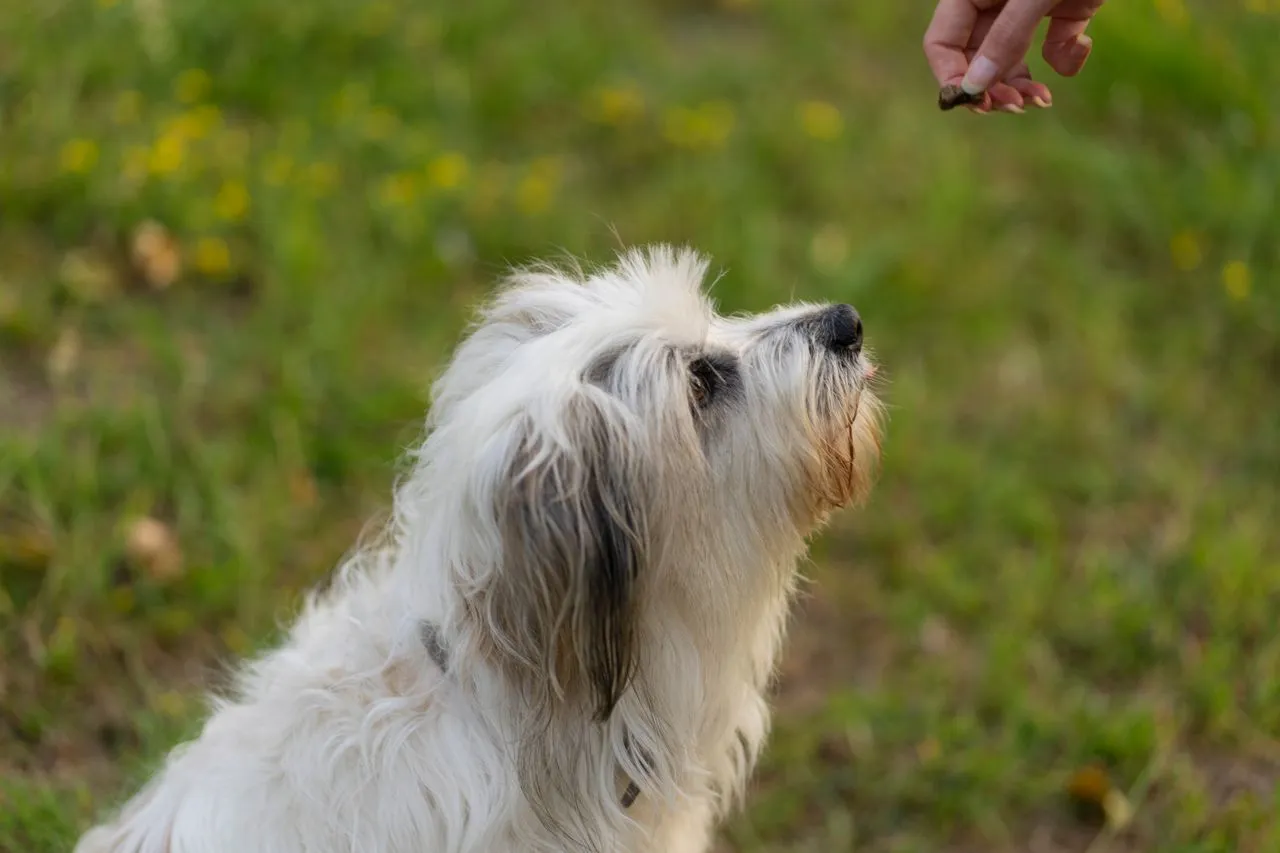
The Essential Mechanics of Successful Clicker Training
Click the Behavior, Not the Reward
The click needs to happen at the exact instant your dog performs the correct action. The reward itself can follow a beat or two later — what matters is that the click identifies the precise moment that earned it.
Reward After the Click, Not at the Same Time
If you reach for the treat before clicking, the visible movement of your hand can overshadow the sound of the click itself. Try to keep your reward hand still and neutral until after you’ve clicked.
Use One Click for One Correct Response
It can be tempting to click rapidly as a form of praise, almost like applause. Resist that urge. Repeated clicking blurs the timing information the marker is supposed to provide.
Break Behaviors Into Small Achievable Steps
Think in terms of criteria — the specific version of a behavior you’re currently rewarding. If your dog stops succeeding, the most common fix is lowering your criteria rather than repeating the same difficult step over and over.
Keep Sessions Brief and End Successfully
Several short sessions beat one long one. Stop while your dog is still engaged and interested, and try to end on an easy behavior your dog can perform confidently, so the session finishes on a high note.
Three Ways to Teach Behaviors With a Clicker
Capturing Naturally Offered Behavior
Sometimes the easiest approach is simply waiting for your dog to do something on their own — lying down, glancing toward you, settling quietly — and clicking the moment it happens. Capturing works particularly well for calm behaviors and habits your dog already offers naturally.
Luring a Dog Into Position
A treat or target can guide your dog’s body into an initial movement, like following a hand downward into a sit. The key is fading the lure quickly, so your dog doesn’t come to depend on seeing food before they’ll respond.
Shaping Through Successive Approximations
Shaping breaks a final behavior into small steps and rewards each one as the dog gets closer to the goal — looking at a mat, then stepping toward it, then touching it, then eventually lying on it. This is where a clicker’s precision often pays off most clearly.
When to Add the Verbal Cue
Add a word only once your dog is reliably offering the behavior on their own. Attaching a cue too early means repeating a word your dog hasn’t actually learned yet, which can dilute its meaning.
Beginner Clicker-Training Exercises
Teaching Attention and Name Response. Click your dog for voluntarily looking at you before introducing their name as a cue. This foundation supports later training in more distracting environments.
Teaching a Hand Target. Click the moment your dog’s nose touches your open palm. Targeting is a versatile skill that later helps with positioning, recall, movement, and cooperative care.
Teaching Sit. Capture or lure the sit, then click the instant your dog’s rear touches the floor. Avoid rewarding in a way that encourages your dog to pop right back up.
Teaching Down. Use a lure or shaping process without applying physical pressure. Down often requires smaller, more gradual steps than sit.
Teaching “Go to Your Mat.” Click initial interest in the mat, then a paw on it, then the full body, then calm duration on the mat. Current AKC guidance follows a similar incremental approach.
Teaching Recall Foundations. Mark the moment your dog decides to turn and move toward you, then gradually add distance and distraction. Recall should always be heavily reinforced and never routinely followed by something your dog dislikes.
A Step-by-Step Training Session Readers Can Follow
Once you understand the mechanics, most training sessions follow a similar structure:
- Decide exactly which behavior will earn a click.
- Prepare small, high-value rewards before starting.
- Begin in a low-distraction environment.
- Wait for, lure, or shape the first achievable action.
- Click at the exact moment the criterion is met.
- Deliver the reward after every click.
- Repeat only while the dog remains engaged.
- Raise one difficulty factor at a time.
- Record progress and finish with an easy success.
Deciding on a clear criterion before you start prevents random, inconsistent clicking and makes it much easier to tell whether your dog is actually progressing.
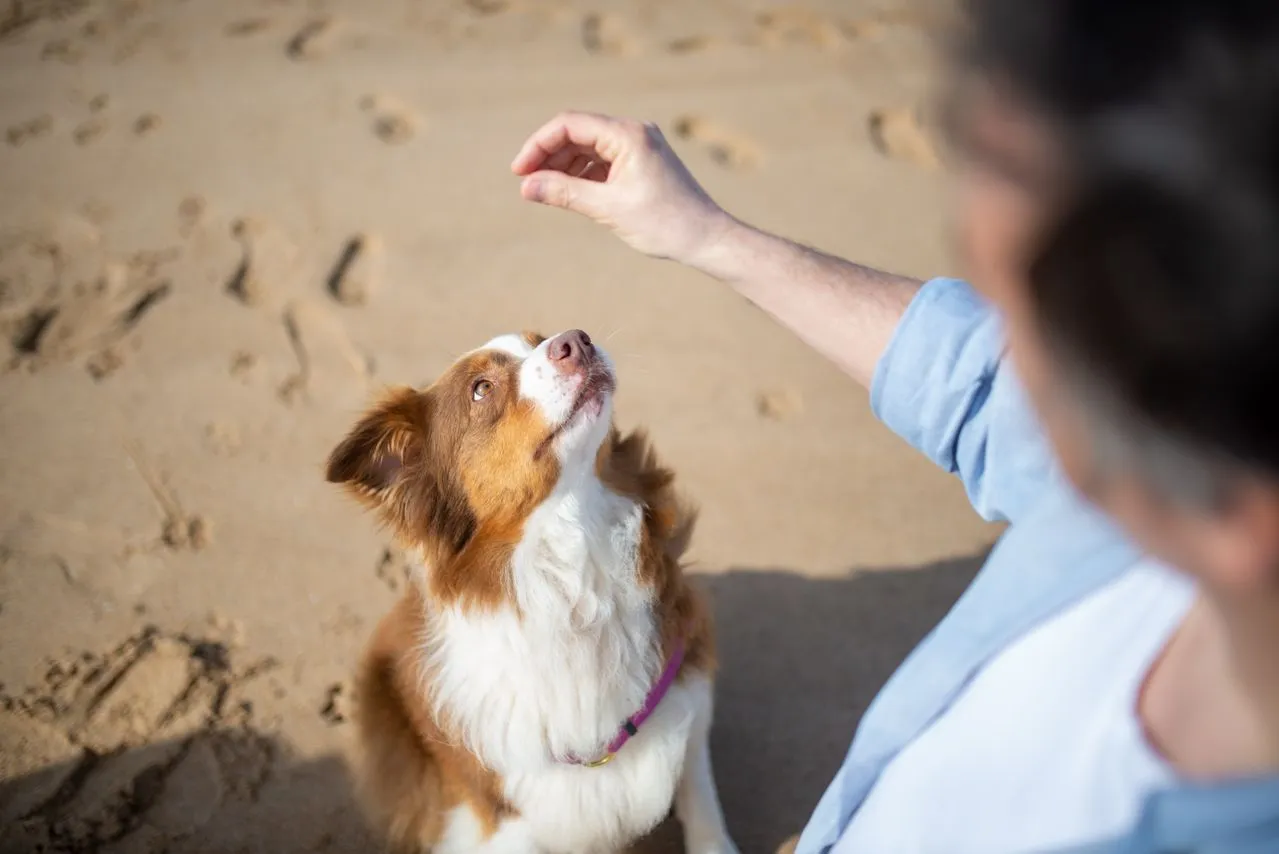
How to Progress Beyond the First Successful Repetition
One successful repetition doesn’t mean your dog fully understands a behavior yet.
Building Duration. Increase how long your dog holds a position in small increments. Rushing this step tends to cause more failures than it prevents.
Adding Distance. Gradually move farther away while keeping other elements — like duration or distraction — easier during that phase.
Introducing Distractions. Move through a progression: a quiet room, then another room, then a yard, then a calm outdoor area, then busier environments. A dog who knows a behavior perfectly at home may struggle the first time they try it somewhere new.
Generalizing the Behavior. Dogs don’t automatically transfer a cue across different rooms, surfaces, people, or handler positions. Expect to reteach, or at least reinforce, behaviors in new contexts.
Changing Only One Variable at a Time. Trainers often refer to the “three Ds” — duration, distance, and distraction. Increase one while keeping the other two at a manageable level.
How and When to Fade the Clicker
A common misconception is that you’ll need to carry a clicker for the rest of your dog’s life. You won’t.
Use the Clicker Most During Active Learning. The marker earns its value most clearly when you’re teaching something new, refining precision, or shifting criteria. Once a behavior is fluent, you don’t need to click every single repetition anymore.
Transitioning to Everyday Reinforcement. Move from continuous reinforcement during early learning toward a more natural, variable schedule once the behavior is reliable. Keep stronger reinforcement in reserve for difficult environments, safety-critical behaviors, and especially good responses.
Why Rewards Should Not Disappear Completely. Fading the clicker doesn’t mean fading all reinforcement. Well-established behaviors still benefit from food, play, praise, and access to things your dog enjoys.
Keeping the Marker Available for New Skills. You can retire the clicker for cues your dog already knows and bring it back whenever you’re teaching something new or working through a tricky step.
Common Clicker-Training Mistakes
Clicking Too Early or Too Late. Poor timing can accidentally mark the wrong moment — standing up, jumping, or looking away instead of the behavior you intended. Practicing your timing independently of your dog, such as clicking the instant an object hits the floor, can sharpen your mechanics.
Clicking Without Delivering a Reward. Repeatedly clicking without following through weakens the signal’s meaning. Even an accidental click deserves a reward.
Using the Clicker to Get the Dog’s Attention. The clicker isn’t a recall tool or an interruption device. Clicking to grab your dog’s focus risks reinforcing whatever they happened to be doing right before the sound.
Raising Criteria Too Quickly. Hesitation, wandering, barking, repeated mistakes, or disengagement often signal that a step is too hard. Dropping back to an easier version usually solves it.
Repeating a Cue the Dog Does Not Understand. Saying “sit” over and over without a response teaches your dog that the word is optional.
Training Too Long. Watch for slower responses, excessive sniffing, or visible frustration — all signs it’s time to wrap up or lower the difficulty.
Assuming Food Is the Only Possible Reward. Food is popular because it’s fast and easy to deliver repeatedly, but it isn’t the only option. Pay attention to what genuinely motivates your individual dog.
Troubleshooting Common Problems
The Dog Is Afraid of the Clicker. Stop using the loud device and switch to something quieter. Reintroduce a softer marker from a comfortable distance, pairing it consistently with something your dog enjoys.
The Dog Becomes Overexcited Around Treats. Try lower-value food, calmer delivery, tossing treats to the floor, or increasing distance from the treat pouch. Reinforcing brief moments of calm can also help.
The Dog Stares at the Treat Hand. Keep treats out of sight — in a pouch or behind your back — and reward from varied positions so your dog learns to focus on the task rather than your hand.
The Dog Stops Offering Behavior. Check for fatigue, reduce distractions, lower your criteria, and consider whether the reward needs to be more compelling.
Progress Works at Home but Disappears Outside. This usually means the behavior hasn’t generalized yet, or the environment is simply too difficult right now. Rebuild the skill in an easier outdoor setting rather than repeating the same cue louder.
The Dog Is Not Food-Motivated. This can stem from medical, environmental, emotional, or simple preference-related reasons. Test alternative rewards and check in with your veterinarian if your dog’s appetite has changed unexpectedly.
Clicker Training for Puppies, Adult Dogs, and Senior Dogs
Puppies benefit from very short sessions focused on house-training support, gentle handling exercises, name response, recall basics, and reinforcing calm behavior. Long drills tend to overwhelm a young puppy rather than help them.
Adult rescue dogs often need time to settle in before formal training begins. Avoid assuming anything about their previous experience, observe what motivates them, and start with low-pressure behaviors they can offer voluntarily.
Senior dogs may need non-slip surfaces, comfortable positions, shorter sessions, and adjustments for changes in hearing, vision, or mobility. A sudden shift in behavior or learning ability is worth a veterinary check.
Any breed can learn through clicker training, since the underlying learning principles apply broadly. That said, motivation, arousal level, physical capability, and individual temperament all shape how a session should be structured.
Advanced and Everyday Uses of Clicker Training
Cooperative Veterinary and Grooming Care. Trainers use markers to reinforce chin rests, paw presentation, and calm, voluntary participation in routine handling. Serious fear or medical procedures usually call for professional guidance.
Confidence-Building and Novel Surfaces. Shaping can help a dog calmly investigate new objects or environments at their own pace, without being forced toward them.
Trick Training and Canine Sports. Spins, pivots, retrieving, scent work, and agility foundations all benefit from precise timing, especially as behavior chains grow more complex.
Capturing Calm Household Behavior. Reinforce lying quietly, waiting at doors, keeping four paws on the floor, and settling during meals — the everyday behaviors that often go unnoticed and unrewarded.
Working-Dog and Detection Applications. Marker training bridges the gap between a correct response and access to a reward, which is part of why it shows measurable benefits in detection work. Pet owners don’t need professional-level protocols to benefit from the same basic principle.
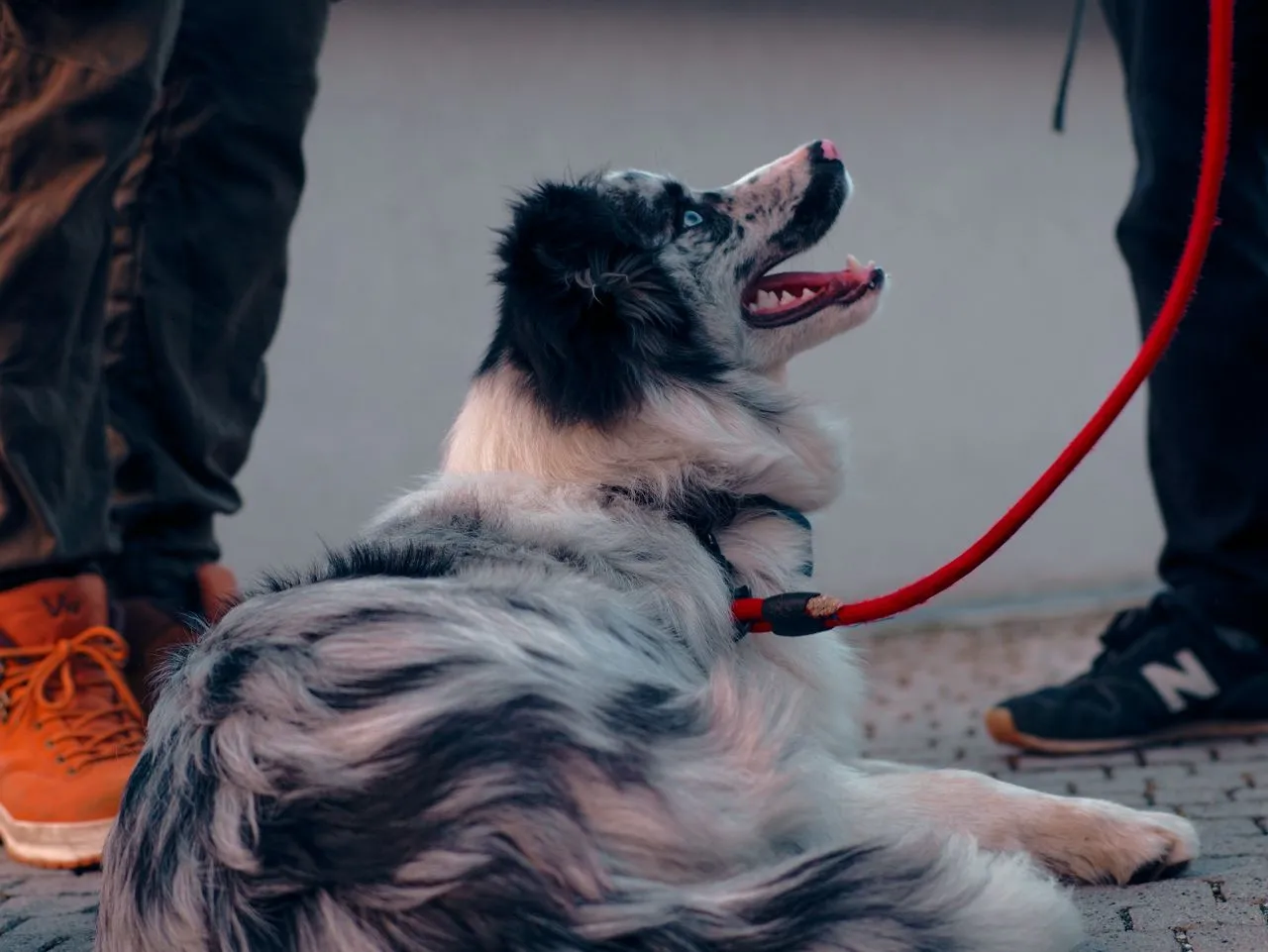
Behaviors That Need More Than Basic Clicker Training
Fear, Aggression, and Reactivity. A clicker can be part of a professionally designed behavior-modification plan, but it doesn’t resolve the underlying cause on its own. Never provoke a reaction just to create a training opportunity.
Separation-Related Problems. These typically call for gradual desensitization, environmental management, and veterinary or behavioral evaluation rather than standard cue-and-reward sessions.
Sudden Behavior Changes. Unexpected aggression, sensitivity, reluctance to move, house-soiling, confusion, or training regression can signal an underlying medical issue and deserve veterinary attention.
When to Contact a Qualified Professional. Reach out to a veterinarian, veterinary behaviorist, or qualified reward-based trainer when safety is at stake, fear is intense, progress has stalled, or you’re unsure how to manage the environment.
How to Choose a Clicker-Training Class or Professional
Questions to Ask Before Enrolling. What happens when a dog makes a mistake? What equipment does the trainer use? Can you observe a class first? How are fearful dogs handled? What credentials or continuing education does the trainer have?
Green Flags. Reward-based instruction, small achievable steps, individualized plans, safe spacing between dogs, clear explanations, and a willingness to refer out medical or complex behavior cases.
Warning Signs. Intimidation, physical force, forced exposure to fear triggers, punishment for fear signals, guarantees of instant results, or instructions that ask you to frighten or overpower your dog.
Aligning Training With Current Welfare Guidance. The AVSAB recommends reward-based methods for training and behavior modification — a useful benchmark when evaluating any trainer’s approach.
Frequently Asked Questions About Clicker Training
Do I have to give a treat after every click? Yes, particularly while your dog is still learning. Once a behavior is well established, you can click less often — just don’t click and then withhold the reward you’ve already promised.
Can I use a word instead of a clicker? Absolutely. A consistent verbal marker can work just as well, trading some of the clicker’s distinctiveness for everyday convenience.
Is clicker training the same as bribing? No. Bribing shows the reward before the behavior to persuade the dog to comply. Clicker training delivers the reward after the behavior, once it’s already happened. Lures can be useful early on, but they should be phased out.
Can I use clicker training without food? Yes — toys, play, and access to things your dog enjoys can all serve as reinforcement, as long as they genuinely matter to your dog and you can deliver them practically.
What happens if I click by accident? Just give the reward anyway, reset, and continue. One stray click won’t derail your training, but frequent mistimed clicks make the signal harder for your dog to trust.
How long does clicker training take? There’s no universal timeline. It depends on the behavior, the environment, the reward, your dog’s training history, their health and emotional state, and your own timing.
When should I stop using the clicker? Once a behavior is fluent, you can fade routine clicking while still reinforcing the behavior appropriately. Bring the clicker back whenever you’re teaching something new or raising the difficulty.
Can clicker training stop unwanted behavior? It works best when used to teach and reinforce a desirable alternative, rather than as a way to suppress an unwanted one directly. Management, enrichment, and addressing underlying causes often matter just as much.
Clear Timing Matters More Than the Tool
Clicker training remains a genuinely useful, humane method for giving your dog precise feedback and building new behaviors through reinforcement. The research suggests it’s especially valuable for complex tasks, shaping, and situations where reward delivery is delayed — and less essential for simple behaviors taught at close range.
The core principles are worth remembering regardless of which marker you choose: make the sound or word meaningful before relying on it, click at the right moment, reward every click, work in small steps, adapt your approach to your individual dog, and bring in a qualified professional when a problem goes beyond ordinary training.
If you’re just getting started, resist the urge to teach five commands in one afternoon. Pick one simple behavior — attention or a hand target work well and build from there.